Lifestyle
From the wilderness to the generic drug market, check out these new podcasts


NPR; WABE; OPB; KUT & KUTX Studios — Podcasts; GBH; KALW
Summer is sunsetting but dawn has arrived for several podcasts across public media. The NPR One team gathered a list of new releases to cozy up and listen to this fall.
The podcast episode descriptions below are from podcast webpages and have been edited for brevity and clarity.
How To Do Everything – NPR

Half advice show. Half survival guide. Half absurdity-fest. (Wait, how does this work again? We’re not numbers people.) Each episode, we answer all your burning questions, from how to survive a public bathroom to how to get close to a panda. When we don’t know the answer, which is roughly 92% of the time (again, not numbers people), we bring in overqualified experts to help out. So you’ll eventually walk away knowing how to do everything. That’s what happens when you’re one & a half shows. From the team at Wait Wait… Don’t Tell Me!
Start listening to, “Haircuts in Space, Tutus, and the Nasal Ranger.”
Tacos of Texas – KUT & KUTX Studios — Podcasts

KUT & KUTX Studios — Podcasts
Tacos of Texas is back! With Season 4, we’re taking the taco studio on the road to 3 markets in Texas and talk to locals about the food and the culture in their own communities. You’ll hear about the history of Vaqueros and Breakfast Tacos, learn about HEB’s road to Mi Tienda, meet James Beard award-winning chef Ana Liz Pulido, and more.
Start listening to, “Los Verdes: Goooool!”
Imperfect Paradise – LAist (New Season)

Voters elected Los Angeles District Attorney George Gascón in 2020 on his promises to undo decades of mass incarceration, tackle what many viewed as excessive prison sentences, and to generally create a fairer system. LAist Civics & Democracy Correspondent Frank Stoltze explores the criminal justice system Gascón set out to change. He examines decades-old practices and the impact on the people imprisoned through the case of Jose Santana. Santana ended up being sentenced to 22 years in adult prison for robbing two kids of their cellphones when he was 15.
Start listening to, “District Attorney Gascón: Part 1.”
Tradeoffs – WFYI

Generic drugs are, in many ways, the unsung hero of America’s health care system, bringing powerful medical innovations within the reach of millions more people. These cheaper copies of brand-name drugs — from pills that stop heart attacks to antibiotics that cure life-threatening infections — save America hundreds of billions of dollars a year. But will affordable, high-quality generic drugs continue to be there when we need them? Some players are abandoning this business while others slash costs by cutting dangerous corners. Shortages of older generic drugs have become the norm, sending doctors scrambling. At the same time, crucial new medicines are proving tougher to copy on the cheap, saddling patients with brand-name prices. Over the course of “Race to the Bottom,” our new three-part podcast series, we’ll explore why this industry that’s so essential to our health is in trouble — and what could change that.
Start listening to part one, “Race to the Bottom: Boom Times.”
Health Wanted with Laurel Bristow – WABE

Health Wanted brings you each week’s need-to-know public health headlines and breaks down the science behind trending topics. Host and social media science influencer Laurel Bristow covers everything from Ozempic to the ozone, interviewing experts and answering your questions, all in pursuit of better health.
Listen to, “Vaccines.”
Terrestrials from Radiolab for Kids – WNYC

Terrestrials is Radiolab’s spin-off nature show for families and for people of all ages that explores the strangeness that exists right here on Earth. Each episode feels like a fairytale that is 100% true. Host Lulu Miller (co-host of Radiolab) leads you on a nature walk to encounter incredible creatures, wild storytellers, and original songs from “The Songbud” Alan Goffinski. That’s right! We sing on this show; don’t worry, good voices not required. Listen in with your whole family. Or all alone. This season, we are tackling the overlooked – the treasures, secrets, and wildness waiting right underneath our noses. From tree stumps, to lichen, to humble squirrels that fade into the background so easily. When you look close at the creatures we usually ignore, you’ll find all kinds of secrets hidden inside.
Start listening to, “The Stumpisode: The Wild World of Tree Stumps!”
Hush – OPB

Hush is an investigative podcast from OPB, uncovering the buried truth about critical stories in the Pacific Northwest. In the first season, we look at the case of Jesse Lee Johnson, a Black man who lived for 17 years on Oregon’s death row for a crime he says he didn’t commit, and we try to understand why the state tried for so long to kill him.
Listen to episode 1, “Jesse.”
Question Everything with Brian Reed – KCRW

Reporter Brian Reed re-examines everything about journalism, the profession he thought he knew. In the middle of making his second hit podcast, Brian got sued. Accused. Told the biggest story of his career – the Peabody Award-winning series S-Town – wasn’t journalism. Which meant he had to spend years proving that it was. Obsessing over the question, “What is journalism, anyway?” Join Brian as he turns the tools he’s acquired over his years as a journalist on journalism itself. With gripping stories, reporting, and interviews every other Thursday, Question Everything is a show for anyone who’s ever felt confused, frustrated, or misled by the news they rely on. At a time when distrust in the media is at an all time high, when so many believe that journalism is failing, Question Everything is a real-time quest to try and make journalism better.
Listen to episode one, “The Critic.”
How Wild – KALW

How Wild hits trails around the country, exploring the meaning of wilderness. A century ago, the U.S. set aside the first official wilderness. You’ll hear stories from rangers, scientists, hikers, environmentalists, and Tribal leaders as they grapple with the realities of wilderness on a changing planet, and whether the concept of “wilderness” has ever really existed.
Start listening to, “Untrammeled.”
College Uncovered – GBH

Divisive protests, police crackdowns, and a chilling backlash against free speech are among the reasons that a growing number of students say they don’t feel welcome on some college campuses. Conflicts over abortion, LGBTQ+ rights, and DEI, as well as what can and can’t be taught in classrooms are stirring up campus life against the backdrop of a contentious presidential election. A majority of students say abortion laws and restrictions around the discussion of race and gender would have at least some effect on where they go to college, according to Gallup polling. The same polls also find that some students at four-year universities feel as if they don’t belong or disrespected. Students on the left and right alike say they’re increasingly reluctant to express controversial opinions, but that it’s okay to report on classmates or faculty who do. That’s why we’re exploring the politics of higher education this season. College has become a new battleground in the culture wars, and it’s affecting where students enroll and what they’re learning. Learn more from the Hechinger Report’s College Welcome Guide!
Listen to episode one, “Un-welcome to college.”
NPR’s Jessica Green and Jack Mitchell curated and produced this piece.


Inde Navarrette and Michael Johnston in Obsession.
Focus Features
hide caption
toggle caption
Focus Features
Two big horror films, Obsession and Backrooms, just smashed all box office expectations. So much of their success has been driven by Gen Z, which is now the biggest moviegoing demographic. But what makes a movie a Gen Z movie? Today we’re bringing you an episode of NPR’s It’s Been a Minute. Host Brittany Luse talks about this trend with Sam Adams and Reanna Cruz.
If you want to hear more about these movies, check out these episodes:
In ‘Obsession,’ love hurts. It really, really, really hurts.
‘Backrooms’ brings YouTube horror to the big screen
Zendaya brings ‘The Drama,’ we bring the spoilers
Connect with Pop Culture Happy Hour:
Letterboxd / Facebook
Our weekly newsletter
Support Pop Culture Happy Hour+

I regret to inform you I’ll need to keep this introduction brief. Not because there’s any lack of things to say about July’s crop of notable new releases; it features award-winning journalists and several different flavors of anxiety about our bleak ecological future and data-dominated present, as well as the welcome returns of several beloved novelists.
No, these books certainly deserve some love, dear readers. It’s just that I’m finding it a bit tough to type while bearhugging a box fan. And since it seems that may be my last best chance to get through this latest U.S. heat wave here on the east coast without sweating through my shirt, I feel some urgency to get back at it.
So enough with the ado. With any luck, you’ll soon be cracking open one of these great reads on the beach — or in front of a decent air-conditioning unit, at any rate.
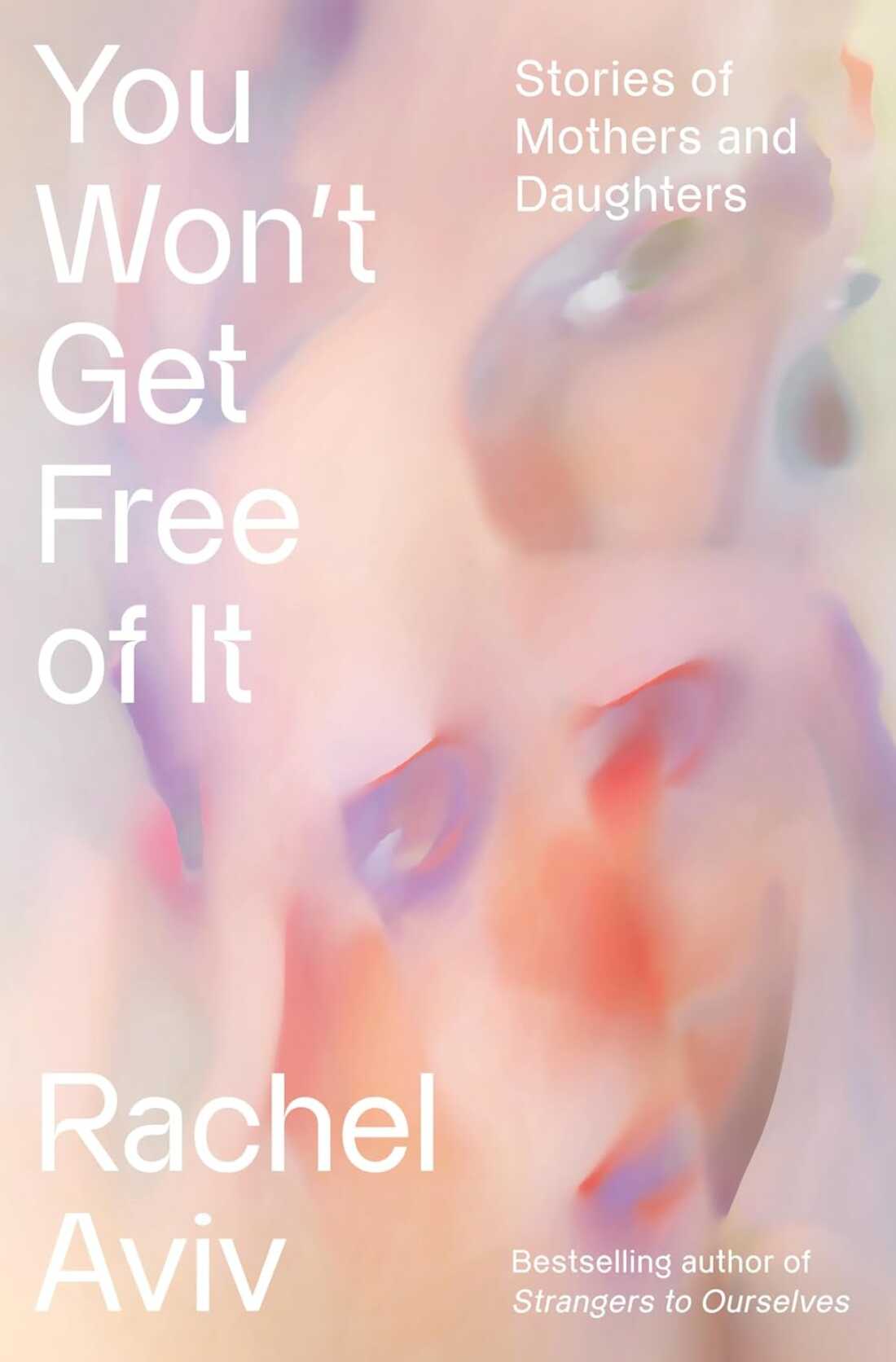
You Won’t Get Free of It: Stories of Mothers and Daughters, by Rachel Aviv (July 7)
Aviv, New Yorker staff writer and finalist for this year’s Pulitzer Prize, has a fairly extensive purview in her role as reporter at large. Still, when reviewing her latest work, Aviv noticed a crucial throughline: “I realized that, to some degree, I’d been writing about mother-daughter pairs for the last decade,” she explained to the Paris Review. Seeing this, she decided to collect and revise half a dozen of those stories, which cover ground from a daughter’s troubling fugue states to the immigrant nannies who must leave their own children behind, to Alice Munro’s daughter, whose claims of sexual abuse went unheeded yet regularly resurfaced in her mother’s fiction.
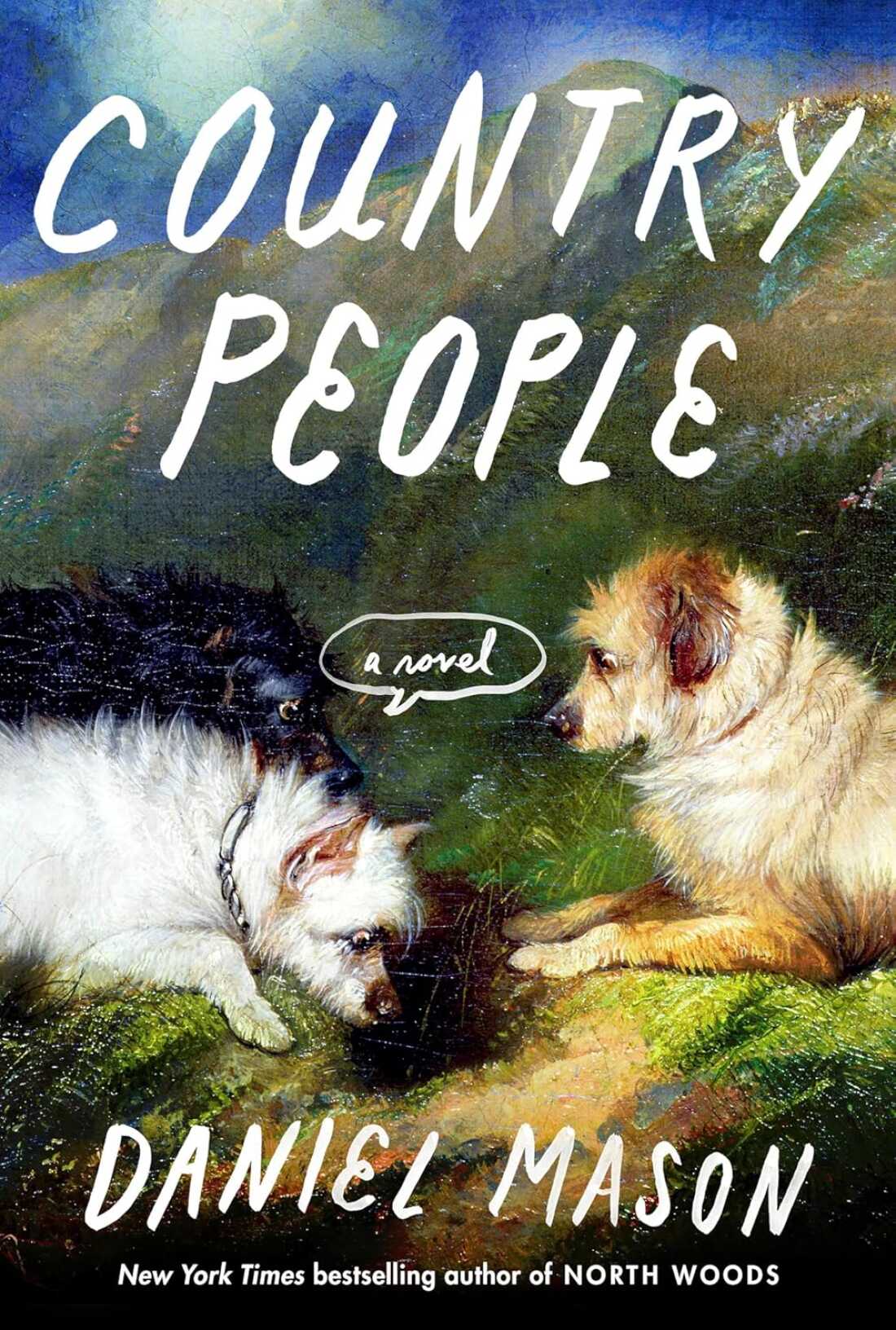
Country People, by Daniel Mason (July 7)
In Mason’s first novel since North Woods, 2023’s critical darling and book club stalwart, readers are plopped right back in the New England woods but the time scale has shrunk considerably. Whereas North Woods spanned centuries, his new novel confines itself to a single year, during which Miles, loving family man and lackadaisical Ph.D. candidate, plans to finally buckle down on that derelict degree of his and reassert his worth to one and all! At least, that’s the idea. But plans don’t stand much of a chance when there are eccentric neighbors to befriend and mysterious local legends to investigate.

Catch the Devil: A True Story of Murder, Deception, and Injustice on the Gulf Coast, by Pamela Colloff (July 14)
This is the first book from Colloff, a veteran investigative journalist for ProPublica and The New York Times Magazine. She has won multiple National Magazine Awards for stories focused on miscarriages of justice – such as her 2019 piece about Paul Skalnik, a grifter, fabulist, sexual predator and snitch, whose fabrications can be linked to dozens of wrongful convictions in Florida, including some sending the innocent to death row. Here Colloff expands upon that investigation, which gets a lot more room to breathe in the transition from magazine article to full-length book. What emerges in this disturbing account is a portrait of one man’s callous cruelty, and the law enforcers who had no problem tolerating a deal with the devil, provided it kept juicing the conviction rate.

Cloudthief, by Nathaniel Rich (July 14)
Though it’s his fiction we’re discussing here, it’s important to note Rich’s reporting has earned plaudits, too, as well as a few film adaptations. No matter the medium, climate change is usually on his mind, as well as the blunt, rather bleak, prognosis he offered on Fresh Air in 2019: “There’s a huge range of outcomes … ranging from the not very good to the apocalyptic.” Which is to say I’m surprised to find myself describing his newest response to global catastrophe as a rollicking good time – and not just because I’ve never said those words, in that order, in my life. This spry, funny caper features a freelance environmental reporter who inadvertently breaks bad, careening under the influence of lust and a light wallet toward the novel’s big centerpiece: the planned heist of a massive data center.

Data Empire: The Power of Information to Organize, Control, and Dominate, by Roopika Risam (July 14)
And now, for another book centered on data – albeit from a rather different angle. This illuminating history from Risam, a Dartmouth professor, traces the practice of collecting information – and the power conferred by possessing it – from the bones that were humans’ first archives, to the omnipresent systems that shape (or outright determine) life today. As Risam asks, “What has it meant – and what will it mean – when records that once served only to help us remember, come to rule?” A pressing question (see: those data centers), which you’re probably better served trying to answer with the help of Risam than, say, Alexa or Claude.

It Will Come Back to You: Stories, by Sigrid Nuñez (July 14)
For someone with nine novels to her name, Nuñez got a later start than you might expect, having published her first book when she was already in her mid-40s. More than three decades later, now a spry 75 years old, the National Book Award winner has gotten around to publishing her first collection of short stories. The 13 stories here have been culled from across her career, but each one resonates clearly with the warm timbre of her voice: simple, unadorned prose and mundane setups, from which she consistently manages to tease out glimpses of truth, elusive and profound.

They Stole a City: Wilmington’s White Supremacist Coup and the Families Who Live with Its Legacy, by Lauren Collins (July 14)
The only coup d’etat to succeed on U.S. soil is, at most, a distant historical afterthought these days. To be honest, I can’t recall reading a single textbook entry that even remarked on the 1898 race massacre in Wilmington, N.C., an action led by white supremacists that left many (historian estimates say up to 300) Black Wilmingtonians dead and permanently scarred a community newly aware of its simmering animus and vulnerability to violent overthrow. So I’m grateful for Collins’ new chronicle of the infamous event, which fills in some serious gaps in the American collective memory and explains how its perpetrators cultivated the disorienting silence that persists in the historical record today.

Yellow Pine, by Claire Vaye Watkins (July 21)
I don’t think I’ve ever actually laid eyes on the Mojave Desert but after reading Watkins’ latest novel, it feels like I can picture it more vividly than some streets I’ve actually lived on. No, it’s “not a beginner’s wilderness,” as Watkins concedes in Yellow Pine, but this landscape so redolent of death is also deceptively robust with life, if only you’re patient enough to find it. Too bad, then, that it’s also on fire. And choked by drought, irradiated by military test sites and soon to be sacrificed to a massive new solar array named, inexplicably, Yellow Pine. But those aren’t the only complications confronting the book’s main character, Rose, whose aspirations of becoming a kind of climate hermit warp a bit under the pressure of a rekindled love and the pendulum swing of rage and despair at the state of the world.

Cool Machine, by Colson Whitehead (July 21)
Ray Carney is back, for what regrettably appears to be the last time. The lifelong Harlemite, hard-luck furniture dealer and ambivalent crook starred previously in Harlem Shuffle and its sequel, Crook Manifesto. His perspective is our window on the changing eras of the historically Black neighborhood, from the mid-1950s on. In this, the final installment in Whitehead’s brisk, exceedingly entertaining Harlem Trilogy, readers catch up with Carney around the start of the 1980s, following him deeply into Reagan’s decade. The novel also represents the end of an era for Whitehead, whose attention has been exclusively occupied with these characters since he won Pulitzer Prizes for consecutive novels, The Underground Railroad and Nickel Boys.

Beginning Middle End, by Valeria Luiselli (July 28)
The gifted young Mexican writer returns this month with her fourth novel, the second she has written in English and her first since Lost Children Archive launched to widespread plaudits more than seven years ago. Her new book, like her previous one, also concerns the travels of a small family – only this time, the road leads not through the American Southwest but Sicily. And the history sought by its mother-daughter main characters is not a record of bureaucratic cruelty but something much more intimately personal: the links shaped and tested by generations of shared heritage and experience.



-

 Detroit, MI5 minutes ago
Child shot while riding bike outside home on Detroit’s west side, police say
-

 San Francisco, CA17 minutes ago
Bay Area restaurant has strict policy on acceptable children behavior
-

 Dallas, TX20 minutes ago
Detroit Pistons trade Marcus Sasser to Dusty May’s Dallas Mavericks
-

 Miami, FL25 minutes ago
The offseason has been a massive success for the Miami Heat
-

 Boston, MA32 minutes ago
Can’t afford Boston’s priciest restaurants? Try these instead. – The Boston Globe
-

 Denver, CO35 minutes ago
City of Denver says images of piling waste a case of illegal dumping
-

 Seattle, WA40 minutes ago
14-year-old dies in electric motorcycle crash at Seattle bike park
-

 San Diego, CA47 minutes ago
Serial sex abuser sentenced to over 300 years for crimes against young relatives

