Politics
Where Kamala Harris' campaign saw most support from new donors

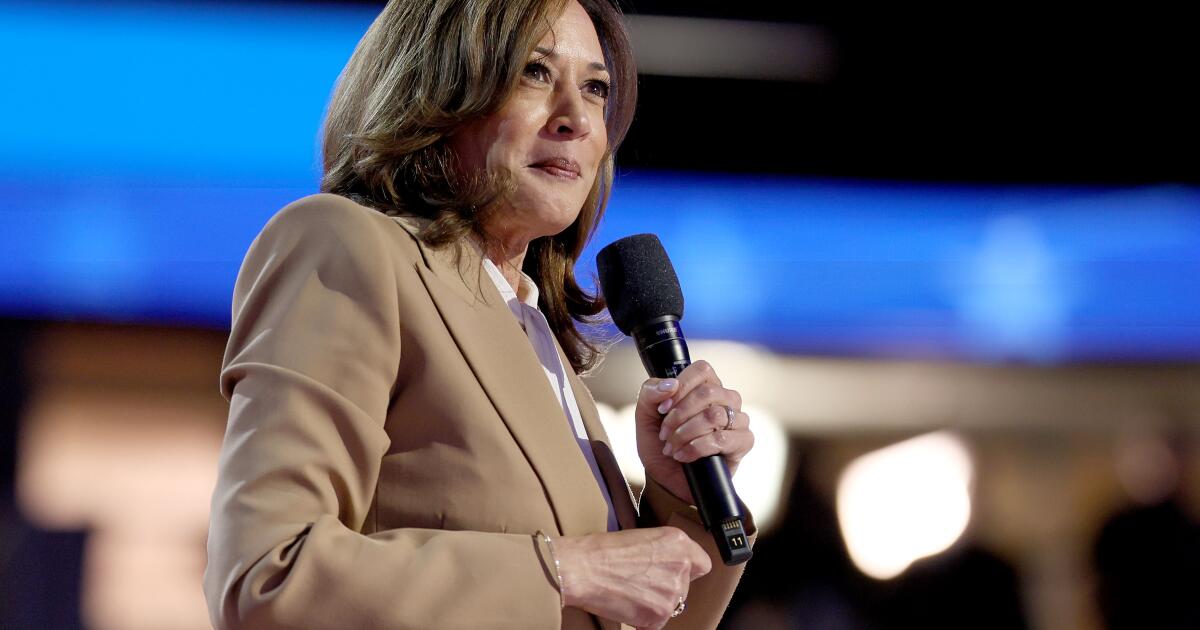
More than 1.5 million donors opened their wallets for the first time in July to support Vice President Kamala Harris, the Democratic nominee, in the early days of her campaign.
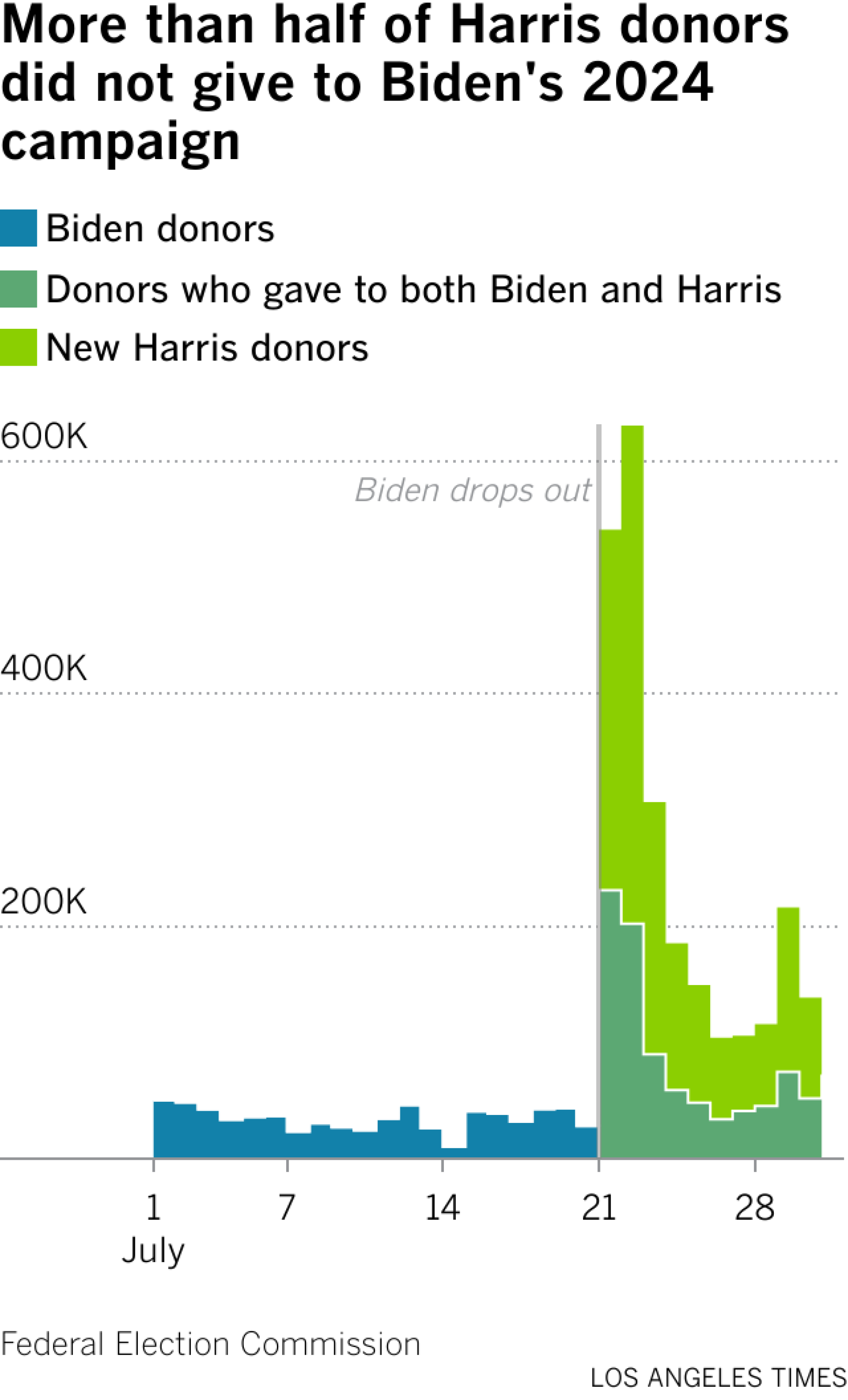
Nearly $184 million flooded into Harris’ presidential campaign committees from individual donors since President Biden dropped out of the race on July 21, according to a Times analysis of Federal Election Commission filings released last week. Harris raised nearly a third of Biden’s total with more than 2.6 million contributions averaging $69, $41 less than Biden’s average contribution.
July 21 and 22 were the biggest fundraising days in the entire campaign cycle. Most of that boost came from small dollar contributions, under $200.
Biden’s exit and Harris’ ascendance sparked an immediate wave of enthusiasm. On the night of the 21st, members of Win With Black Women held a Zoom in support that attracted an estimated 90,000 viewers. Younger generations that the Democrats had struggled to engage flocked to the Harris campaign with viral memes that have flooded social media platforms such as TikTok. Both women and young voters are critical groups that Harris needs to vote to win in November.
Nearly 70% of her support was from donors who had not given previously to President Biden in this election cycle, according to a Times analysis of July fundraising reports released Aug. 20.
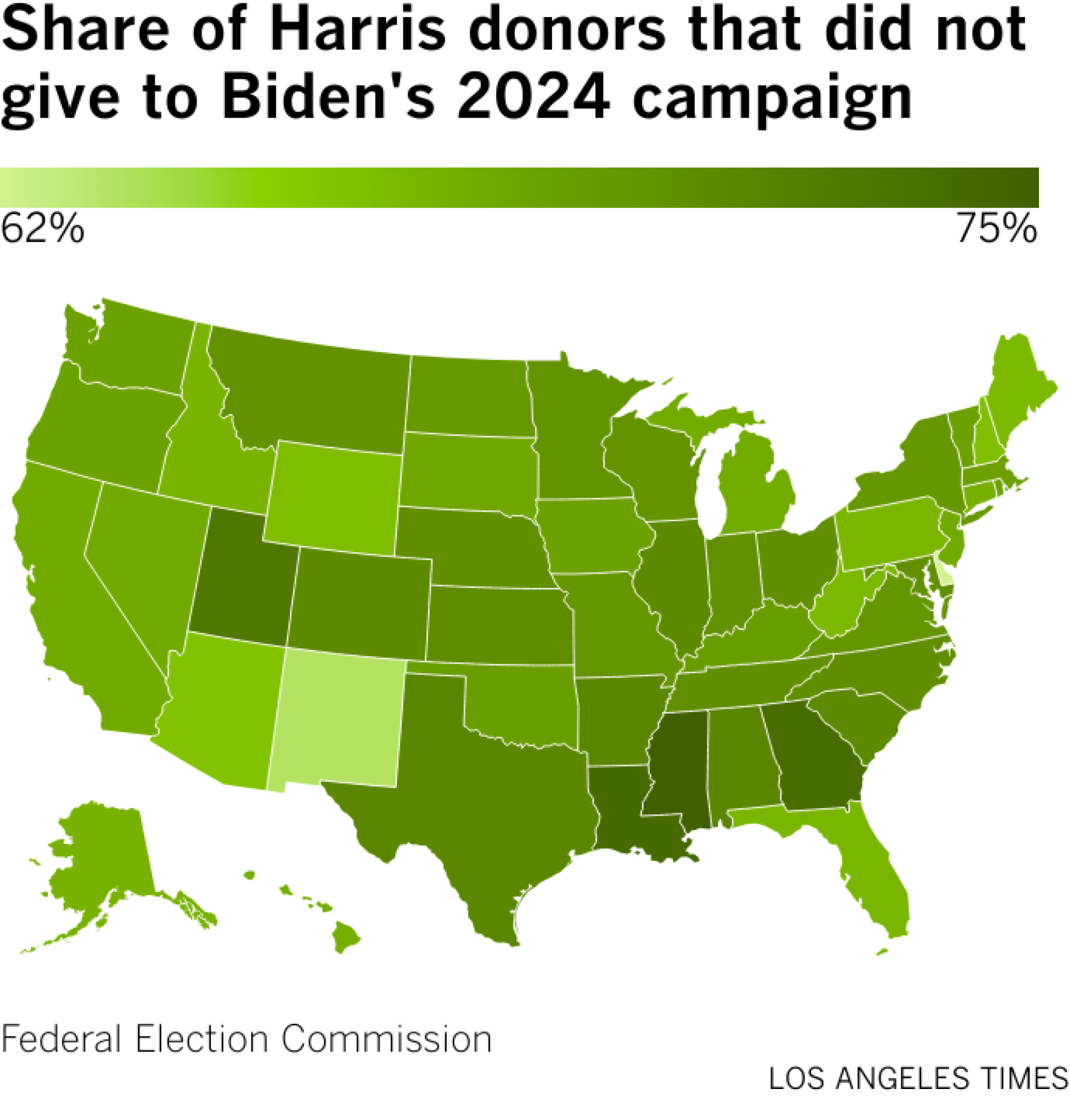
Every single state saw more than half of its contributions come from new donors. The biggest increases were in the South and Midwest.
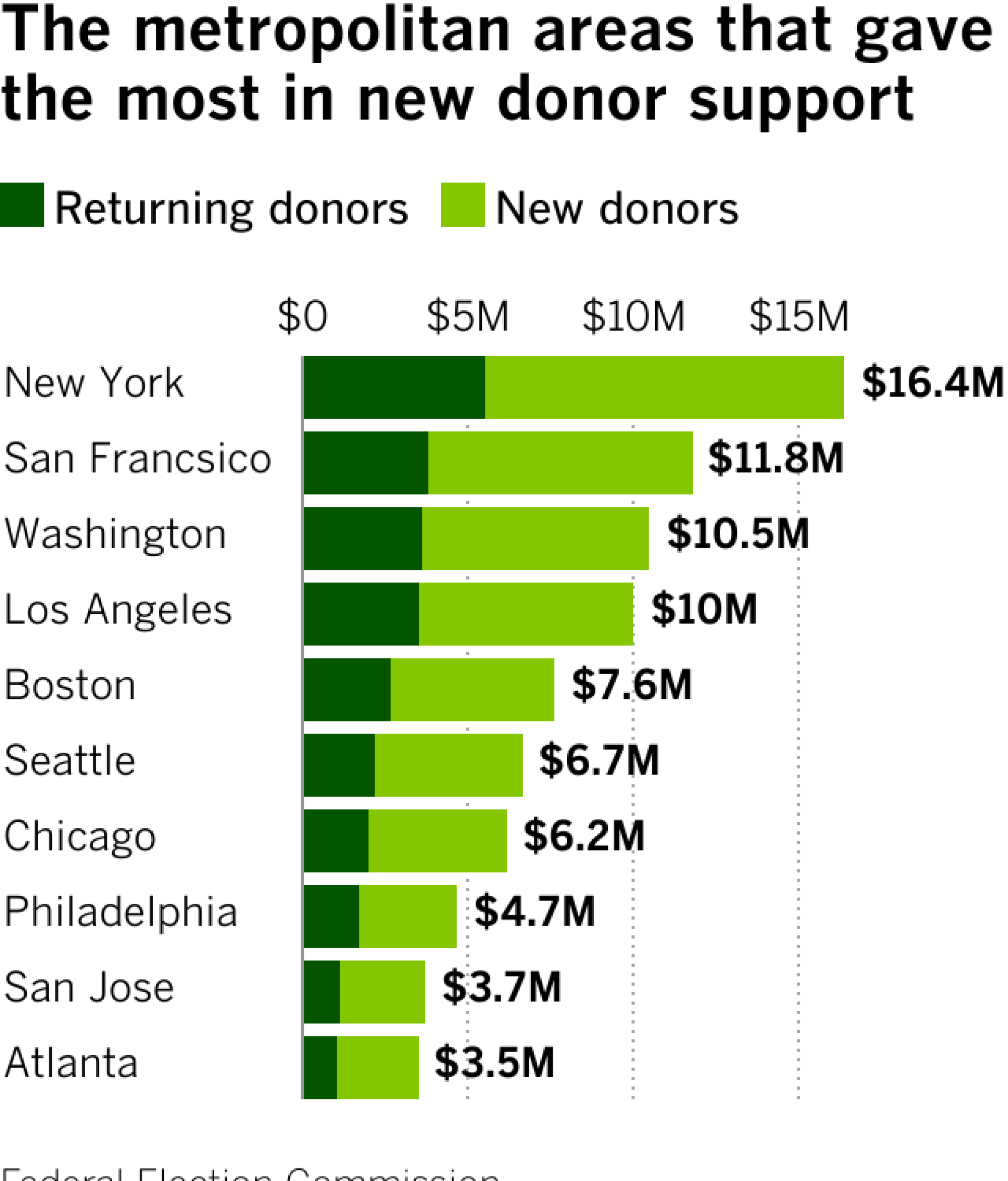
Overall the most money came from large metropolitan areas on the coasts. The New York, San Francisco, Washington and Los Angeles metro areas donated a combined $48.7 million to Harris from July 21 to 31.
In Los Angeles, heavily Latino areas on the Eastside and white neighborhoods in Silver Lake and Echo Park had many first-time donors. Many Asian-majority neighborhoods in Long Beach and the Valley stepped up for the first time for the first major presidential candidate of Indian heritage. Around the county, South Asian donors gave $2.4 million in the first days of her campaign. A similar pattern of excitement can be seen in Little Indias across the country, in Edison, N.J.; Queens, N.Y; and areas around Devon Avenue in Chicago.
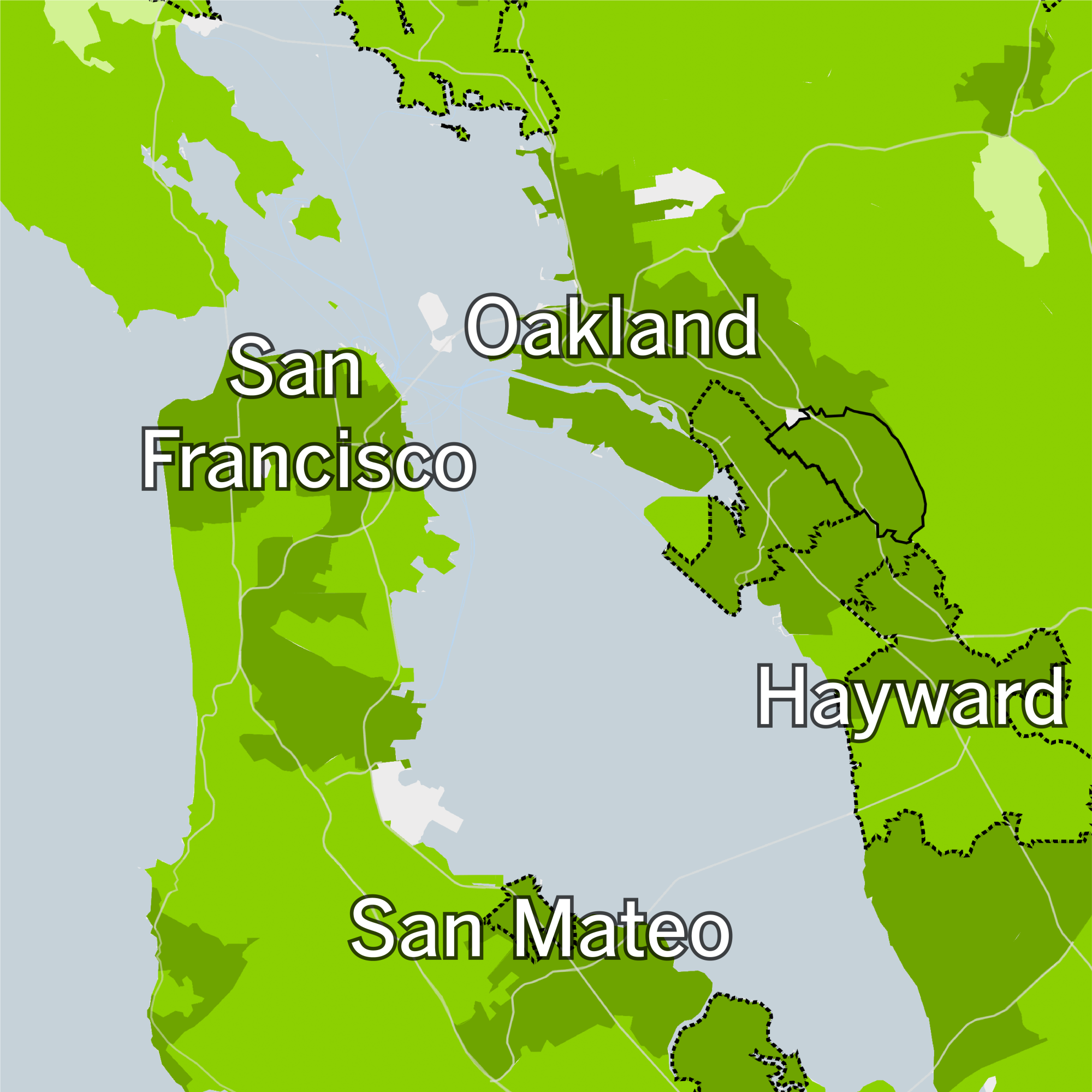
In San Francisco, 70% of donors were new in Noe Valley, which is home to many young white families. Some Latino and Black majority ZIP Codes near San Leandro saw a similar shift towards new donors. Harris seems to be drawing on renewed enthusiasm for the Democratic ticket in majority Black areas: ZIP codes around Compton in L.A. and Oakland saw big increases in new donors.
In the first 11 days that Harris was endorsed as presidential nominee, she raised almost half of what Biden raised since the beginning of 2023 from Atlanta. Areas with high percentages of Black residents saw big increases in new donors. The swing state of Georgia is a critical voting bloc, with a large proportion of Black voters and working-class families.
Donors from the Charlotte metro area in North Carolina poured in more than $745,000 for Harris in new donations. These areas are majority Black and mostly lower income. Seventy percent of donors in the state were new and they brought in a total of $3.3 million for Harris.
Share of Harris donors that had not contributed this campaign cycle
ZIP Code demographics
More than a third Black residents
More than a third Latino residents
Majority Black and Latino areas in the South and West sides of Chicago gave heavily to Harris. New donors nearly tripled in the majority Black Hyde Park area.
In New York, majority Latino and Black ZIP codes in the Bronx, Harlem and Brooklyn saw three new donors for every returning donor. In the South Bronx ZIP Code 10454, where the population is 70% Latino and 25% Black, 86% of Harris donations were from new donors.
In neighboring New Jersey, a comparable pattern can be seen in the eastern part of Newark. The area is home to young lower- to middle-income Latinos.
This boost in new donors is especially important in swing states like Arizona, where a wave of new donors from middle-class, majority Latino communities in the Phoenix area showed their support for Harris. South of Phoenix, in Laveen, 83% of support came from new donors. Some contributions came from Republican-leaning areas.
Texas is a majority Republican state with blue pockets in Austin and Houston. Just west of Houston, near Katy, Harris donations spiked in areas that voted heavily for Donald Trump in 2020. The Latino and Black area south of Houston, around Rosharon, previously gave less than $1,000, but new support for Harris grew to more than $10,500.
Since the filings only include contributions through July, the data won’t show the impact that running mate Minnesota Gov. Tim Walz has had fundraising in working-class areas. Both Madison, Wis. and the Minneapolis area had twice as many new donors as returning donors. On Aug. 20, Harris and Walz visited left-leaning Milwaukee, an area that’s given $520,000 in new donations.
After the Democratic National Convention in Chicago last week, it seems like the energy is only growing. The Harris campaign said it’s raised $540 million in August, with a surge of support after her DNC speech. The campaign said nearly a third of contributions during the convention week were first-time contributors.


NEWYou can now listen to Fox News articles!
President Donald Trump said Tuesday he plans to lift U.S. sanctions on Turkey and signaled he is prepared to move forward with the long-stalled sale of F-35 stealth fighter jets, marking a dramatic reversal in U.S. policy toward the NATO ally years after Ankara was expelled from the program for its purchase of a Russian missile defense system.
Speaking alongside Turkish President Recep Tayyip Erdoğan during a bilateral meeting at the NATO summit in Ankara, Turkey, Tuesday, Trump said his administration would remove sanctions imposed on Turkey’s defense sector.
“I can tell you we’re going to be taking the sanctions off, OK?” Trump said. “I don’t want him to waste his time answering that question. It’s time. We don’t sanction friends.”
TRUMP BETS ON FORMER NATO TROUBLEMAKER AS TURKEY’S STRATEGIC VALUE SURGES
Turkish President Recep Tayyip Erdogan welcomes US President Donald Trump at Ankara Airport, who is paying an official visit to Turkey ahead of the 36th NATO Heads of State and Government Summit in Ankara, Turkey, on July 07, 2026. (Dogukan Keskinkilic/Pool via REUTERS)
Asked whether he would sell F-35 fighter jets to Turkey despite existing legal restrictions tied to Ankara’s purchase of the Russian-made S-400 air defense system, Trump indicated he was open to doing so.
“Many people, including the people sitting right here thinks why wouldn’t we do that?” Trump said. “Turkey has been in many ways much more loyal than other countries that we think would be loyal.”
Pressed on concerns about Turkey’s continued possession of the S-400, Trump dismissed them.
“I have no concerns about anything.”
The remarks represent Trump’s clearest indication yet that he intends to restore defense ties with Turkey, building on months of efforts to revive military cooperation with one of NATO’s largest armed forces after years of strained relations.
Turkey was removed from the multinational F-35 program in 2019 after taking delivery of the Russian-made S-400 air defense system, prompting Washington to argue that operating the Kremlin-built system alongside America’s most advanced stealth fighter could expose sensitive U.S. technology. Congress subsequently imposed sanctions under the Countering America’s Adversaries Through Sanctions Act, or CAATSA.
‘WRITTEN IN OUR DNA’: POLISH PILOTS WHO REMEMBER SOVIET RULE PREPARE FOR AMERICA’S MOST LETHAL FIGHTER JET
Congress long has been one of the biggest obstacles to restoring Turkey’s access to the F-35, with bipartisan lawmakers arguing that Ankara should not receive America’s most advanced fighter aircraft while it continues to possess the Russian-made S-400 air defense system and pursues policies they say run counter to U.S. interests.
A U.S. airmen watches an Air Force F-35 Lightning II joint strike fighter aircraft approach for the first time on July 14, 2011 at Eglin Air Force Base in Florida. (Samuel King Jr./U.S. Air Force)
Beyond political opposition, the Trump administration also faces legal hurdles.
While the president has authority over sanctions policy, Congress enacted additional restrictions after Turkey’s purchase of the S-400. Section 1245 of the fiscal year 2020 National Defense Authorization Act bars the transfer of F-35 aircraft to Turkey unless the executive branch certifies that Ankara has met statutory requirements related to the Russian missile system.
In recent days, a bipartisan group of House lawmakers urged Trump not to move forward with an F-35 sale, arguing that doing so without satisfying those legal requirements would violate U.S. law and undermine national security.
Lawmakers also have warned that Turkey’s continued possession of the S-400, support for Hamas and tensions with fellow NATO allies Greece and Cyprus raise broader concerns about restoring Ankara’s access to the stealth fighter.
Russian S-400 missile air defence systems are seen before the military parade to commemorate the 75th anniversary of the battle of Stalingrad in World War Two, in the city of Volgograd, Russia February 2, 2018. REUTERS/Tatyana Maleyeva – UP1EE220T3A2B
CLICK HERE TO DOWNLOAD THE FOX NEWS APP
The Pentagon has maintained that the S-400’s sophisticated radar could collect data on the F-35’s radar signature and electronic profile during routine operations, potentially allowing Russia to better detect and defeat the aircraft in a future conflict if that information were shared with Moscow.
When the Trump administration removed Turkey from the F-35 program in 2019, the White House said “the F-35 cannot coexist with a Russian intelligence collection platform that will be used to learn about its advanced capabilities.”
Pentagon acquisition chief Ellen Lord similarly warned at the time that allowing Turkey to operate both systems would jeopardize the long-term security of the F-35 program because “much of the F-35’s strength lies in its stealth capabilities.”
SEATTLE — Is everybody happy now? You good, Mr. President?
Put our boys in a blender, President Trump did, with those phone calls to FIFA President Gianni Infantino. Messed with their mojo by politicking to get American striker Folarin Balogun’s red card rescinded.
We’ll have to check VAR, but it might be the first time Trump succeeded at having a decision overturned.
Probably because this time what he sought to overturn — discipline stemming from Balogun’s accidental contact in the United States’ victory over Bosnia and Herzegovina — actually was unjust. Balogun should not have received a red card.
The problem is, having our President butt in here was a joke. Unfunny and out of bounds, offsides, an own goal — all of the things.
It put the U.S. team at the center of a geopolitical maelstrom, which is exactly what they did not need in the hours before the biggest match of their lives and the biggest match in the history of the U.S. men’s soccer program.
Some 40 or 50 million viewers were expected to tune in; how many of them watched for the first time? And what sort of impression did Monday’s 4-1 blunder-filled meltdown against Belgium make? That we stink at soccer — still?
If you were one of them, please, believe your soccer-fan friends when they tell you the Americans played much better in previous matches.
But so much for a magical run. On their home turf, the Americans pulled up lame before the finish line (aka, for the U.S. team’s purposes, its first quarterfinals since 2002).
To their credit, after the debacle, members of the U.S. team didn’t complain about anything being rigged. They didn’t use the distraction as an excuse. And they didn’t point fingers at anyone — anyone at all.
U.S. striker Folarin Balogun (20) walks to the locker room at halftime against Belgium in the World Cup on Monday at Lumen Field in Seattle.
(Allen J. Schaben / Los Angeles Times)
“We’re playing on home soil,” defender Chris Richards said. “So the only pressure we put on ourselves is to perform for our country, and ultimately didn’t feel the way we wanted to today. But I don’t think the antics of the last 24 hours had anything to do with it.”
No, they said the “debate,” or “outside noise” or “political manipulation” — as Tim Ream, Alex Freeman and coach Mauricio Pochettino described what others are calling “Balogate” — were not to blame for the gut-punch that answered the question: Why not us?
Because the U.S. is not yet good enough to beat the world’s great teams. Especially not when their pregame preparation includes having to try to block out an international uproar.
To have any hope against the Belgians in the round of 16 — a matchup between FIFA’s Nos. 9- and 17-ranked sides — the Americans needed to be going full-tilt, to be focused and ferocious and probably also a little bit lucky.
Instead, they looked shook, rattled. And they got rolled.
They were the worst version of themselves at the worst time, which was so weird from a team that had been on its front foot from the first whistle against Paraguay.
Not Monday. Against Belgium, they were on their heels from the outset. Heavy touches, slow afoot, playing like they had the weight of the World Cup on their shoulders.
And all that White House maddening meddling — for what?
Balogun started and played most of the match, but it could just as well have been reserve striker Ricardo Pepi. Or you or me, Balogun was that ineffective.
His play of the day came postmatch, when he approached Belgian coach Rudi Garcia and the two had a respectful exchange. A real diplomat, that Brooklyn-born, Britain-raised American by birthright.

This loss was a real team effort, of course. Christian Pulisic came off in the 59th minute after twisting his right ankle — leaving this World Cup without a goal in the four matches he appeared.
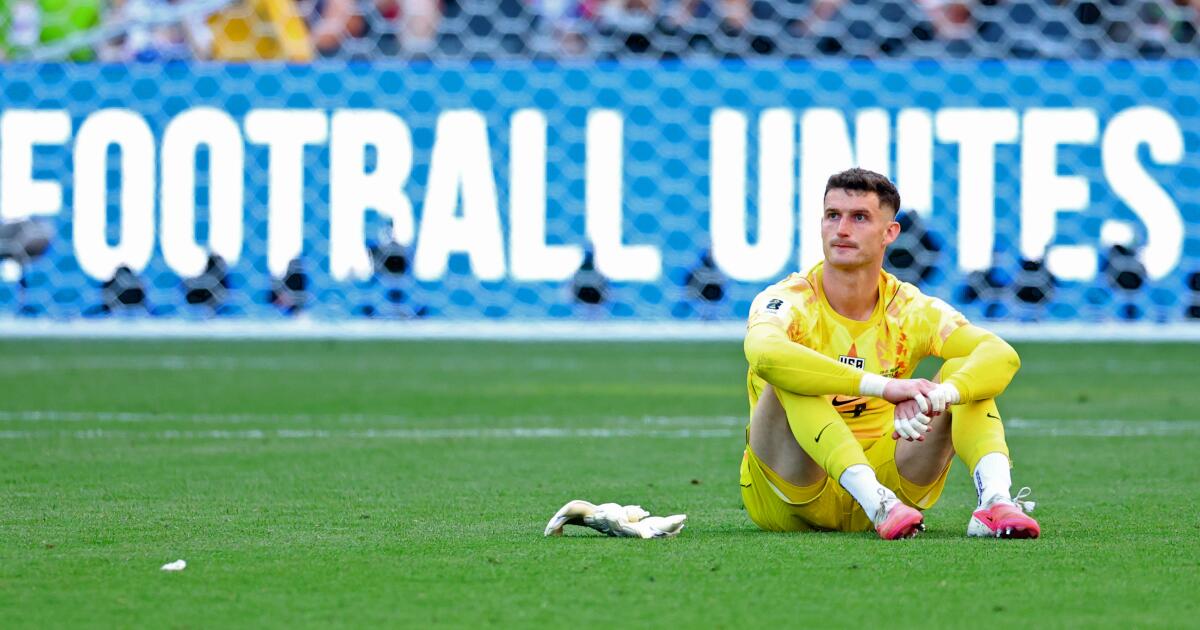
Matt Freese, the Harvard-educated starting goalkeeper, had a brain cramp of epic proportions when he stepped outside of the box and failed to corral a ball. Belgium’s Charles De Ketelaere kicked it loose and set up Hans Vanaken, whose shot traveled behind Ream for an easy score that made it 3-1 in the 57th minute.
There was a lot of poor decision-making with this match, on and off the pitch.
In the end, Trump’s appeal to Infantino did more harm than good. But what if some good could come from it?
Hey, FIFA, what about giving teams a process to appeal cards, like our American athletes in the NBA, NFL and MLB have?
Offering a suggestion box wouldn’t be opening Pandora’s box, not if it were a transparent and regular part of the game that would, hopefully, offer increasingly fair outcomes in a tournament where every match is so monumental — as our President recognized, much too enthusiastically.

U.S. coach Mauricio Pochettino waves to the crown after a 4-1 loss to Belgium at the World Cup on Monday.
(Allen J. Schaben / Los Angeles Times)
Prosecutors on Monday began laying out their case against the man accused of murdering Charlie Kirk. It was the first day of a weeklong preliminary hearing that will determine whether or not there is enough evidence against the accused killer to stand trial.
-

 Seattle, WA5 minutes ago
Disappointment on the field, but momentum on the streets
-

 San Diego, CA7 minutes ago
Community Calendar: La Jolla meetings and more, July 9-17
-

 Milwaukee, WI13 minutes ago
Opinion: Milwaukee teachers have more to give. Let’s give them the chance. | Milwaukee Neighborhood News Service
-

 Atlanta, GA20 minutes ago
Maryland kidnapping suspect taken into custody in Georgia
-

 Minneapolis, MN22 minutes ago
Man sentenced to federal prison for armed robberies of St. Paul bank, Minneapolis Walgreens
-

 Indianapolis, IN28 minutes ago
Advocates say new public camping ban criminalizes homelessness
-

 Pittsburg, PA34 minutes ago
Allegheny County park with 200-year-old trees joins network of
-

 Augusta, GA38 minutes ago
Local service members get more chances to expand their education

