West
Blue city politicians push woke policy on police, but veteran officer warns it comes at a cost

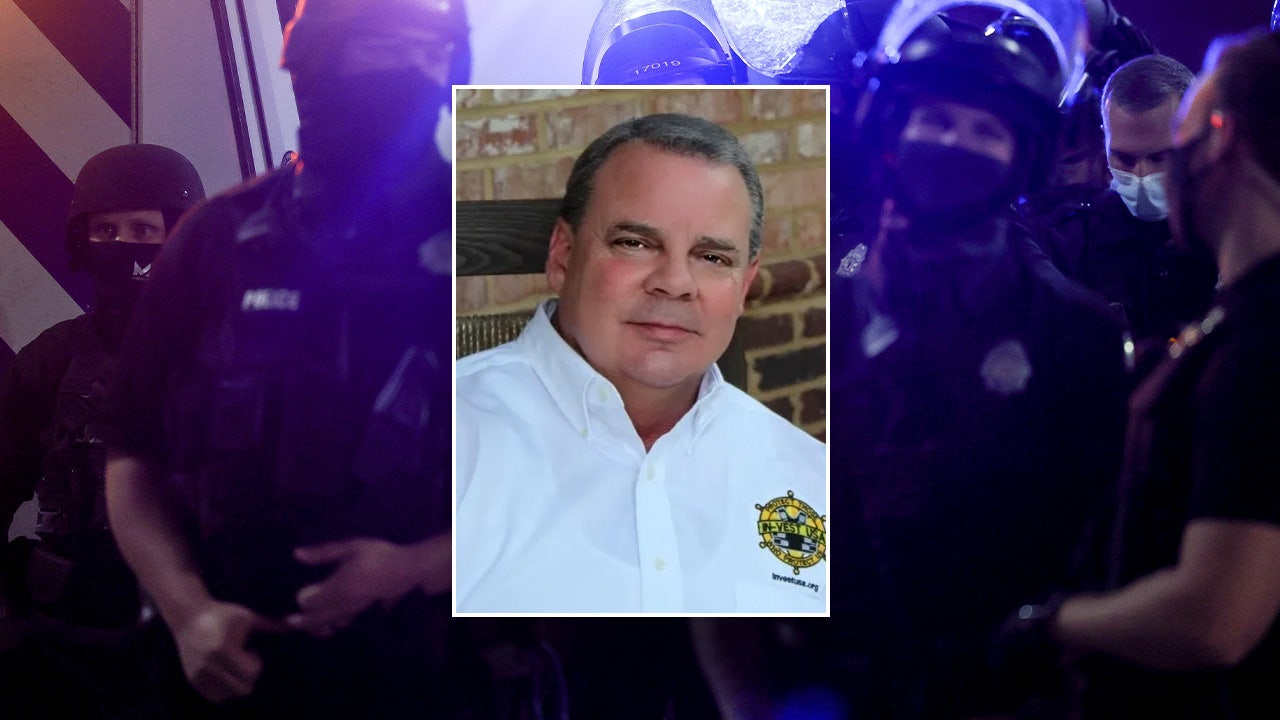
A law enforcement veteran shared how a recent directive from the Denver Police Department ties the hands of law enforcement who put their lives on the line for their community.
Michael Letts, a veteran law enforcement officer with 30 years of experience and the founder of InVest USA, a not-for-profit organization donating chest protection to state and local police, spoke to Fox News Digital about the Denver Police Department’s new directive.
Under this new policy, suggested to the Denver Police Department by the Denver City Council last year, Denver police officers in the Mile High City will not pull drivers over for minor traffic infractions, like a broken taillight, window tint or window tags, that do not pose an immediate threat to public safety.
“It’s frustrating for members on the streets to be on the street to be dictated how to do their job by somebody that has no idea how the job functions or what they’re doing,” Letts said.
HOW US CAN BECOME ‘LAW ENFORCEMENT-MINDED COUNTRY’ AFTER DEFUND POLICE EFFORT: FORMER ICE OFFICIAL
Michael Letts, a veteran law enforcement officer with 30 years of experience and the founder of InVest USA, said Denver’s decision to remove low-level traffic stops came because they were having issues hiring and retaining officers. (Xinhua/Marc Piscotty via Getty Images/File)
A Denver Police spokesperson told Fox News Digital that this year it implemented the policy, which emphasizes officers focus their attention on more serious violations, such as speeding, careless driving and and not obeying traffic signals, all of which the department noted can help prevent crashes and save lives.
The spokesperson also noted there are exceptions to the policy, such as when officers have reason to believe drivers are involved in other, more serious crimes. Drivers pulled over for more serious offenses can also receive secondary, lower level offenses.
Letts said Denver’s decision to remove low-level traffic stops came because they were having issues hiring and retaining officers.
“They came up with the great idea in Denver, from the ordinance standpoint, that they have difficulty getting enough police protection and protecting the citizens and the safety that is involved with it,” he said. “Well, they don’t address the real issue.”
“The real issue, quite frankly, is that they don’t pay them anything to begin with. We have difficulty providing the kind of salaries that they need,” he said. “Look, everybody knows in law enforcement you’re not going to retire as a millionaire, OK? We accept that. And in fact, the vast majority of law enforcement officers want to serve the public. They don’t expect to make a dime off of it.”
“They get great satisfaction, such satisfaction that they’re willing to put their lives on the line every day. And that’s part of the job,” he said.
Republicans are ramping up their election messaging on crime and law enforcement support. (Getty Images/File)
A Denver Police spokesperson told Fox News Digital the department’s staffing is at 93.7 percent. Full authorized strength of the force is 1,639 officers. It currently employs 1,536 officers. The spokesperson also noted that Denver Police officers are paid $74,176 per year after graduating from the training academy and $106,000 by the fourth year. The starting salary for those beginning the training academy is $68,878.
Letts said the events of the last decades have created a “perfect storm” to affect law enforcement.
“We have a number of factors that have converged in what I call the perfect storm. First of all, we created an image in the mainstem media that law enforcement was a bad profession,” he said. “That there were a lot of bad apples in there and that they were racists and bullies.”
BIDEN MUST SUPPORT POLICE OFFICERS INSTEAD OF UNDERMINING THEM
“That’s been around for quite some time, but what made it different in the last few decades is that you had a concerted effort, like the Black Lives Matter and others, who created an image, and the mainstream media played with that image,” he said. “It started with George Floyd. It started with Minneapolis.”
Police officers stand near the Colorado State Capitol during a protest on Nov. 6, 2020, in Denver. (Michael Ciaglo/Getty Images)
Letts said politicians in Denver are attempting to alleviate the tension stemming from the 2020 riots by stopping minor traffic violations that can give the appearance of “harassment.”
“Denver thought about what they can do to alleviate the situation and to make the public think that they’re [police] are not racist,” he said. “They came up with the bright idea of not implementing traffic violations.”
DENVER EVICTIONS REACH RECORD LEVELS FOR THE SECOND YEAR IN A ROW
“It saves time, these guys don’t have to worry about pulling over for minor violations, and the public won’t be ‘harassed’ by law enforcement,” he said.
Many states initiate low-level traffic stops for a number of reasons, such as a broken taillight, window tint or expired tags. They can sometimes expose bigger problems. (iStock)
The veteran law enforcement officer said this recent move diminishes the respect and trust that Denver police will do their job.
“The message that they are sending to law enforcement is that they don’t respect your ability to do the job and I don’t think that you know how to help deter crime,” he said.
MORE BLUE CITIES USING DRONES INSTEAD OF POLICE FOR SOME 911 CALLS, EXPERT SAYS: ‘THEY CAN’T GET COPS’
Letts said this news is a “good thing for criminals.”
“This is a good thing for criminals. This means that they can get away with a lot more,” he said. “And for the cop, it’s just one more incident. They don’t want to pay, they don’t want to give me proper equipment, and they don’t trust me to do my job.”
“At some point, law enforcement officers have to decide if it is worth wearing a badge. And they have to ask themselves a serious question if it is worth putting my family through this for 20 to 25 years before they can retire.”
“This is happening all over the country, and it’s quite shocking, where officers who have worked for 18 years are walking away because they feel like they can’t do the job,” he said. “It’s a sad state.”
Letts said officers are leaving in droves. (Michael Ciaglo/Getty Images/File)
Letts said officers are leaving in droves.
“Right now, we’re at roughly at about a 40% loss across the country,” he said. “The NYPD operated at 40,000 at its peak, and it’s at 26,000 now and expected to be at 20,000 next year. This is happening to agencies across the country.”
“We are headed for a path, for a critical juncture that nobody wants to go to because there will be nobody left to enforce law and order,” he said.
Read the full article from Here

Washington
Washington records world’s worst air quality for a city after 850,000 Fourth of July fireworks

Washington DC residents breathed in “unhealthy” air for hours after a 40-minute Independence Day fireworks show over the National Mall on Saturday night, with the country’s capital briefly recording the worst air quality of any major city in the world.
The highly emitting display, which the president called “spectacular”, came as the Trump administration rolls back an unprecedented number of pollution controls.
Hourly concentrations of particulate matter rose to 6.7 times their pre-fireworks levels, according to a Tuesday analysis from the company Clarity Movement based on its network of 26 air quality sensors throughout the city in partnership with the local department of energy and environment. Every one of those sensors reached air quality levels which the Environmental Protection Agency deems “unhealthy for sensitive groups” during the event, the researchers found, with some recording even worse levels of emissions.
Levels of particulate matter peaked at 4am on Sunday, approximately five hours after the display concluded, according to the new analysis. It remained elevated for approximately five hours after reaching its peak, the authors found, with city officials issuing a Code Red alert.
“Outdoor air quality is unhealthy for seniors, kids, people with medical conditions,” the alert said. “General public may experience health issues. Limit time outside.”
The south-west region of DC experienced the highest pollution levels, the report’s authors found, probably because of its proximity to one of the fireworks launch sites in West Potomac park, as well as overnight meteorological conditions that trapped smoke over the area.
That highly polluted air probably drifted into Arlington, Virginia, said David Lu, CEO and co-founder of Clarity Movement.
“Unfortunately, we don’t have sensors there to confirm it,” he said. “That’s exactly why expanding real-time air quality monitoring matters. Without comprehensive coverage, communities can be exposed to significant pollution events that go undetected.”
The air quality across the city could have been even worse in the aftermath of the display if it were not for thunderstorms that struck the city on Sunday evening.
“Despite the scale of the fireworks display, the city’s air quality avoided a worst-case scenario thanks to favorable weather conditions and the timing of the event,” said Lu.
The Fourth of July fireworks show, organized by the Trump-backed non-profit Freedom 250, began at 11pm on Saturday evening. It involved more than 850,000 fireworks launched from 10 sites across the capital, the organizers said. (A typical Independence Day show in DC involves just 17,000 shells.)
Trump on social media called the show “the Most Spectacular Fireworks Show I have ever seen, and I’ve seen them all”.
The fanfare came as the region was baking under an extreme heatwave, which brought triple-digit temperatures to the city hours earlier. For a time after the fireworks show, the city recorded the worst air quality of any major city in the world, according to AirNow, the Environmental Protection Agency website that reports air quality measurements from its monitoring stations.
Asked to comment, a White House spokesperson, Taylor Rogers, said: “It was the largest and greatest firework display in the history of our country to properly celebrate America’s 250th birthday! Every year, fireworks on the Fourth of July cause short-term spikes in air quality across the United States, including Washington, DC. This was not unique to the 250th fireworks celebrations in our nation’s capital.”
The Guardian has contacted Freedom 250 for comment.
Americans shoot nearly 300m lb of fireworks into the atmosphere every year, according to the American Lung Association, letting off lung-harming gases such as sulfur dioxide, carbon dioxide and carbon monoxide.
The Trump administration has, since re-entering office, engaged in a wide-ranging assault on pollution controls, exempting polluting facilities from emissions regulations, boosting coal power, and halting the consideration of the value of lives saved when restricting fine particulate matter and ozone. On 4 July, the president also pardoned nine individuals convicted of violations related to the Clean Air Act, including people found to have tampered with emissions control equipment in cars or selling parts to bypass air pollution standards.

Monique Merrill
(CN) — A federal judge in Montana must determine whether or not to split up two cases challenging the Bureau of Land Management’s reduction of protections to the greater sage grouse across millions of acres in the West and transfer the claims to Wyoming.
Seven conservation groups — the Center for Biological Diversity, Gallatin Wildlife Association, Great Old Broads for Wilderness, Rocky Mountain Wild, the Sierra Club, the Western Watersheds Project and WildEarth Guardians — sued the agency in March, challenging its approval of resource management plan amendments for greater sage grouse across nine Western states spanning from California to North Dakota.
Later that month, another three conservation groups — The Montana Wildlife Federation, the Wilderness Society and Defenders of Wildlife — also sued the agency, challenging specifically the Wyoming and Montana plan amendments.
In both cases, the plaintiffs accuse the Bureau of Land Management of weakening prior protections for sage grouse habitat by removing key restrictions and expanding oil and gas leasing. The bird is considered threatened, with populations in sharp decline due primarily to habitat loss.
Both cases were filed in Montana federal court and have not been consolidated, and on Monday, the state of Wyoming argued they should be dismissed or at least severed and have the case transferred to Wyoming.
“Wyoming is a sage grouse stronghold,” Ethan Paddison of the Wyoming Attorney General’s Office argued. “The group’s challenge to the 2025 Wyoming [Resource Management Plan Amendment] strikes at the heart of this longstanding cooperative conservation framework between the state of Wyoming and the federal government.”
According to Wyoming, its resource management plan is different than the other states because it took account of different underlying facts and local plans in its development.
But U.S. District Judge Brian Morris, a Barack Obama appointee, noted his concern at severing the cases in the event that the courts return conflicting decisions. Wyoming appeals go to the Tenth Circuit and Montana appeals go to the Ninth Circuit.
Wyoming argued there was more tying the cases to Wyoming than any other venue.
“The state has spent close to three decades and upwards of $100 million developing and implementing the sage grouse core area strategy,” Paddison said.
The federal government agreed and asked the court to move all claims raised by the seven conservation group plaintiffs to the District of Wyoming.
“What we’re asking here is to do something different, to keep the case together, but to put it in a place, at least one of these places, where there’s a higher concentration of sage grouse habitat,” Justice Department attorney Luther Hajek said.
Wyoming has 24% of Bureau of Land Management-managed surface lands designated as sage grouse habitats, roughly 17 million acres.
Michael Freeman, Earthjustice attorney representing the trio of conservation groups, implored the court to consider the case as a continuation of a recently decided sage grouse case in which Morris tossed oil leases on sage grouse habitat.
“Rather than conserving sage grouse by complying with prioritization, BLM has responded to this court’s decisions by attempting to just eliminate prioritization from its plans altogether,” Freeman said. “And just as this court found in the leasing litigation that national decisions need to be properly adjudicated together in a single court, and this court represents a proper venue for doing so.”
Transferring the case to Wyoming would reward a “rush to courthouse,” Freeman argued. Plus, it would be inefficient to have two courts deciding the same issues based on essentially the same administrative record, he said.
Morris questioned why there were even two lawsuits to begin with.
Freeman clarified that the trio of conservation groups are focused specifically on oil and gas prioritization issues, though admitted there were overlapping issues.
Andrew Missel, attorney with Advocates For The West representing the larger coalition of conservation groups, agreed with Freeman.
“I think transferring part or all of this case to Wyoming would not be in the interest of justice because it would effectively reward what I think is a pretty naked display of gamesmanship,” Missel said.
Morris again questioned why both sets of conservation groups filed separate suits.
“And you just happened to file both in the District of Montana,” Morris said.
Wyoming and the Western Energy Alliance filed suit against the Department of Interior in the District of Wyoming, seeking a declaration from the court that the state’s amended plan complies with the law. Missel characterized the suit as a sham.
Wyoming argued the lawsuit is further reason why Morris should move the claims to Wyoming, so the Montana court doesn’t run the risk of issuing a conflicting judgment with the Wyoming court.
Morris said he would return an order in the next couple of weeks.
San Francisco, CA
Multiple people lose eyes, hands in illegal fireworks-related injuries in San Francisco

SAN FRANCISCO (KGO) — San Francisco emergency departments and first responders experienced a sharp increase in serious injuries over the Fourth of July weekend, with illegal fireworks and electric scooter crashes contributing to some of the busiest days in recent years.
At Zuckerberg San Francisco General Hospital and Trauma Center, medical teams treated a wave of patients suffering severe trauma. In one incident, bystanders rushed to help a person who was bleeding heavily after a hand injury. A 911 dispatcher described the call as “Extreme Trauma. Hand injury.”
Dr. Christopher Colwell, chief of emergency medicine at Zuckerberg San Francisco General Hospital, said surgeons worked to treat patients with devastating injuries.
“We are able to do a lot with and sometimes save the function of the hand and eye. Unfortunately, there are injuries that exist every year where we are not able to do that even with the expertise that we have,” Colwell said.
MORE: SF police in riot gear crack down on 4th of July illegal fireworks shows: ‘It was crazy’
According to Dr. Colwell, four people lost eyes, five lost hands and at least 15 people suffered serious injuries related to electric scooters over the weekend.
“We saw a lot of electric scooter accidents. And I think part of it was that their traffic was such that that was a more efficient way of getting around town. But we also learned very clearly that the combination of electric scooters and how fast you can go in San Francisco, particularly going downhill along with not wearing a helmet and adding alcohol on board, is a really bad combination,” Colwell said.
ABC7’s data team reviewed San Francisco EMT data and found that medical incidents on July 4 and July 5 were about double the number reported during the same period in 2025.
Lt. Mariano Elias of the San Francisco Fire Department said emergency crews handled significantly more calls than usual.
“We had almost 200 more calls than we normally have so we had roughly 576 calls in a 24-hour period,” Elias said.
MORE: Over 400 people arrested during chaos at Newport Beach July 4th celebrations, police say
Illegal fireworks activity also sparked fires across the city. Firefighters responded to Telegraph Hill, where crews quickly contained a blaze.
“We did have two house fires that night on the 4th of July, due to fireworks activities,” Elias said.
City officials estimated that more than 100,000 people were in San Francisco to watch Fourth of July fireworks, creating traffic congestion that complicated ambulance response efforts.
“All the gridlock between, people coming and going from, the Golden Gate Bridge. The city was very impacted on the streets. So that was an issue. The one particular ambulance did, involve themselves in an accident. So, someone hit the ambulance. So that patient had to be transported and moved to a different ambulance,” Elias said.
First responders warned that illegal fireworks activity typically continues for days after the Fourth of July and urged the public not to take unnecessary risks.
Copyright © 2026 KGO-TV. All Rights Reserved.
-

 Vermont2 minutes ago
Letter to the Editor | Judy Murphy: In support of Molly Gray
-

 Virginia7 minutes ago
Va. man accused of killing Pontiac family of 4 in crash, held without bond
-

 Washington14 minutes ago
Washington records world’s worst air quality for a city after 850,000 Fourth of July fireworks
-
Wisconsin17 minutes ago
Northeast Wisconsin says goodbye as Savannah Wood leaves FOX 11 for a new chapter
-

 West Virginia20 minutes ago
Sentencing for man convicted of murdering West Virginia State Trooper; other top stories
-

 Wyoming22 minutes ago
Montana judge to consider Wyoming sage grouse litigation
-

 Crypto29 minutes ago
Strategy Is No Longer Just Going to “Inoculate the Market,” Selling Crypto May Be Much More Common. Here’s What That Could Mean for the Stock | The Motley Fool
-

 Finance32 minutes ago
UK financial regulator publishes landmark AI review


