The filmmaker expected his subject to be angry. To cry or scream, curse him out. He had, after all, betrayed her.
For two years, Eric Goode, the producer behind the mega-hit “Tiger King,” had purposefully concealed his identity from the star of his new documentary series. Her name was Tonia Haddix, an Ozarks-based exotic animal broker who was obsessed with chimpanzees. And Goode would ultimately play a key role in having the “humanzee” she considered her child, an ape named Tonka, removed from her home.
Yet when Goode and Haddix finally came together for a filmed face-to-face, she was cordial. Friendly, even. “She was so surprisingly OK with it,” the director, 66, recalls now. “Almost to the degree where she felt more important because it was me.”
In fact, Haddix allowed the production’s cameras to trail her for another year and a half, culminating in “Chimp Crazy,” the four-part docuseries that premiered on HBO and Max this month. Now that the program is out, however, Haddix — who did not respond to multiple inquiries from The Times — is publicly saying she never would have participated if she’d known from the outset that it was a Goode production. Critics, too, have called the series’ ethics into question, voicing concerns about what standards should apply to nonfiction filmmakers, especially those making series with high entertainment value.
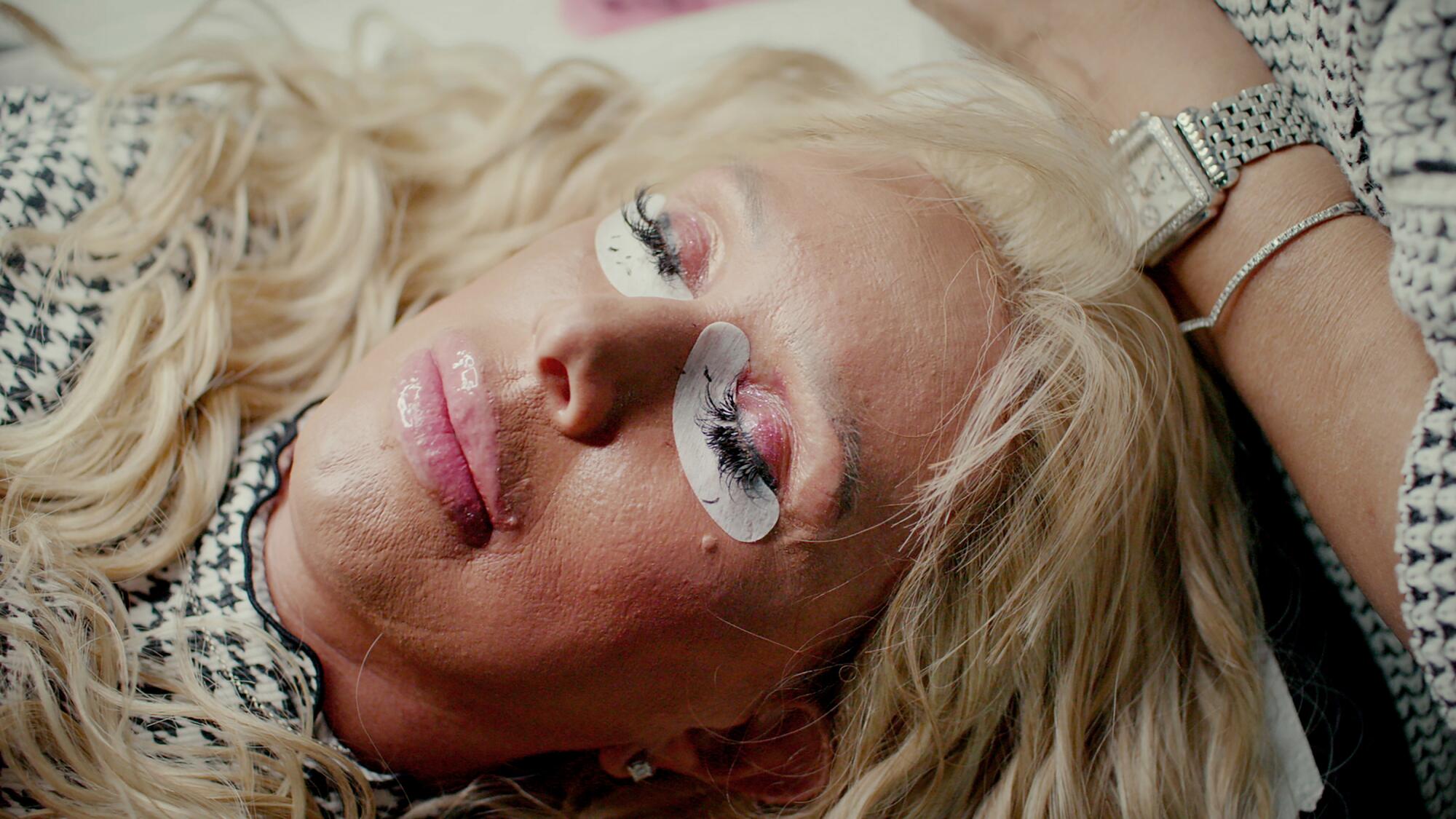
“Chimp Crazy’s” main subject, Tonia Haddix.
Advertisement
(HBO)
Goode admits he doesn’t know how he identifies: Journalist? “I don’t think so.” Animal rights activist? “No. I’m more of an animal welfare guy.” He wasn’t even a filmmaker before “Tiger King.”
Goode does not necessarily feel obligated to follow the educational or ethical guidelines by which conservationists and journalists abide. Without these “indoctrinated boundaries,” as he calls them, he has the freedom to find — or, in the case of “Chimp Crazy,” provoke — dramatic on-screen conflicts and satisfying resolutions that traditional documentarians might not. Still, Goode’s own discomfort with the tactics he employed against Haddix points to the pitfalls of this approach. He may not characterize himself as an activist, but his work as a filmmaker originated with his desire to protect exotic animals — and any viewer of “Chimp Crazy” or “Tiger King” who isn’t aware of that background is liable to feel unmoored.
With its cast of outlandish characters and a well-timed premiere date — it launched on Netflix in March 2020, right when COVID-19 lockdowns forced everyone indoors — “Tiger King,” a seven-episode exploration of the world of private tiger ownership, became one of the wildest successes of the streaming age. It made subject Joe Exotic, an eccentric felon with an affinity for mullets, tattooed eyeliner and big cats, into a household name. It propelled Carole Baskin, Joe’s archnemesis, onto “Dancing With the Stars.” And in 2022, the Big Cat Public Safety Act, which makes it illegal for private citizens to purchase animals like lions, tigers and leopards, was finally signed into law by President Biden after a decade of advocacy by animal rights groups.
Advertisement
Goode is not a big-cat aficionado himself, but he’s been drawn to reptiles since he was a boy. Growing up in Sonoma in Northern California, he and his four siblings roamed the family’s land, playing with spiders and snakes. It was the gift he received on his 6th birthday that most captured his attention, though: a Greek tortoise, whose shell would go on to become the logo for the Turtle Conservancy he opened in Ojai in 2005.
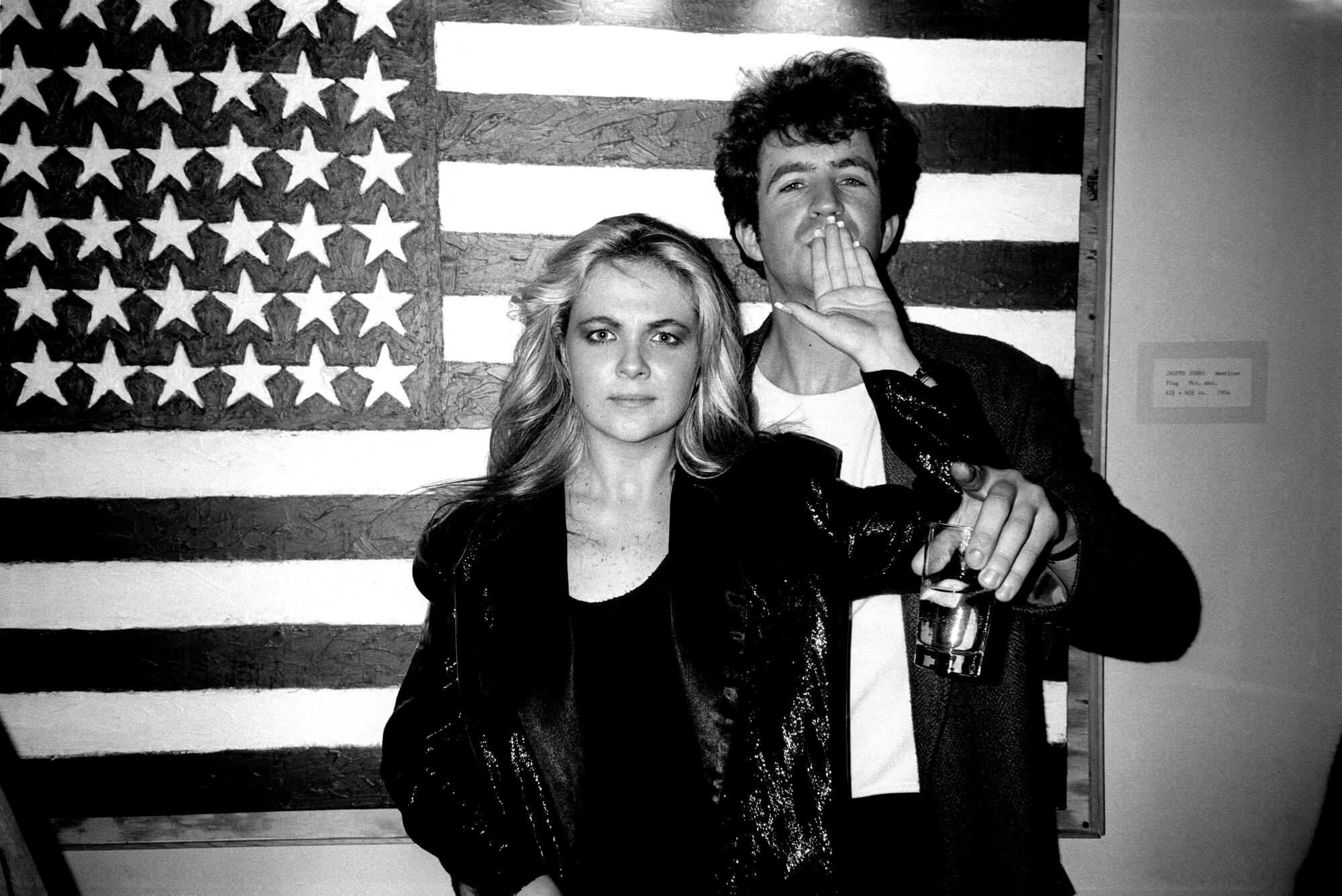
In his 20s, Goode was a nightlife fixture in New York City, co-founding Area, the 1980s club that featured art installments and merchandise from the likes of Keith Haring, Andy Warhol and Jean-Michel Basquiat. He would go on to launch such establishments as the Waverly Inn, the Bowery Hotel and the Jane Hotel. He palled around with Madonna, dated Naomi Campbell and directed a couple of Nine Inch Nails videos — one of which, “Pinion,” was so racy that MTV wouldn’t play the full thing on air.
Goode at his club Area with Cornelia Guest in 1985.
(Patrick McMullan / Getty Images)
It was during this era that Maurice Rodrigues, then a part-time zookeeper at the Bronx Zoo, first encountered Goode. When the fish tank broke at Goode’s now-defunct restaurant the Park, Rodrigues was called in for a repair. Afterward, Goode invited him to dinner there.
Advertisement
“I’m in my early 30s, just this little Jersey boy, and we’re sitting at the best table in the place surrounded by actual models,” Rodrigues remembers. “But Eric and I started talking about turtles so much that we completely ignored these beautiful women. Finally, they got frustrated and said they were leaving. And Eric’s like, ‘OK, bye!’”
Bonded by their love of chelonians — turtles, terrapins and tortoises — the two men began traveling the world together to research the reptiles. But they found the Turtle Survival Alliance conferences they attended to be drab. Instead of listening to boring lectures regurgitating scientific papers they’d already read, why not present video footage?
“Our aim was to try to buy animals from poachers and catch them on camera,” says Rodrigues. “We got undercover cameras and found a pair of eyeglasses that had a spy camera in them. I thought we were going to maybe get killed.”
Then, in 2009, “The Cove” came out. The documentary, in which a team set out to secretly capture a bloody Japanese dolphin slaughter, was named the best of the year at the Academy Awards. “That’s when Eric said, ‘Let’s not do these little amateur films anymore,’” says Rodrigues. “‘Let’s do something for a global audience that we can pitch to anyone, and if it’s successful, maybe we can raise money for conservation.’”
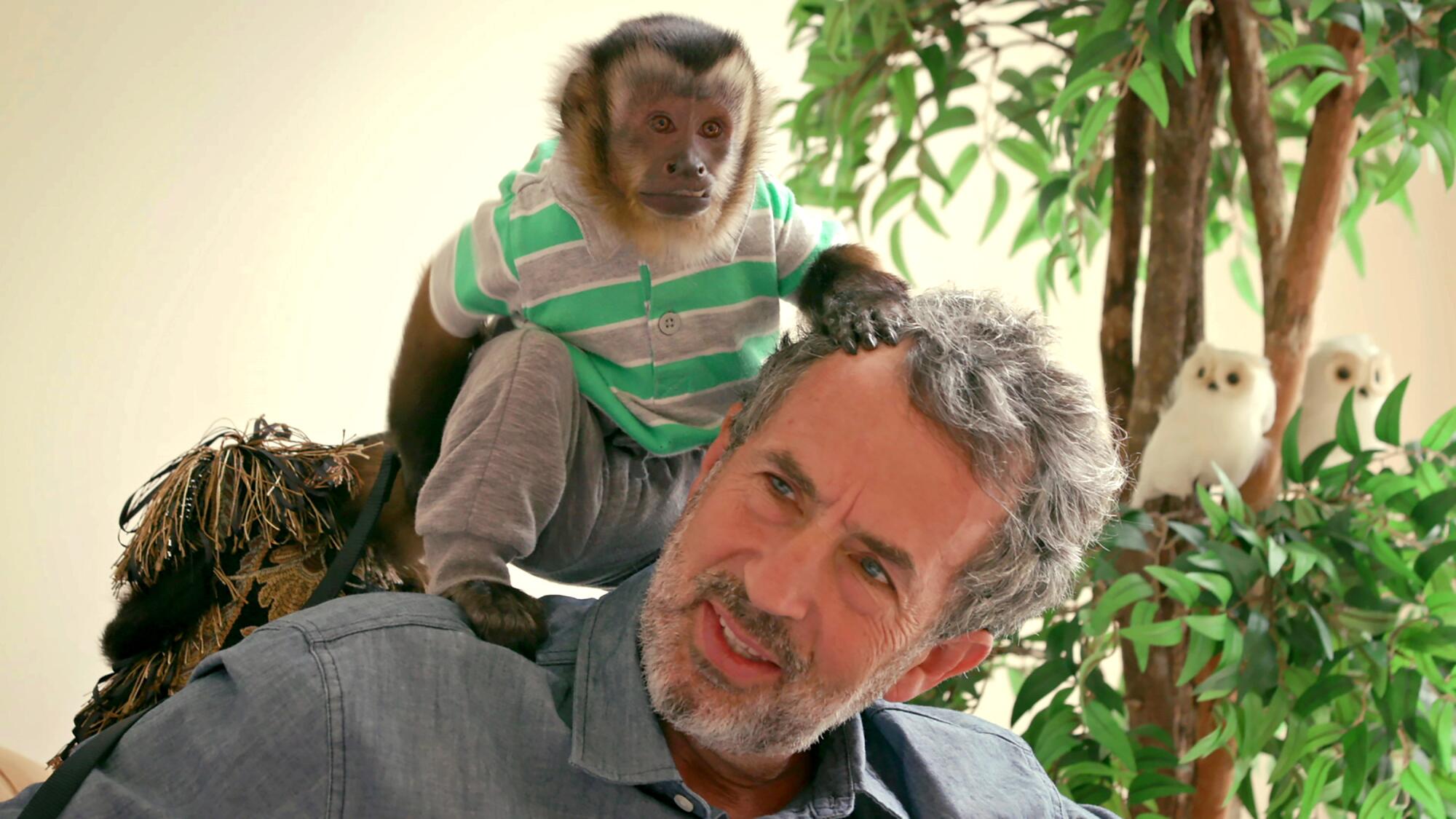
Goode during the filming of “Chimp Crazy.”
(HBO)
Advertisement
Using his own money, Goode began bringing a small professional production crew along on his travels with the aim of making a project about the extinction crisis. CNN got wind of the footage and committed to shooting a pilot for a TV series. The network ultimately passed on the show in 2019, but after “Tiger King,” Goode started to revisit some of the topics he’d been interested in for his next project.
“We were looking at bushmeat markets in Southeast Asia, female trophy hunters, butterfly collectors,” said Jeremy McBride, Goode’s producing partner. “We wanted to explore this broader theme of individuals’ relationships with exotic animals.”
That’s when things started heating up at the Missouri Primate Foundation. The facility’s owner, Connie Casey, bred chimpanzees that starred in movies, appeared on Hallmark greeting cards and appeared at children’s birthday parties — including a chimp named Travis, whom she sold for $50,000 when he was an infant, and who went on to attack a Connecticut woman named Charla Nash in 2009, ripping out her eyes, nose, lips and nine fingers.
After receiving a dozen citations from the U.S. Department of Agriculture, Casey was sued in 2017 by People for the Ethical Treatment of Animals, which claimed she had violated the Endangered Species Act. That’s when Haddix, trying to purchase a chimp, learned about Casey’s struggles and agreed to take legal ownership of the animals in the hopes of helping her new friend evade trouble.
Advertisement
But PETA did not relent. In 2020, the organization negotiated an agreement with Haddix that stipulated she could keep some chimps on the Missouri property if she renovated and expanded their facilities.
It was in the midst of this legal back-and-forth, in June 2021, when Haddix received a phone call from Dwayne Cunningham.
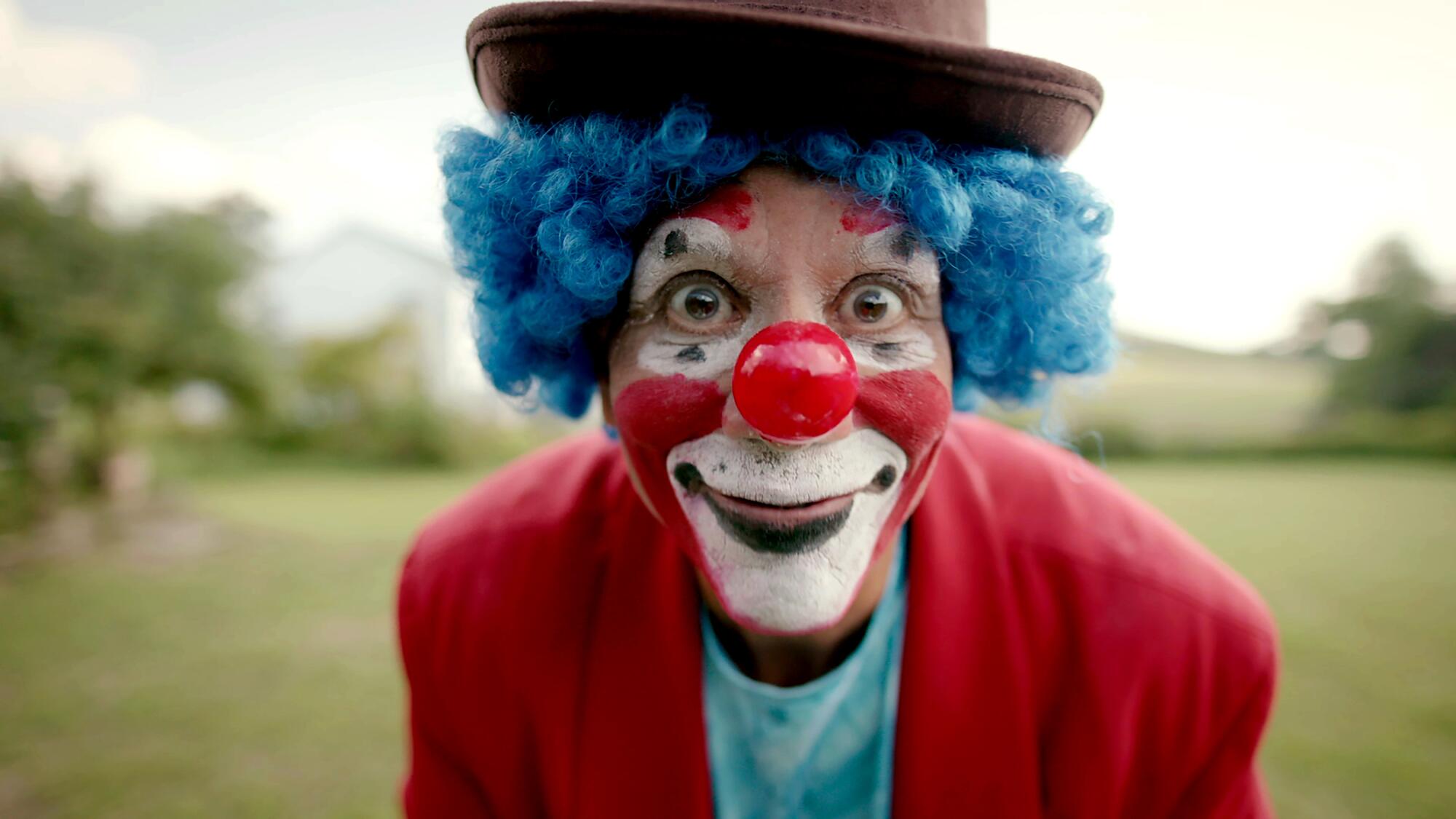
“Don’t ever say anything to me that you don’t want the whole world to know,” Dwayne Cunningham, “proxy director” and a former Barnum & Bailey clown, says he told Haddix. “And Tonia being Tonia, she just kept talking.”
(HBO)
Goode brought in the former Barnum & Bailey circus clown, who was sentenced to 14 months in federal prison in 1999 for trafficking tortoises and endangered iguanas, to be his liaison to the reclusive Casey, who hadn’t granted an interview to anyone since the journalist Peter Laufer for his 2010 book, “Forbidden Creatures.” If she was going to talk to anyone, Goode surmised, it would more likely be a guy whose “livelihood was also shut down because of animal rights groups” than the guy who made “Tiger King.”
Advertisement
Cunningham was open to the assignment because, as an animal lover, he wanted to see with his own eyes if the chimps were truly being mistreated. Likewise, Goode couldn’t forget what Laufer — a friend who is also on the advisory board of his Turtle Conservancy — told him about his time in Missouri.
“Peter described it as being so horrific — that he’d done prison interviews and been in civil wars, and nothing prepared him for it,” says Goode. “What made me feel like it was worth it, morally and ethically, was the knowledge I had about what was going on inside that house. I thought: ‘You know what? The end justifies the means, in this case.’”
The plan worked — sort of. Though Casey never agreed to an interview, Cunningham did win over Haddix. She later told Rolling Stone that she agreed to be part of the project because Cunningham was “a big animal person” who “would even come out early just so he can help bottle-feed some of our baby hoofstock.”
With her collection of wigs, eyelash extensions and spray-tanned body, the 54-year-old made for a visually intriguing subject. Plus, she was forthcoming, admitting to the cameras that she cared more about Tonka than her own human son.
Haddix’s use of eyelash extensions, lip filler and other cosmetics are a key part of her depiction in the docuseries.
(HBO)
Advertisement
Just days after the film crew arrived in Missouri, a judge ruled that all seven of the chimps who lived there would be sent to a Florida ape sanctuary because Haddix had not renovated the habitat to the standards previously agreed upon with PETA.
But when local sheriff’s deputies and the U.S. Marshals Service arrived at the Missouri property to seize the seven chimps on July 28, 2021, they found only six animals. Haddix told them the missing primate, Tonka, had died on May 30 from heart failure.
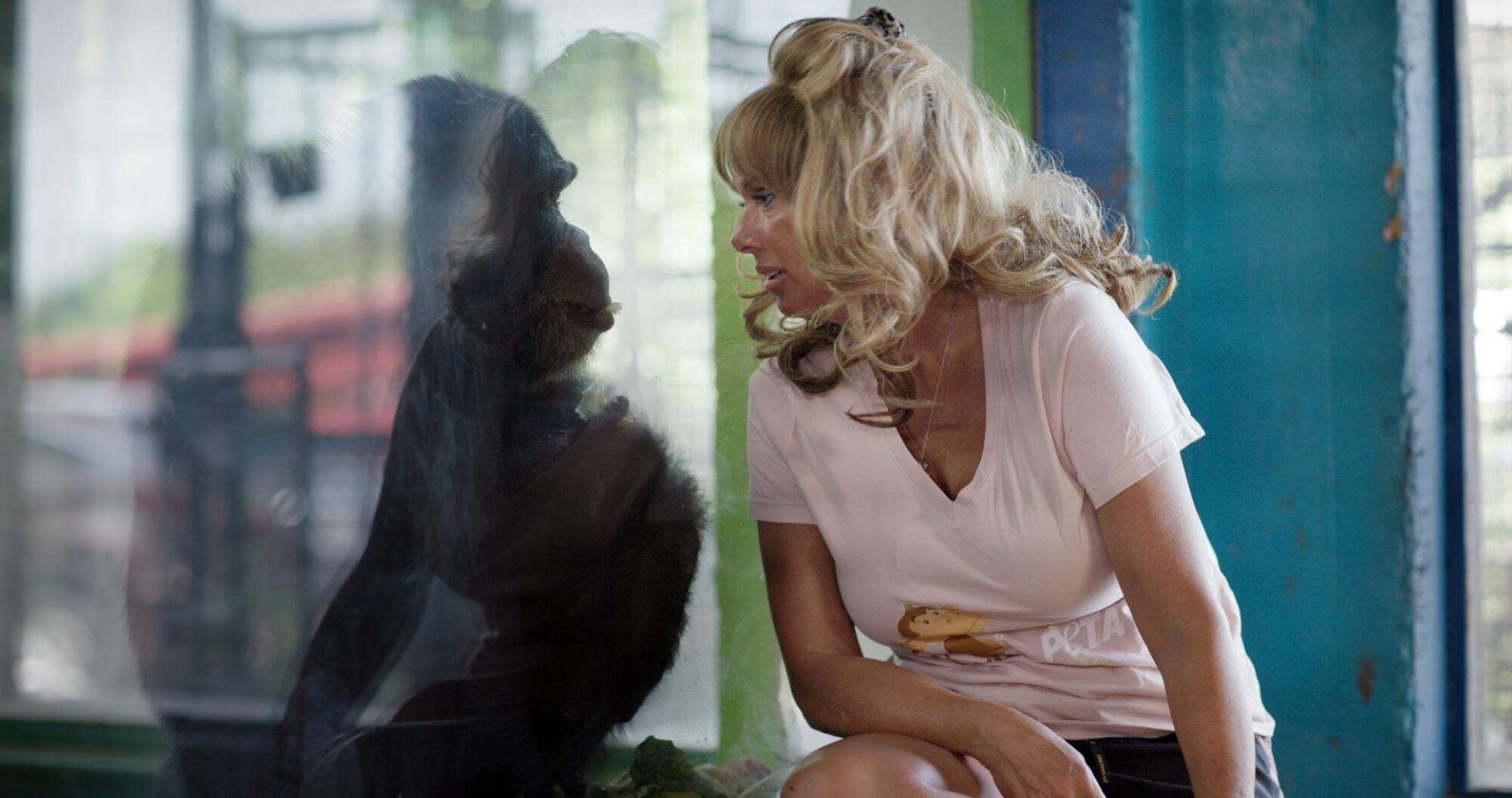
As “Chimp Crazy” reveals, however, Haddix had sneaked her most beloved chimp to a friend’s house in Ohio. From there, she moved Tonka to her home near the Lake of the Ozarks, where she had outfitted her basement with a cage.
Almost immediately after kidnapping Tonka, Haddix let the documentary crew in on her secret. But she still did not know that Goode was behind the project — something he was increasingly “not fully comfortable with,” he acknowledges. “I don’t want to be that kind of person. I just kept thinking, ‘When is the right time to tell her that this is me?’ I always kind of thought it could have been sooner.”
Advertisement
The crew, meanwhile, was growing concerned. Haddix was in the dark, and now they had unwittingly become accessories to a crime. Alan Cumming, who starred with Tonka in the 1997 film “Buddy,” teamed up with PETA to offer a $20,000 reward for information about the chimp’s whereabouts. Cunningham, who is referred to as a “proxy director” in the series, says he and some camerapeople raised these issues with their bosses.
“I’m sure it was hard for the crew to have to understand that maybe there’s a greater good in not acting so quickly,” Goode says. “It was a very unsettling period. I was talking to my primatologist friends and saying, ‘If I don’t do something, is this chimp going to be OK?’”
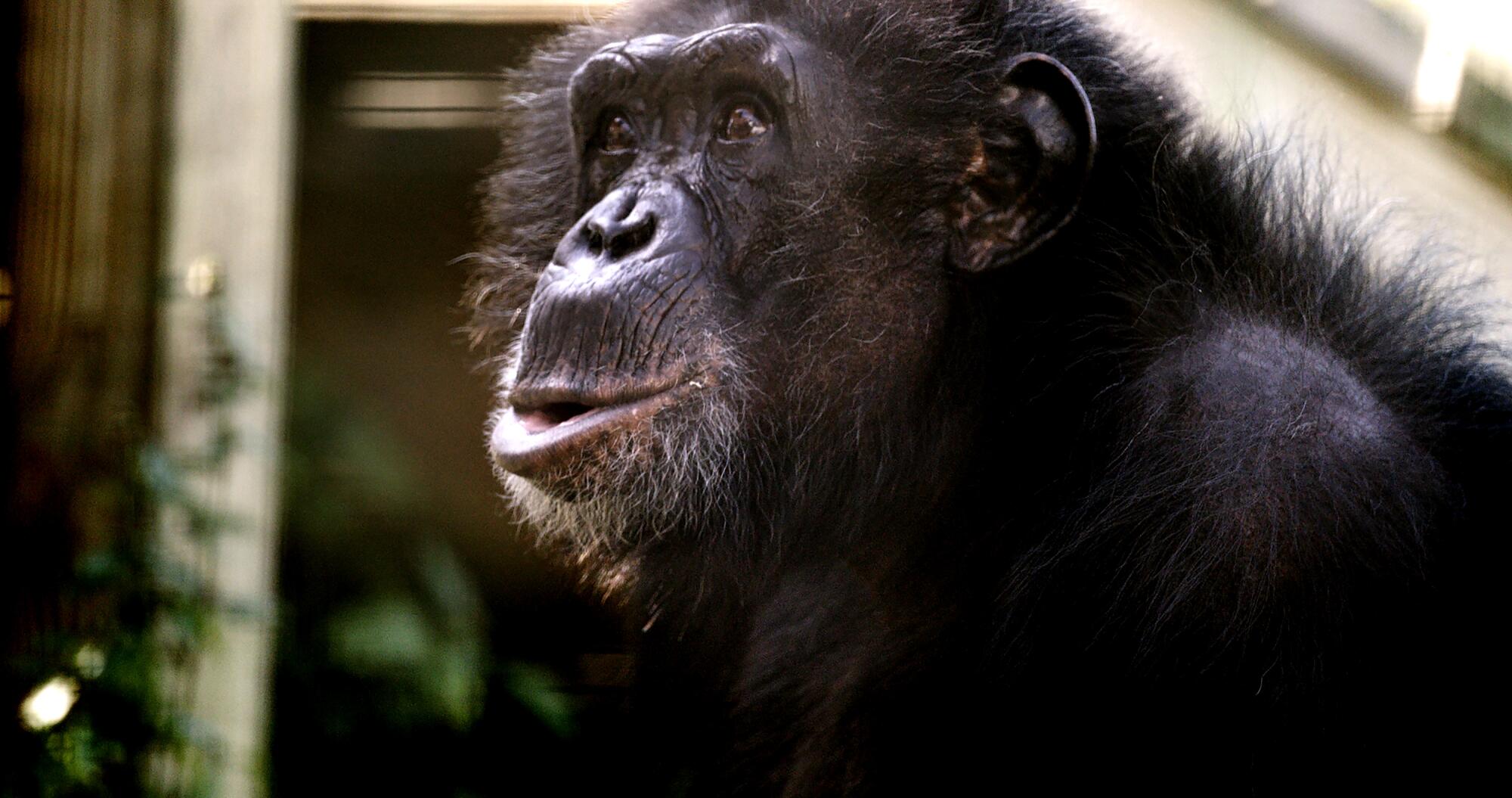
Haddix with Tonka the chimp.
(HBO)
Goode shared video of Tonka from the basement with the scientists, who attempted to identify physical tics that indicate mental distress. Cunningham shared his own observations of the chimp with Goode: Tonka was clean. He wasn’t having anxiety attacks. Yes, Tonia occasionally fed him Happy Meals or Powerade, but “he was always loved,” Cunningham says.
Advertisement
In May 2022, Haddix confided to Cunningham that she planned to euthanize the chimp; she said the animal’s veterinarian told her Tonka was so unwell it was cruel to keep him alive. Cunningham notified Goode, who decided it was finally time to tell PETA where Tonka was.
The producers called PETA on May 30, 2022, and requested an in-person meeting. The next day, they met with the organization’s lawyers. On June 1, PETA filed an emergency motion to remove Tonka from Haddix’s care.
“We would have wanted to know the moment the filmmakers found out that Tonka was in Tonia’s basement,” says Brittany Peet, the PETA Foundation’s general counsel for captive animal law enforcement. “I’m incredibly grateful that they did ultimately loop us in so we were able to get Tonka out. I don’t think that every documentary filmmaker would have made the choice that they did, called us and risked their project to save a life.”
In the days leading up to Tonka’s removal on June 5, 2022, Haddix was still in the dark about who had revealed her secret. She confessed as much to Cunningham, who wore a hidden camera when he went to talk to her during that period.
“I didn’t feel guilty,” Cunningham insists. “I always said to Tonia, ‘Don’t ever say anything to me that you don’t want the whole world to know.’ And Tonia being Tonia, she just kept talking. So I didn’t feel guilty; I felt like I was doing my job. But I felt bad for a friend, because I could see that the love story was spiraling out of control.”
Advertisement
When he learned Tonka was hidden in Haddix’s basement, Goode says he wondered, “If I don’t do something, is this chimp going to be OK?”
(HBO)
When he eventually met Haddix, Goode began by telling her that he related to her. “There are certain animals,” he says in the series, “that if people took them away from me, I would be very, very upset.”
He was referring to the chelonians he keeps on his Ojai property, where approximately 40 endangered species of turtles or tortoises live. While he says he does like being around them for “selfish reasons,” the animals reside in Southern California because they’re either extinct in the wild or so endangered that poachers pose a critical risk to the remaining population. “I don’t want to say I’m, like, trying to create a loophole for why I can keep a tortoise and someone can’t keep a chimp,” he says. “It would certainly be better to keep our animals in the wild, just because the environmental conditions are very hard to replicate.”
Goode has been a controversial figure in conservation circles. Craig Stanford, a human evolutionary biologist who has led USC’s Jane Goodall Research Center, says his colleagues often question his association with someone who directed something “really trashy” like “Tiger King.” (He is on the Turtle Conservancy’s Board of Directors and sat for a “Tiger King” interview that was eventually cut.)
Advertisement
“How dare you capitalize on these gorgeous, endangered animals to make millions?” Stanford says, describing his peers’ criticism. “I say, ‘Well, OK, yes, but he did shine a light, and it did lead to stricter regulations. And he did donate some of the proceeds from it to a very good cause.’” (Goode says he and two other “Tiger King” partners donated $1 million of the series’ proceeds to a program for tigers in the wild in India.)
Such judgments are enough to make Goode wish one of his other, non-animal-centric projects — such as a documentary he recently shot about his late mother — was being released before “Chimp Crazy.” “That way, people wouldn’t think I’m just using this model of ‘Tiger King’ and that’s all I can do,” he says.
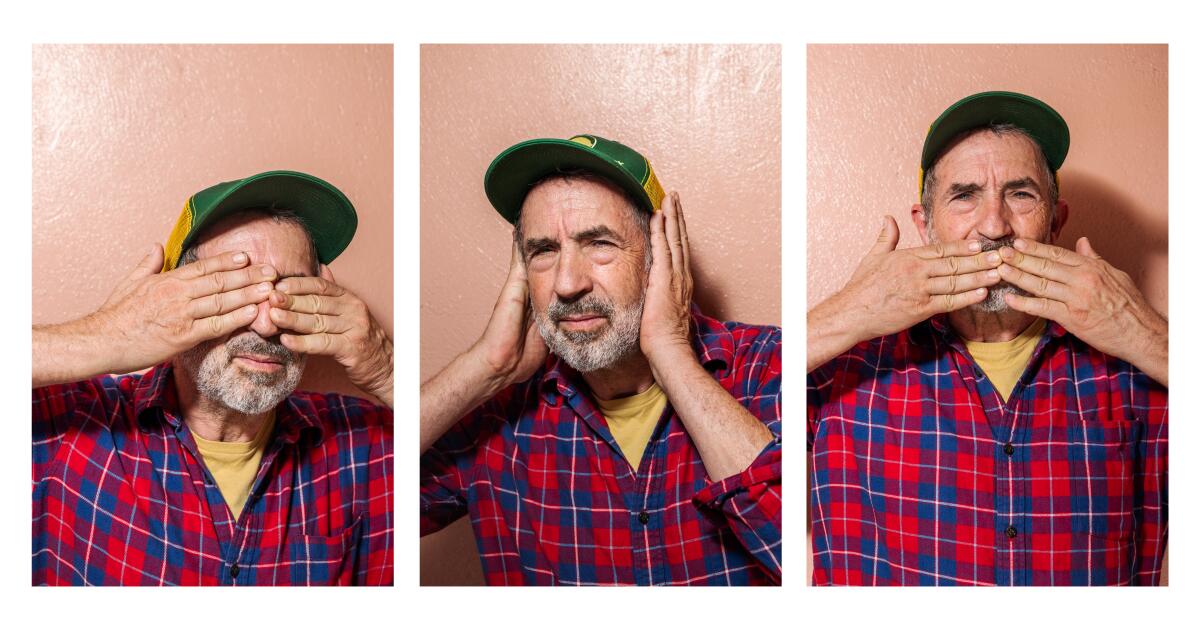
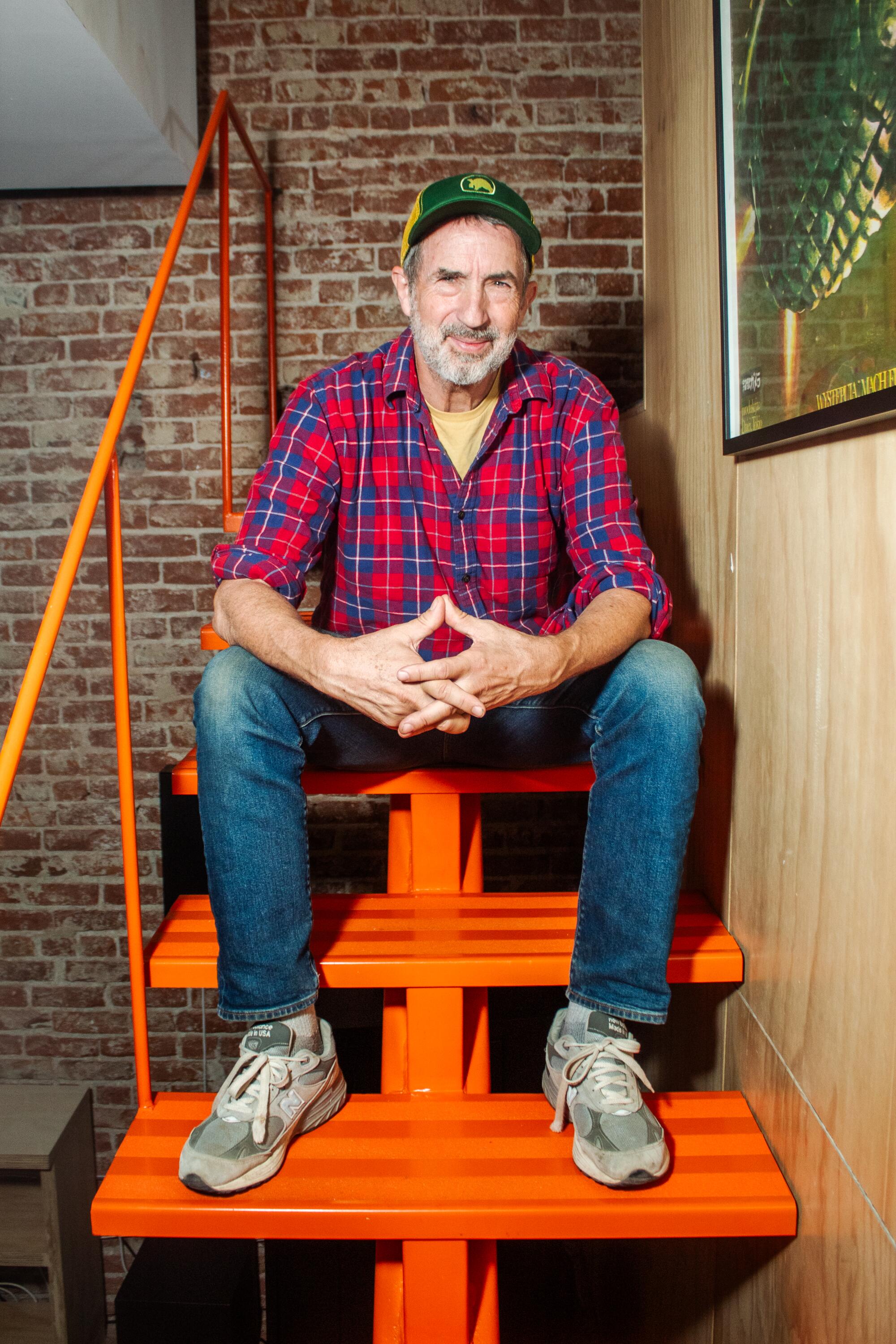
Goode says he hopes “Chimp Crazy” doesn’t leave audiences thinking he’s “using this model of ‘Tiger King’ and that’s all [he] can do.”
(Emil Ravelo / For The Times)
Haddix, he says, has been having a difficult time with the film’s release. A few weeks ago, Cunningham traveled to St. Louis to screen all four episodes for her. After she watched the first one, which features the most video of her with Tonka, he says she cried in his arms. Then there was silence. “I told her she had to get up off the couch because we had to move it back,” Cunningham says. “She started laughing, and that kind of broke the ice a little bit.”
Advertisement
They’ve continued to exchange text messages, as have Haddix and Goode. The director says Haddix requested a number of “Chimp Crazy” posters be sent to her so she could sign and sell them. In public, however, she seems to be presenting a different story. And that upsets Goode.
“She said that I offered her money so she would continue to film with me, or guaranteed she could go see Tonka — both of which are absolutely, categorically not true,” he says, noting that the production did pay her for use of some archival footage.
The way Goode sees it, Haddix would have been caught eventually, with or without him. By her own admission, she told friends, family and neighbors that Tonka was in her basement.
“So yes, we are the bad guys — we turned her in. But I think that was inevitable,” he says. “I just try to use the moral compass that my mother gave me in life. I don’t know where that falls, but there definitely is one.”
Olivia Wilde’s new comedy drama is “the kind of smart, well-crafted film for adults we are constantly complaining we don’t get enough of,” said Benjamin Lee in The Guardian. Wilde, in her third directorial offering, co-stars as a stay-at-home-mom who, to the consternation of her failed musician husband, Joe, has invited the freewheeling couple upstairs to dinner. With Seth Rogen, Edward Norton, and Penelope Cruz filling out the cast, the charged get-together soon turns into “a night that Edward Albee would approve of,” except that this evening hits peak tension when the guests extend a surprise invitation to join them for a night of group sex.
The Week
Escape your echo chamber. Get the facts behind the news, plus analysis from multiple perspectives.
SUBSCRIBE & SAVE
Advertisement
Sign up for The Week’s Free Newsletters
From our morning news briefing to a weekly Good News Newsletter, get the best of The Week delivered directly to your inbox.
From our morning news briefing to a weekly Good News Newsletter, get the best of The Week delivered directly to your inbox.
Latest Videos From
Perhaps because it’s an adaptation of a 2016 Spanish play that has spawned overseas film versions, The Invite is “an American film that feels vaguely international,” said Matt Zoller Seitz in RogerEbert.com. Though the first half is overdirected to the point of being “irritating,” the showy camerawork fades away as the actors take over, creating a second half that’s “the best work Wilde has yet done as a director.” While all four actors excel, “it’s Rogen who’s the revelation,” said Alissa Wilkinson in The New York Times. “His line readings fill out Joe’s backstory brilliantly, a guy who was always used to being rejected, somehow landed a girl way out of his league 20 years ago, and now is miserable that she doesn’t really want him anymore.” In this movie, relationships change because people change. “To me, that feels true.”
‘Minions & Monsters’
Directed by Pierre Coffin (PG)
★★★
Advertisement
Though they’re “one of the more enduring creations of 21st-century cinema,” the Minions “still get no respect,” said Scott Roxborough in The Hollywood Reporter. Maybe, though, this seventh film in the Despicable Me franchise will finally end a 16-year awards shutout, because it’s a love letter to cinema that argues, between its mile-a-minute gags, that the highest-grossing animated franchise of all time deserves a place in Hollywood’s canon. Minions & Monsters is “very much a film of two halves,” said Drew Taylor in The Wrap. In the first, a quick history tour revisits how bad Minions have been in their quest to find villains to serve, until one group lands in 1920s Hollywood and stumbles into stardom. A flurry of homages to Buster Keaton and other legends follows, until talkies arrive and put the gibberish-spouting Minions out of work.
Join 350,000+ subscribers and keep yourself informed with a selection of
The Week’s most interesting, enlightening and entertaining stories – plus daily puzzles.
The second half offers more-conventional Minion action, yet it “builds to an open-hearted tribute to the power of the communal moviegoing experience.” When two of the Minions start work on creating a monster movie using real monsters, this outing “does rather lose momentum,” said Guy Lodge in Variety. But as the film speeds toward a standard save-the-world climax, the latest Minions serves up the usual mayhem “with gusto and a delirious cartoon grin.” It’s “a clear peak for the series: a Minions movie with an actual idea at its core beyond general cheerful chaos.”
Tom Sandoval’s former girlfriend Victoria Lee Robinson has filed a dueling restraining order against the reality TV star.
Reality TV star Tom Sandoval’s former girlfriend Victoria Lee Robinson has filed a dueling restraining order after she was arrested in June following an altercation that involved her father being pushed into a lit fire pit.
In the petition, filed Thursday in a Los Angeles court, Robinson claims that over the course of the former couple’s 2.5-year relationship, the former “Vanderpump Rules” star “routinely physically and verbally abused” her.
According to court documents reviewed by The Times, the model alleges that Sandoval shoved her down a flight of stairs in his home, pushed her to the ground at a hotel in Nashville, and attacked her and her father on June 3.
On Monday, a Los Angeles Superior Court judge denied Victoria Robinson’s request for the temporary domestic violence restraining order because Sandoval’s existing temporary restraining order requires a hearing (which was set for July 16) before Robinson’s could be granted.
Advertisement
Representatives for Sandoval told The Times in a statement, “It’s no surprise that Victoria’s request for a restraining order was immediately denied.”
Sandoval, known for the Scandoval cheating scandal that erupted on the hit Bravo series “Vanderpump Rules” in 2023, filed a temporary restraining order against Robinson and her father J. Will Robinson on June 25. In Sandoval’s petition, he claimed that since the two became a couple in February 2024, Victoria Robinson has been violent and attacked him physically.
Sandoval was granted a temporary restraining order which required Robinson and her father to vacate the Los Angeles rental the three had shared. According to Sandoval, he’d left the house and stayed in hotels and with friends following the June 3 incident.
“This is my home. We are both on the lease, but I paid the first month’s rent and deposit, surprised him with the keys and virtually every item in it is mine,” Victoria Robinson said in a statement shared with The Times. “I have filed my own legal action because I have my own account of what happened and it’s very different from what has been said publicly.”
Robinson said that while her father has been under media scrutiny, he was trying to protect her.
Advertisement
“My relationship with Tom has already controlled the past two years of my life,” she said. “I cannot allow a false narrative to control my future.”
The altercation involving Sandoval, Robinson and her father happened in the early morning hours after the couple returned home from a night out at a bar, according to both accounts.
In a video of the June 3 incident, obtained by TMZ, Robinson and her father are seen sitting next to a lit fire pit on the patio when Sandoval and the elder Robinson begin arguing. Sandoval is heard yelling at Will Robinson before he asks his girlfriend if she is recording and approaches her. Will Robinson stands up and wraps his arms around Sandoval, seemingly to get him to back away from Victoria Robinson. Sandoval turns and pushes Will Robinson, who falls backward into the lit fire pit.
After Will Robinson gets back up, he rushes after Sandoval into the home while Victoria Robinson screams for the men to stop.
According to Victoria Robinson’s petition, when Sandoval noticed she was recording his exchange with her father, he twisted her arm while trying to gain control of her phone.
Advertisement
Will Robinson allegedly suffered a thumb fracture and elbow and back injuries.
Victoria Robinson was arrested after police responded on June 3 and released on bond the same day. On June 4, Sandoval returned to their L.A. house to collect his things and Victoria Robinson called police, who escorted Sandoval from the home, according to the filing.
The Los Angeles Police Department declined to comment on the reason for Robinson’s arrest.
Will Robinson told TMZ last month, “The DA did not file the case for a reason. I lifted Tom off of my daughter because he was overpowering and twisting her arm and trying to take her phone aggressively after yelling at us in a very aggressive and threatening manner.”
“This is my daughter’s home and we just want Tom as far away from us as possible and to keep his lies and drunken abuse away,” Robinson said.
Advertisement
This isn’t the first time their fights have turned physical, according to both accounts. Victoria Robinson‘s petition claims that in August 2025, Sandoval shoved her down their hardwood stairs and she suffered knee injuries. She said she reported the incident to police but ultimately recanted her statements to protect Sandoval from being arrested. “In hindsight, I deeply regret this decision,” reads the suit.
Weeks before the fire pit incident, Robinson alleges that during a trip to Nashville to visit her grandfather who was in hospice care and has since died, Sandoval pushed her to the floor of their hotel and locked her out of their shared room.
“During their 2½-year relationship, Tom has made it clear he never physically harmed Victoria,” representatives for Sandoval said. “Instead, he lived in fear of her repeated physical attacks and unpredictable behavior. He will show he was the victim of ongoing physical and emotional abuse, and has substantial evidence documenting what he endured, which will be presented through the legal process.”
It’s summer blockbuster movie season and there have been a lot of new releases from many of the biggest studios and directors. Some of the biggest titles include “Supergirl”, “Disclosure Day”, and “Toy Story 5.”
GBH’s Morning Edition guest host Tori Bedford spoke with GBH correspondent and film critic Sarah G. Vincent, along with GBH’s Callie Crossley, an avid cinephile and host of Under the Radar with Callie Crossley, for their take on some of the season’s biggest releases. What follows is a lightly edited transcript.
SUPERGIRL
Tori Bedford: So one of the biggest movies to hit theaters lately has been the next installment in James Gunn’s new DC Universe, “Supergirl”, starring Millie Alcock. Sarah, let’s start with you. What did you think?
Sarah G. Vincent: I actually loved it. It’s the first summer movie where I didn’t have any disclaimers of “I liked it but…” I was very invested in the storyline because if someone hurt my fluffy baby, I would run around the universe and try to save him. Also, I like that it was like a superhero movie with a woman where she didn’t become a surrogate mother, where she wasn’t sexualized, where she was dealing with real emotion. The real emotion really hit me. I love the backstory. It was gorgeous. I understand that it’s a lot of jokey jokes.
Advertisement
Bedford: What do you mean jokey jokes?
Vincent: On the present day storyline where she’s helping Ruthye, they do try to keep it light because they’re dealing with a lot of heavy issues, and so there are a lot of like flippant jokes and one-liners and everything. And I didn’t mind that because this is still a blockbuster and I think that a blockbuster does need to have some like mass appeal. I’m not going for a Bergman film, right?
Bedford: Yeah, it’s summer. Like, chill out.
Vincent: Right.
Bedford: What’d you think, Callie?
Advertisement
Callie Crossley: I am the “but” — I liked it except some of the themes were so heavy, even though presented in an entertaining way. So, don’t take me wrong. You should see it. It’s a popcorn movie. But I was like, “OK…”
Bedford: You wanted more jokey jokes.
Crossley: Well, it was just to me, I looked at it and I thought, “Epstein Files” because we have a plot of young girls being trafficked to an island of crazy men. So that’s what came to me. But then I thought, I guess I’m just— I live in news, so this is what I would think of. But I can understand in the moment why it was there, but I’m not sure it resolved itself for me in the best way possible that sort of made it maybe not so uncomfortable about it. Now, she is great, Millie Alcock as Supergirl, and I loved her backstory. I really enjoyed that part. And there are some cameos from Superman. So you really get to see the difference between the two of them and why there is a difference, because now you know the backstory.
Bedford: I love their relationship, where he’s like, “This is why Krypto is not well-behaved” and she’s all disorganized.
DISCLOSURE DAY
Advertisement
Bedford: All right, next up — I can’t wait to talk about this. Steven Spielberg is back with an alien mystery thriller, “Disclosure Day.” This man is obsessed with aliens.
Callie, let’s start with you. What’d you think?
Crossley: I went because it’s Steven Spielberg, and I wanted everything. So again, this is a popcorn movie, and out of the gate, you are really on a ride, and you’re like, “What’s happening?” So, I would say the first part of the movie, you’re just caught up in trying to understand where he’s going with it, and it’s a lot of action, and it’s Spielberg-esque in that way. And that John Williams score is fabulous. What I had a problem with was the end of it. I’m going to use the word unimaginative because I am not giving away the plot, so no spoilers here, It’s unimaginative in how he resolves it because I think it’s old-fashioned in both how he presents some of the folk, and also in the methodology of how he wants to get the word out. So that sort of threw me off and I’m thinking, “That’s not a word I use with Steven Spielberg. I should not be using unimaginative.” I still say you should see it, but those are my thoughts.
Vincent: At 2.5 hours, I would say, I warned you. So as an action movie where people are being chased, like the bad guys are chasing the good guys, it’s a great movie. As a movie where it takes an alternate sort of sci-fi approach to the idea of possession and what it would look like, terrific. Actually, a really provocative, wonderful idea. Emily Blunt does a wonderful job.
Crossley: Fabulous.
Advertisement
Bedford: She’s great in the movie.
Vincent: I think she owns the movie, and if the movie was just about her character, I would probably give it like closer to a 90 than where I landed, which was probably in the 70s.
Bedford: I was just going to say … I got out of this, and I thought, “Am I stupid? Or was this really dumb?” It was fun though.
Crossley: This is not a Spielberg movie you’re going to remember, I say.
Vincent: No, yeah, you’re not.
Advertisement
Crossley: And there’s a lot of reviewers saying it’s fabulous. And I’m like, were we at the same place?
Bedford: Am I dumb?
Crossley: But still, it’s a popcorn movie. Got some really good stuff in there you could enjoy.
TOY STORY 5
Bedford: All right, finally: Woody, Buzz, and all their friends are back again for “Toy Story 5,” and this one is taking on big tech as a teaching tablet enters the toy box. Sarah, what’d you think?
Advertisement
Vincent: I loved it. It’s my favorite Toy Story. And I would say that what I loved about this movie is when you go to movies, usually technology is the bad guy, period. And this movie is much more nuanced. And no one is really the bad guy. It presents the pros and cons of everything. And it’s about authentic relationships and it shows how in the past, a relationship without technology was fraught, in retrospect, with problems for Jesse, with the trauma she endured by losing her person. Now in the present with their new human basically having this crisis of “how do I make friends?” So I think it shows the universal problem of how you make authentic relationships, and the technology is only showing how that problem persists. It embodies now, but it’s always been a problem.
Crossley: I think it’s brilliantly done in this way. It doesn’t demonize all the folks that usually get demonized. The tech gets demonized. Sometimes the parents get demonized. That did not happen at all. But for me, any story about friendship that’s told authentically is going to get me. And they know how to get you. It’s a really, really important story about finding your tribe, as Sarah said. Now, having said that, it’s still not my favorite. Toy Story 3 is my favorite. And I went back just to say, “Okay, let me just go look at the end of 3 again to see if I had the same response.”
Bedford: Oh, masochist, my God.
Crossley: Well, because I just wanted to see. I looked at my computer, watched only the end, and sobbed yet again.
Bedford: I know, that’s all I’ve got to say about this franchise. How much more crying do you want me to do?
Advertisement
Crossley: I misted up at the end of this. I did not sob, as I scared the children in 3 before in the theater. But this time I did mist up because really, they know how to get you. It’s so worth seeing.
GBH Daily
Your essential daily newsletter delivering trusted news, local insights, ways to connect, and can’t miss programs from Boston and beyond.