Politics
How would Robert F. Kennedy Jr. quitting affect the Harris-Trump race?

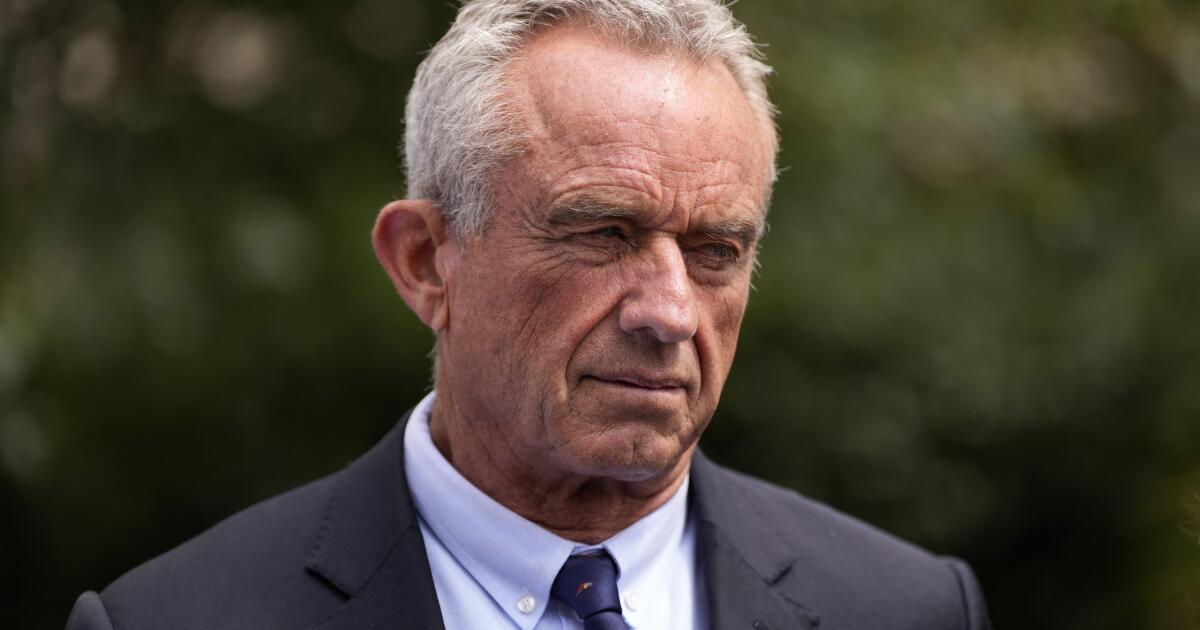
Robert F. Kennedy Jr. plans to hold a news conference Friday in Phoenix to announce his exit from the presidential race, according to multiple media outlets, which also predicted that the scion of America’s greatest Democratic political dynasty would throw his support behind the Republican nominee, former President Trump.
It’s unclear how Kennedy‘s exit would affect the presidential race. A Pew Research Center poll this month suggested that Vice President Kamala Harris has picked up would-be Kennedy supporters. It appeared that backing came in some measure from women and non-white voters who previously were leaning toward Kennedy.
But Trump allies say the Kennedy endorsement would be a victory. “Fox & Friends” host Brian Kilmeade said Friday morning that the Republican would surely pick up a critical 2 or 3 percentage points with Kennedy’s support. That would be enough, Kilmeade insisted, to swing the campaign back into the GOP’s favor.
Trump is campaigning in Arizona on Friday and posted on social media that he would have a “special guest” at an afternoon rally. On Thursday, Kennedy withdrew from the ballot in Arizona.
Kennedy, a 70-year-old Los Angeles resident, entered the race in April 2023, with a burst of media attention. He showed unusual strength in some early polls for a candidate with no experience in elected office. But his support flagged after Harris emerged last month as the Democrats apparent nominee.
Kennedy’s thoughts about leaving the race became public in recent days, when his vice presidential running mate, Nicole Shanahan, discussed those talks. She said Kennedy might accept a position in a Trump administration, in particular if he thought it could help combat what she called an epidemic of chronic disease.
The transition to Trump stalwart will be greated with skepticism in many circles, given Kennedy’s political DNA and his past description of the Republican as “unhinged” after Trump went on a social media tirade, accusing Kennedy of being a “Democrat plant” and “wasted protest vote”.
“When frightened men take to social media they risk descending into vitriol, which makes them sound unhinged,” Kennedy wrote on X in April. “President Trump’s rant against me is a barely coherent barrage of wild and inaccurate claims that should best be resolved in the American tradition of presidential debate.”
Kennedy’s presumed exit from the race comes 16 months after he stood before the media in Boston, scene of many political triumphs for previous generations of the Kennedy clan, which included his father, the New York senator and attorney general and his uncle, President John F. Kennedy.
The long-time environmental attorney initially ran as a Democrat. But by October 2023, Kennedy said that he would run as an independent, because party nominating rules made it too difficult to compete, particularly against an incumbent like President Biden.
Kennedy said his independent status would allow him to break the grip on power held by a virtual “uniparty” — the Democrats and Republicans — and that he would be in a better position to cut out-of-control government spending, to take on “Big Pharma” and other corporate interest and to invest more in reversing America’s epidemic of chronic illness.
Even after his shift to an independent campaIgn, and as he courted support from smaller political parties, polls showed Kennedy unable to move within reasonable striking distance of his big party rivals.
Kennedy argued that he should be allowed into the June debate between President Biden and Trump, but he could not persuade the other candidates or networks that he had earned a place on the stage.
Kennedy’s campaign also spent abundant time and money trying to qualify him for the ballot in all 50 states. He suffered a setback last week when a New York judge ruled he shouldn’t appear on the ballot because he listed a “sham” address on nominating petitions.
Thought he presented himself as a pragmatic problem solver, not beholden to big interests, Kennedy’s views on some issues — particularly vaccines — were extreme. A particularly problematic example: When he compared Biden’s vaccine policies to the Holocaust. He suggested that Jews, including Anne Frank, had more freedom under the Nazis than Americans living with COVID-19 mandates.
That drew rebukes from many Jewish groups and even a complaint from his wife, actor Cheryl Hines, who called the Frank reference “reprehensible and insensitive.” Kennedy apologized.
Though born into what some viewed as an American political “Camelot,” Kennedy struggled as a young man, particularly with his 14-year addiction to heroin. The candidate sought to use that ordeal to his advantage, saying that his 40 years in recovery made him uniquely qualified to bring new solutions to the nation’s addiction crisis.
But other aspects of his past, including his past relationships with women, became fodder for new criticism.
That included the regurgitation of a 2013 New York Post story, after the tabloid somehow acquired a journal that RFK Jr. allegedly kept in 2001. It included a log of 37 women that he had sex with when he was married to Mary Richardson Kennedy, the Post and other outlets reported.
(Kennedy’s wife had killed herself in the year prior to publication of the story, but she had reportedly found the journal at some point.)
Early last month, reports about the disturbing behavior resurfaced in a Vanity Fair profile, in which a former family babysitter described how Kennedy groped her when she was in her early 20s and taking care of Kennedy’s four children with Mary. Text messages revealed that the candidate apologized to the former babysitter after publication of the article, though he told reporters he recalled nothing about the alleged misconduct.
Then, in August, a New Yorker profile revealed an odd Kennedy prank. As a grown man, the man known – like his father — as Bobby, once retrieved a dead bear cub from a roadside and deposited the corpse in New York’s Central Park. The carcass provoked a mystery that consumed the city a decade ago.
Kennedy faulted both Biden and Trump, as he criss-crossed the country, trying to spark the kind of momentum his father did in the 1968 race for the White House. But he increasingly lashed out at Biden and the Democrats more, particularly infuriated by the challenges they lodged to his ballot petitions.
As recently as Wednesday, the candidate sent messages like a man still in the fray. One came via a video posted on social media, when he invoked Abraham Lincoln and said “we must realign ourselves with the founding spirit of our nation.”
On Thursday, Shanahan again nodded to the duo’s possible exit from the race. She seemed to relish the way some of her friends pleaded with her not to support Trump.
“My old Dem buddies have been flooding me with frantic calls, texts, and emails,” she wrote on the social media platform X. ”The message was clear: they’re terrified of the idea of our movement joining forces with Donald Trump. When I point out what the Democratic Party and their super PACs have done to sabotage our campaign, their response is always, ‘but Trump is worse.’ Here’s an idea: stop suing us. Let us debate.”
She then suggested, without providing evidence, that the Democrats somehow were “rigging the media and the polls” — the sort of accusations Trump has made many times in the past.
Trump gave no clear indication Thursday of how he might partner with Kennedy. Following Harris’ address to the Democratic convention, the former president went on Fox News for a phone interview.
“I’ve had a great relationship with him over the years. I respect him. He respects me,” Trump told Fox anchor Brett Baier. “I have no idea if he’s going to endorse me.”
He said the Friday appearance of both men in Arizona was a coincidence. “But it’s possible we will be meeting tomorrow,” Trump said.


NEWYou can now listen to Fox News articles!
“Two down and two to go” blared the new wanted poster targeting the two remaining fugitive sons of infamous Mexican cartel kingpin Joaquin “El Chapo” Guzman-Loera, who is serving life-plus-30-years in Colorado’s federal supermax prison.
On Monday, ICE posted a new wanted poster for two members of “Los Chapitos” — Ivan Archivaldo Guzman Salazar and Jesus Alfredo Guzman Salazar, two of El Chapo’s sons with his first wife, Alejandrina Maria Salazar-Hernandez.
After El Chapo’s final capture in 2016, control of the powerful Sinaloa Cartel shifted to Ismael “El Mayo” Zambada. Following Zambada’s arrest during the Biden administration, leadership passed to Guzman’s four sons.
MEXICAN SENATOR ACCUSES SHEINBAUM OF SHIELDING ‘NARCO-POLITICIANS’ AFTER US CARTEL INDICTMENT
Both the Trump administration in the U.S. and the Sheinbaum administration in Mexico have said they are focused on cracking down on cartel’s new leadership.
“Two down and two to go with $10 million reward,” the wanted poster read, with Xs over the faces of the already captured Joaquin Guzman Lopez and Ovidio Guzman Lopez.
The two captured Chapitos are reportedly cooperating with authorities and have not yet been sentenced, but Ivan and Jesus remain “armed and dangerous,” according to ICE.
ICE NABS ACCUSED MS-13 KILLER HIDING IN NORTHERN VIRGINIA SUBURB
El Chapo Guzman arrives in the United States after his capture in Mexico. (AP File)
The two fugitives are charged with conspiracy to distribute a controlled substance and operating a continuing criminal enterprise.
Two of Guzman’s four sons have already been captured through Operation Take Back America, an initiative seeking the “total elimination of cartels and transnational criminal organizations” in order to protect U.S. communities from violent crime.
U.S. Attorney for the Northern District of Illinois Andrew Boutros said in a recent statement that efforts to capture El Chapo’s sons are the latest steps “in our efforts to bring to justice drug lords and other dangerous criminals who poison the American public with illegal and harmful drugs and who otherwise engage in violence and corruption to carry out their and their enterprises’ wide-reaching criminal activities.”
US MILITARY KILLS TWO ALLEGED NARCO-TERRORISTS IN LATEST EASTERN PACIFIC STRIKE ON DRUG-TRAFFICKING VESSEL
Joaquin “Shorty” Guzman, center, is escorted by soldiers during a presentation at the Navy’s airstrip in Mexico City. (Reuters/Edgard Garrido)
SIGN UP TO GET THE POLITICS NEWSLETTER
In his plea agreement, Guzman Lopez admitted that he and his cartel associates committed violence against law enforcement officials, rival drug traffickers and members of their own organization to protect the Sinaloa Cartel’s trafficking operations.
CLICK HERE TO DOWNLOAD THE FOX NEWS APP
Fox News Digital reached out to ICE and DHS for additional comment and information on the mission to capture the two at-large Chapitos.

WASHINGTON — President Trump said Monday that he called the president of FIFA to dispute a red card that would have barred the American striker Folarin Balogun from playing in Monday’s elimination game with Belgium, acknowledging an extraordinary intervention by a head of state in the sport’s disciplinary process.
“I asked for a review because I didn’t think it was a foul,” Trump told reporters during an event in the Oval Office. “I am good at this stuff. I didn’t think it was a foul. I thought it was two great athletes that crashed into each other and got entangled.”
FIFA subsequently rescinded Balogun’s suspension, the first time the governing body has reversed a red-card penalty during a World Cup in 64 years. Belgium has protested the decision, and a hearing is scheduled for Monday to determine whether Balogun’s reinstatement will stand.
Trump said it would be a “stain” on the World Cup to let the penalty stand, and even called the referee who issued the card “suspect” with a questionable past, though he did not provide evidence to support the accusation.
While many in the United States joined the president in celebrating the reversal, others blasted its adverse impact on the integrity of the sport.
The Belgium team has protested the penalty reversal, with the country’s soccer federation saying it was “astonished” by the ruling.
“We are not defending the national team or federation. We are defending football,” Belgian coach Rudi Garcia said.
The episode has drawn attention to Trump’s close relationship with Gianni Infantino, the president of FIFA. In December, Infantino presented Trump with the inaugural FIFA Peace Prize, an award the governing body created after Trump was passed over for the Nobel Peace Prize. That decision is now the subject of an ethics complaint, backed by members of the European Parliament, who argue it compromised FIFA’s political neutrality.
Trump appeared to downplay the significance of his call to Infantino.
“I can’t tell him what to do, and I don’t believe he made the decision,” Trump said. “I think it was a committee that made the decision, and they made the right decision, because number one, it wasn’t a foul, and you want to see a game with your best players.”
But he said it would be “very unfair” and “terrible” to not let Balogun play. He said it would be the equivalent of barring Argentina’s Lionel Messi or Portugal’s Cristiano Ronaldo — both global superstars — because they “ran” or “bumped” into someone on the field.
“We have to have our best players, and they have to have their best players. And if we win or we lose, it’s fair,” Trump said. “Let’s say we lost [Balogun] and we lose the game — it would be a terrible thing.”

Secretary Burgum condemns vandalism targeting National Mall amid new threats
Interior Secretary Doug Burgum reacts to a disturbing pattern of vandalism targeting the National Mall, including the Lincoln Memorial Reflecting Pool, which suffered significant damage. Burgum details the restoration efforts, the deployment of security and the arrest of seven individuals involved. He stresses that such acts are an attack on the country and will be prosecuted to the full extent of the law.
NEWYou can now listen to Fox News articles!
President Donald Trump and his Interior Department are declaring an America 250 victory over algae in the Lincoln Reflecting Pool.
Trump shared photos on Truth Social on Sunday showing the pool and the reflection of the Washington Monument appearing clear and blue, and made a call out with a “Wanted” poster for vandals.
“The U.S. Park Police is seeking the public’s assistance in identifying the individual in the notice below in connection with a Destruction of Government Property investigation related to the Reflecting Pool,” Trump wrote Sunday on Truth Social.
Trump also shared an Interior Department statement crediting “advanced nanobubbler technology” and National Park Service cleanup work.
FORMER US OLYMPIAN DAVID HEARN INDICTED IN ALLEGED REFLECTING POOL VANDALISM
President Donald Trump is touting the algae cleanup and the prosecution of vandals from the Lincoln Reflecting Pool, with the water proving clear and refective in this July 3 photo. (Finn Gomez/Getty Images)
“The advanced nanobubbler technology very effectively killed the algae that has plagued every Lincoln Reflecting Pool reopening — most infamously Obama’s reopening — since 1922,” Dei Gratia Minerals founder Greg Wischer, Interior’s deputy assistant secretary for land and minerals management, wrote in a letter shared with Interior Secretary Doug Burgum and Trump.
“The Reflecting Pool water is crystal clear, and our National Park Service team is now vacuuming up the dead algae resting on the bottom of some parts of the Reflecting Pool — just like the destroyed Iranian Navy resting on the bottom of the Persian Gulf.”
The photos shared by Trump show the Reflecting Pool stretching toward the Washington Monument under blue skies. One image appears to show the pool from the Lincoln Memorial end, while a second closer view shows the Washington Monument reflected in the water.
Trump also shared a U.S. Interior Press social media post hailing the technological success, quoting that Wischer memo.
YOSEMITE, GRAND CANYON LEAD NOTABLE LIST OF NATIONAL PARK CAMPGROUNDS FOR AMERICA’S 250TH
Pete Folch carries an American flag during a morning run past the Reflecting Pool as the city prepares for July 4th festivities on July 3, 2026, in Washington, D.C. (Joe Raedle/Getty Images)
“The vacuuming is the final maintenance step after refilling the pool, and it will be complete in a few days,” his memo continued. “Already, the section of the Reflecting Pool closest to the Lincoln Memorial has been vacuumed up, and the beautiful American Flag Blue coating on the bottom of the pool can be seen clearly.”
Trump’s Interior Department has praised the technology for overcoming past challenges in keeping the pool clear, including dunking on former President Barack Obama.
“Previous administrations — most notably under Obama — failed to maintain the Reflecting Pool, and after refilling the pool, the water would quickly become murky and thick with massive clumps of algae floating on the surface,” the memo concluded.
INTERNAL EMAILS EXPOSE HOW JULY 4TH BASH IS BEING DERAILED BY DEM-RUN COUNTY: ‘OFFENSIVE’
Police said the incident happened on Friday at around 3:36 p.m. at the Reflecting Pool on the grounds of the Lincoln Memorial in the nation’s capital. (U.S. Park Police)
“The photos below show how the nanobubbler technology and vacuuming have been incredibly effective, making the water crystal clear with the American Flag Blue coating shining brightly on the bottom of the pool.
“As our National Park Service team noted, the Reflecting Pool is now so ‘blue’ that the Fake News Media, which has been staked out at the Reflecting Pool for weeks, has fled!”
The 6.75 million-gallon pool has been targeted by Trump critics and leftist anti-Trump activists for attacks both verbally and physical, Burgum discussed with ABC’s “This Week” on Sunday.
“The Reflecting Pool has been a big success,” he said. “And we’ve got 340 million people in this country that are celebrating 250. We did have a few vandals, but all that’s going to be repairable, and that’ll all be fixed in the coming weeks as we go forward.”
People look out at the Reflecting Pool and Washington Monument from the steps of the Lincoln Memorial ahead of July 4 festivities on July 03, 2026, in Washington, D.C. (Joe Raedle/Getty Images)
Burgum now believes that the pool might not require a full draining after its “multiple gashes that add up to 350 feet,” he added.
“We don’t know if we need to drain the whole thing or not because, you know, the cutting happened on the edge, and, of course, it slopes from the edge,” according to Burgum.
“We may be able to partially drain it and do the repair. To be able to fix it, we may not have to drain the whole thing, but it could go very quickly.”
CLICK HERE TO DOWNLOAD THE FOX NEWS APP
While the media and Trump critics are pointing to added costs of the reflecting pool refurbishment, Burgum pointed to the vandalism causing that.
“We weren’t expecting that we were going to have a small group of people that wanted to try to destroy effectively what is part of the Lincoln Memorial,” Burgum told ABC. “There’s plenty of cameras around the Lincoln statue and around the memorial, but the Reflecting Pool had gone for, you know, decades without vandalism.”
-

 Culture22 minutes ago
Try This Quiz on Literary Quotations About American Life
-
 Lifestyle28 minutes ago
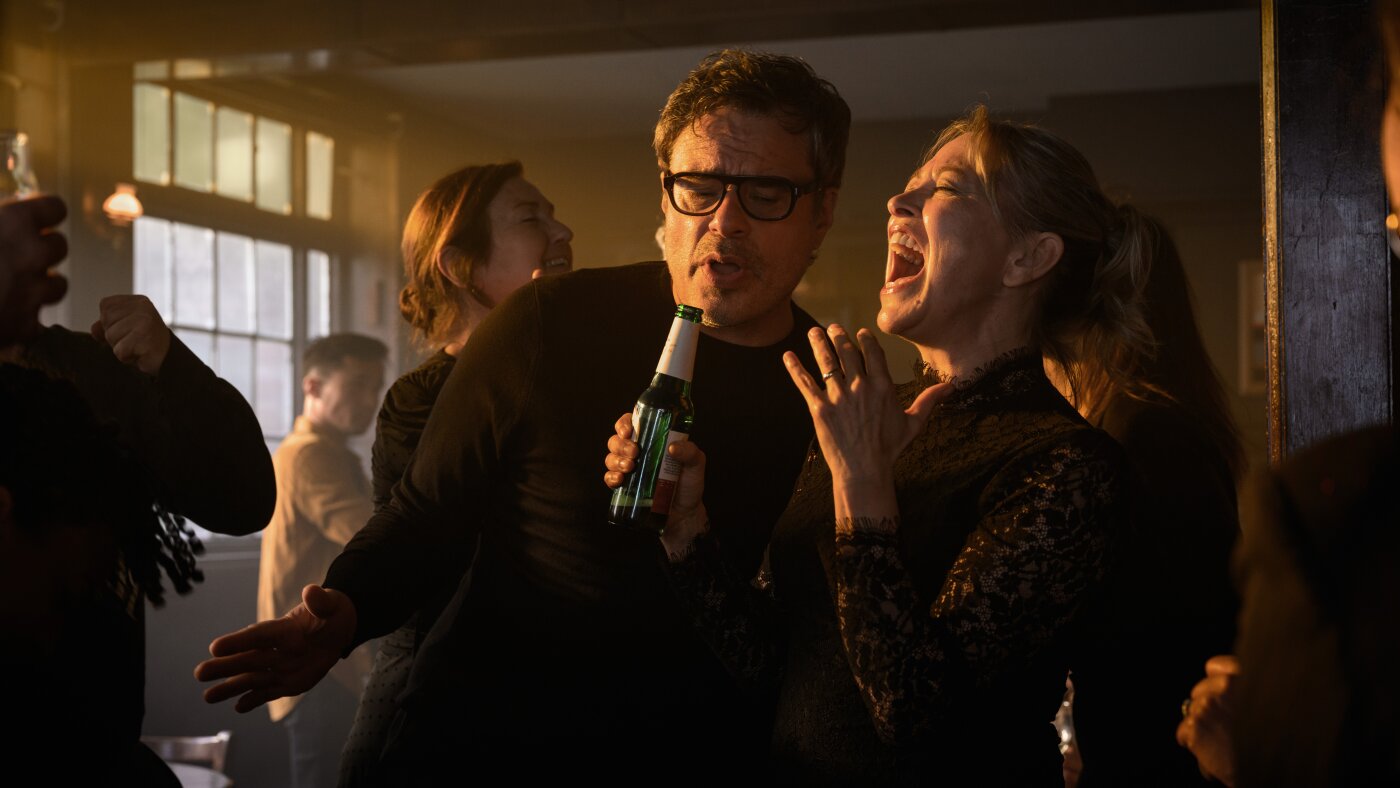
‘Alice and Steve’ might be a mess — but it’s also too fun to stop watching
-

 Technology36 minutes ago
America’s greatest idea is still under threat
-

 World43 minutes ago
Zelenskyy pressures US and Europe for more ‘air defense’ assistance amid ongoing war with Russia
-

 Politics46 minutes ago
ICE renews hunt for El Chapo’s last two fugitive sons with massive reward
-

 Health58 minutes ago
Biohacker hoping to live to 160 reveals alarming diagnosis: ‘My stomach is eating itself’
-

 Sports1 hour ago
FIFA president addresses Trump call amid scrutiny over decision on USA World Cup star
-

 Technology1 hour ago
Fake Booking.com travel credit scam targets travelers

