Shanica Knowles, Anna Maria Perez de Tagle, Miley Cyrus, Cody Linley, Jason Earles and Moisés Arias attend the premiere of Disney’s ‘Hannah Montana 20th Anniversary Special’ on March 23, 2026 in Los Angeles, California. (Brianna Bryson/WireImage)
Montana
Alpine Air CEO questions Postal Service data for air service in Montana

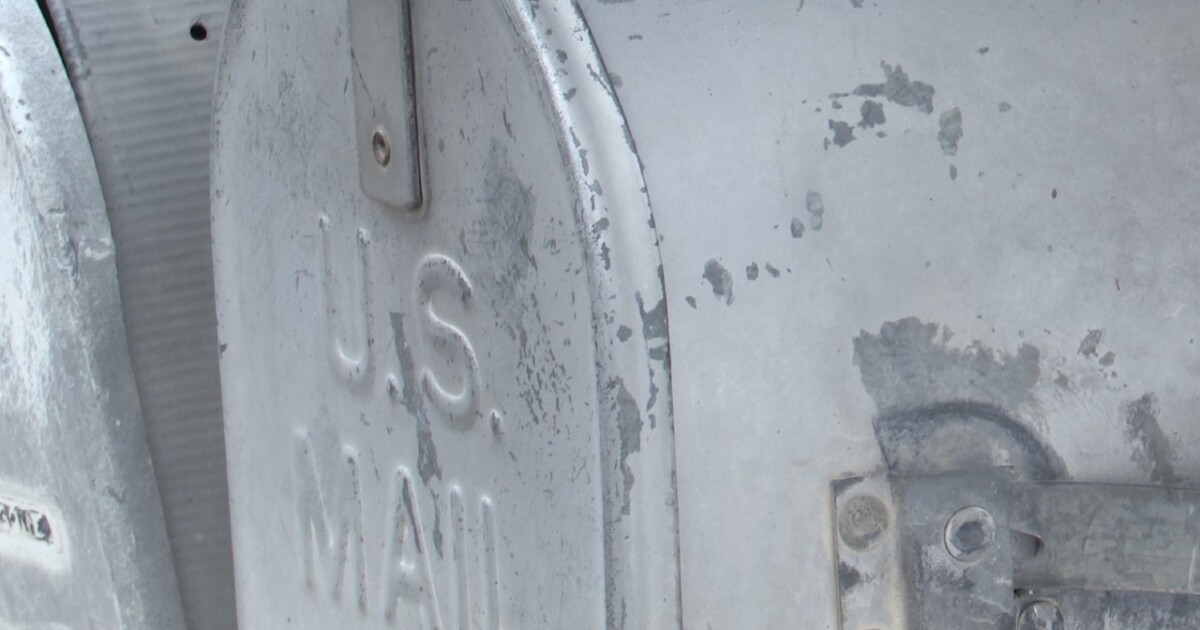
The U.S. Postal Service said it shifted the majority of mail in Montana that was going through the air to ground transport several months ago, but the chief executive of the air transport company said the federal agency relied on bad data to do so.
Alpine Air CEO Michael Dancy said this week he doesn’t believe the Postal Service will be able to meet its own standards for one- or two-day mail either despite its pledges to do so, the Daily Montanan reports.
“I think they’ve just decided that it’s OK to fail delivery standards in the state of Montana,” Dancy said.
Alpine Air has worked with the Postal Service in Montana for some 35 years.
A spokesperson for the Postal Service said again that it isn’t changing Priority Mail and Priority Mail Express in Montana.
“The contract move was simply to transition to more reliable surface transportation,” said spokesperson Kim Frum in an email.
Last month, the Postal Service abruptly stopped air service in Montana and then went silent in the midst of air cargo negotiations with Alpine Air despite the company’s offer to reduce its contract by $3 million.
The Postal Service has been in financial trouble, and in 2021, it released a plan to get its budget on track and, it said, “forge a bold vision for transformation” and provide “service excellence.”
It had projected a loss of $160 billion during the course of 10 years. Its plan, which included reductions in air service and investments in ground transportation, estimated a net income of $0.2 billion instead.
But implementation in Montana has been fraught with controversy.
Both U.S. Sens. Jon Tester, a Democrat, and Steve Daines, a Republican, have urged the Postal Service to reverse course in the decision about air service and have been critical of other effects on Montana.
“Once again, it appears that the USPS is turning its back on rural America and attempting to solve its budget woes on the backs of our nation’s rural citizens,” said Tester in a July 18 letter to the Postmaster Louis DeJoy.
But the Postal Service stepped away from negotiations anyway, and Dancy said since then, he took a closer look at the federal agency’s plan, “Delivering for America.” And he said he found it lacking when it comes to information about air transport.
For one thing, he said, the data about air transport reflects information for all air carriers, not just postal carriers, and it doesn’t reflect Alpine Air’s record in Montana.
The report described air transport as “very unreliable,” and it said the following: “Air transport has major uncertainties and risks (weather, flight delays, etc.) that can drastically impede service performance.”
Before the pandemic, it said ground transportation met a 92% on-time performance rate, but air transportation had 89.4% on-time performance.
Dancy, however, said Alpine Air counts a 99% on-time rate, and it produced the same even during the pandemic when it was deemed an essential service.
The Postal Service’s plan, however, doesn’t make note of the 99% rate. The agency spokesperson said its plan “looks at the network as a whole and does not single out specific providers/states.”
Dancy also questioned the ability of ground transportation to deliver top service in the winter given Montana’s weather and roads, a factor Tester noted in his letter as well.
In its plan, the Postal Service said it will invest another $11 million in vehicles, but this week, the agency did not provide the Daily Montanan performance data for ground transportation related to Montana.
“Unfortunately, your request for ground data is not publicly available information,” Frum said. “However, what I can tell you is in keeping with the DFA plan, the majority of the mail for this contractor, much like others nationwide, was transitioned to existing ground transport several months ago.
“The remaining minimal volume wasn’t enough to justify continuing the service.”
The Postal Service did not directly address whether it can continue to meet delivery standards during the winter months or when mailing distances are on the longer side, such as across the country.
Last week, as a member of the Senate Appropriations Committee, Tester secured provisions for rural postal service in the appropriations package. Those include language directing the Postal Service to provide a briefing regarding the end of air service contracts that affect priority and express mail in Montana and other rural states.
Dancy, for one, is skeptical one- or two-day service is still possible in a state the size of Montana.
“There’s just no way they can do that,” he said. “And they know there’s no way they can do that. But that’s what they’re representing.”
Daily Montanan is part of States Newsroom, a nonprofit news network supported by grants and a coalition of donors as a 501c(3) public charity. Daily Montanan maintains editorial independence. Contact Editor Darrell Ehrlick for questions: info@dailymontanan.com.


After Miley Cyrus reunited with her alter ego for the Hannah Montana 20th anniversary special in March, one of her co-stars is explaining his absence.
Mitchel Musso, who played Hannah’s friend Oliver Oken on the Disney Channel show, noted he had a scheduling conflict, but he would have made time for the reunion if it was a new episode of the 2006-’11 series or a movie.
“The kid in me was banking on it, like ‘I can’t wait for us to all be on set again,’ and it just didn’t work out that way,” he said on the Joe Vulpis Podcast. “Do something other than what was done. Like, do an episode. Do the show. The set’s still there. Or it can be dressed very quick with somebody who’s a pro, and they did that for that and just did it differently.”
Musso continued, “It is what it is. But it wasn’t the right thing and I was busy doing something that was more important, right? But it would have been way more important if it would have just been an episode, or a movie, or a whatever. Of course, that would have been more important.”
The actor said he would have “dropped everything” if it meant getting back into character as Oliver. “It would have been everything,” he said.
“It didn’t turn out that way… Of course they asked me. But like I said, it wasn’t presented correctly,” added Musso. “And I’ve been waiting 10 years. You know, the people they say 20. My break’s been 10. So, it’s too long of a wait to do it in a way that isn’t even close to, in my opinion, correct.”
Emily Osment, who played Miley and Oliver’s friend Lilly Truscott, was also absent from the reunion special, noting she was busy filming Georgie & Mandy’s First Marriage but feels “lucky to have been a part of this once-in-a-generation goliath of a television show” like Hannah Montana.

The Big Hole River, a blue-ribbon fishery that’s become a focal point in a years-long debate over nuisance algae growth, is poised to receive an impairment designation.
At an open-house meeting in Divide on Tuesday, the Montana Department of Environmental Quality announced that the Big Hole, a mellow freestone river critical to southwest Montana’s outdoor recreation and agriculture economies, is struggling as a result of ecologically detrimental nutrient loading.
The term DEQ is using in its discussion of the Big Hole is eutrophication, which describes the link between algae growth and excess nutrients such as nitrogen and phosphorus. When there’s too much algae in a river or lake, dissolved oxygen falls, imperiling fish and the aquatic life they feed on.
Algal growth is also unpopular with members of the recreating public because it can make wade-fishing a slipperier — and therefore more perilous — endeavor. And it drives down biodiversity in the macroinvertebrate population, which has repercussions for fish and other species higher up the aquatic food web. Andy Ulven, who leads DEQ’s water quality division, told Montana Free Press on Tuesday that a eutrophication listing would “formalize that there is an issue on the mainstem” of the Big Hole. He added that the agency proposal is still in draft stage and he doesn’t anticipate a final designation for the Big Hole until 2027 at the earliest.
The pending impairment designation is notable for a couple of reasons. In addition to establishing a new regulatory framework for the Big Hole, the designation creates a template that DEQ can use to determine if other medium-sized rivers popular with wading anglers are eligible for a eutrophication impairment.
DEQ’s Darrin Kron, who oversees the agency’s water-quality monitoring and assessment, explained that a eutrophication impairment designation would trigger regulations to reduce the inputs that contribute to poor water quality. Those standards are called Total Maximum Daily Loads, or TMDLs, and they’re often likened to a “pollution diet” for a compromised waterway.
In the case of the Big Hole, DEQ could develop TMDLs for nitrogen and phosphorus, as well as temperature-related standards to minimize new introductions of unnaturally warm water, which suppresses dissolved oxygen levels and contributes to algae growth.
Ulven anticipates that a eutrophication designation will increase the public funding that conservation groups like the Big Hole Watershed Committee and Trout Unlimited can apply for and put toward river-restoration initiatives. Projects those groups could work on — and are currently working on, if at a smaller scale — could include planting willows to add shade cover and reduce streambank erosion as well as intercepting nitrogen and phosphorus before they reach the river. Fertilizer runoff and livestock manure are common sources of nutrient pollution in agricultural valleys like the Big Hole.
The river’s algae issues have been well documented. Groups like Upper Missouri Waterkeeper, Save Wild Trout and the Big Hole River Foundation (which has since merged with Save Wild Trout) have been taking water-quality measurements and photographing summertime algae blooms on the river for six years to spur DEQ to rein in the nitrogen and phosphorus that are contributing to the algal blooms.
Guy Alsentzer with Upper Missouri Waterkeeper says the agency is playing “political hot potato” with impairment designations instead of acting with urgency to improve conditions on the Big Hole.
“It seems to be very disingenuous because it’s trying to avoid in any way, shape or form admitting that the key issue is that there are unhealthy and unnatural nutrient loading into the Big Hole River,” Alsentzer told Montana Free Press in a Wednesday morning interview. “A world-class, blue-ribbon stream for wild trout is on its knees. It has 40-year historic lows for trout recruitment.”
Alsentzer has long argued that the most proactive and scientifically sound way to reduce algal growth is to use numeric standards for nitrogen and phosphorus. But the Montana Legislature and DEQ disagree with him on this point, insisting that narrative, more subjective standards will suffice.
Last year, the Republican-controlled Legislature passed House Bill 664, which prohibits DEQ from using numeric nutrient standards. Proponents of HB 664 argued that it will result in more achievable and more affordable standards for the entities — water-treatment plants, mines and refineries, for example — that discharge nutrient-laden waters into Montana rivers.
HB 664 is the subject of an ongoing lawsuit Upper Missouri Waterkeeper filed in federal district court in January, maintaining that it doesn’t comply with the Clean Water Act, an environmental law Congress passed in 1972 to clean up polluted waterways. Alsentzer told MTFP that he anticipates the court will order a hearing on the matter at the tail end of this year and issue a ruling sometime in 2027.
Judge Brian Morris’ decision could determine whether DEQ can continue working with the eutrophication designation or whether it will be forced to return to numeric nutrient standards.
Water-quality concerns are likely to be exacerbated by the meager water supply currently in the Big Hole basin. The region received one of its worst snowpacks on record, and anxiety over a dismal summer forecast is a rare point of agreement among those who attended the Tuesday night open house.
Erik Kalsta, who ranches in the Big Hole Valley and is a longtime member of the Big Hole Watershed Committee, said he doesn’t anticipate the eutrophication-related impairment designation will drive significant changes to how he manages his land and water.
“I think the bigger worry for me is the messaging around this, especially on a bad drought year,” Kalsta told MTFP at the open house. He said he wouldn’t be surprised if the Big Hole goes dry in the next four or five weeks. That hasn’t happened since the late 1980s, and it spurred local irrigators to form the Big Hole Watershed Committee in search of cooperative water-management solutions.
“Our (irrigation) ditch right now is running about half of what it can carry,” Kalsta said. “That’s already forcing us to make choices about where we’re putting water, what kind of crops (we plant), what kind of summer we’re going to have.”
Brian Wheeler, executive director of Save Wild Trout, said the Big Hole is currently flowing at about one-quarter of its usual volume for this time of year. “It almost peaked in March, which is insane,” he added.
“If you can’t make more of it,” Wheeler said, “you can at least make sure what you have is clean.”
Montana
‘Hannah Montana’ Alum Mitchel Musso Reveals Why He Missed 20th Anniversary Special With Miley Cyrus

Hannah Montana star Mitchel Musso was noticeably absent from the show’s 20th anniversary special earlier this year — and now he’s revealing why.
“Of course they asked me [to be in it],” Musso, 34, revealed on the “Joe Vulpis Podcast” on Wednesday, June 24. “But, it wasn’t presented correctly [to me].”
Musso appeared in more than 70 episodes of the classic Disney Channel comedy series, playing Miley Stewart’s (Cyrus) best friend Oliver Oken alongside Emily Osment’s Lilly Truscott.
The star explained to host Joe Vulpis that he truly valued the opportunity to play Oliver again since he’d mostly been living outside the spotlight for the past decade. Instead, Disney opted for a retrospective look back at Hannah Montana.
Mitchel Musso, Emily Osment and Miley Cyrus on “Hannah Montana.” Joel Warren / Disney Channel / Courtesy Everett Collection
“I’ve been waiting ten years,” he stressed. “The people, they say, 20. My break’s been 10. It’s too long of a wait to do it in a way that isn’t even close to, in my opinion, correct.”
The Hannah Montana 20th Anniversary Special aired in March and featured Cyrus, 33, looking back on memorable moments from the show, alongside host Alex Cooper and celebrity guests such as Chappell Roan and Selena Gomez.
In his new interview, Musso said he would relish the chance of actually getting to play Oliver again in a proper Hannah Montana episode.
“I need a wig,” he joked. “I’d want the hair, which is fine. I’ve worn [wigs] plenty of times on Disney. I’ve worn plenty of wigs. … I’d want to feel the part again. I’d want to put on that little polo again, and wear the … plaid shorts with the goofy shoes.”
The actor went on, “I’d want to play the character, yeah. Once I saw myself doing it, I’d say, ‘Oh, there you are!’ Let’s get out there and let’s do it.”
Musso was not the only major Hannah Montana cast member missing from the anniversary special, as Osment, 34, could not appear due to her filming obligationa on CBS sitcom Georgie & Mandy’s First Marriage.
“We’re at Georgie & Mandy … and that’s why I was not able to be part of the 20-year reunion, because we are here shooting our show,” she said in a social media video at the time. “But I wanted to say hello and thank you to everybody that has stuck by us for all these years. I’m so grateful that you guys all still love the show. I’m so proud to be a part of it.”
Ahead of the Hannah Montana 20th Anniversary Special airing in March, Musso paid tribute to the show with his own Instagram post.


Miley Cyrus is still fielding questions about Hannah Montana more than a decade after its end — and she has some hilarious memories to share. During the Thursday, June 19, episode of her mom Tish Cyrus and sister Brandi Cyrus’ “Sorry We’re Cyrus” podcast, the Grammy winner, 32, opened up about a moment that never […]
“Hannah Montana wrapped around my heart and never really let go. We literally grew up with ya’ll — long days, crazy schedules, learning lines, cracking up between takes, and figuring out life while the cameras rolled,” he wrote. “It taught me so many wonderful values, but the most important ‘to me’ is that laughter can get you through the tough days. That confidence still sticks with me every single day.”
He also shouted out his costars, writing, “Miley, Emily, Jason [Earles], Billy Ray [Cyrus], Moises [Arias], and the whole crew at Disney — you became my family through all the real, messy, beautiful moments. Thank you for believing in a goofy kid from Texas who wore some questionable outfits with a haircut like that. To all of you, thank you for welcoming me into your homes and hearts 20 years ago and still allowing me to be here today. I’m honored we get to share all of this together.”
Hannah Montana originally aired for four seasons between 2006 and 2011. Classic episodes, as well as the Hannah Montana 20th Anniversary Special, can be streamed via Disney+.
-
Idaho1 second ago
Eagle Road’s long-awaited variable speed signs one step closer to operation
-

 Illinois3 minutes ago
Illinois Lt. Gov. candidates focus on affordability in pitch to Rockford voters
-

 Indiana8 minutes ago
Indiana Fever President Addresses Player Safety After Alyssa Thomas' Suspension
-

 Iowa15 minutes ago
Iowa City Regina baseball finds winning formula under new leadership
-
 Kansas18 minutes ago
Video shows disruption during Osawatomie City Council meeting with data center developer
-

 Kentucky23 minutes ago
Kentucky Lottery Cash Ball, Pick 3 Evening winning numbers for June 25, 2026
-

 Louisiana30 minutes ago
Guest Column: To win in manufacturing, the U.S. needs La. energy and improved permitting
-

 Maine33 minutes ago
High bacteria advisories reported at multiple Maine swimming spots

