Massachusetts
What's in the Massachusetts Senate bill to allow overdose prevention sites?


Jeremy Siegel: You’re listening to GBH’s Morning Edition. The Massachusetts Senate is set to pass a bill today that would give cities and towns the authority to open overdose prevention centers, facilities where people can use illegal drugs under the supervision of medical personnel. Supporters say overdose prevention centers, also known as safe injection sites, can be a way to help stem the tide of drug deaths. But there are a number of obstacles to opening them, including a rocky path ahead at the statehouse. We’re joined now for more by GBH statehouse reporter Katie Lannan. Good morning. Katie.
Katie Lannan: Hey, Jeremy. Good morning.
Siegel: So these types of overdose prevention centers are illegal under federal law. What exactly is the Senate looking to do here, at the state level?
Lannan: Yeah. So obviously the Senate can’t speak to federal law, but they’re looking at adding kind of explicit permission into Massachusetts state law for an array of things that goes beyond just overdose prevention centers. Their bill would give cities and towns the authority to pursue various harm reduction strategies to help decrease the negative consequences of substance use disorder and drug use. So that’s not just overdose prevention centers. It’s needle exchanges, drug testing programs, overdose reversal care using Narcan and treatments like that, and referral to treatment and other services. And under the Senate’s bill, the Department of Public Health would need to report how these programs work, study them in their first year up and running. And they couldn’t just open automatically. A city or town that wants to host a site like this would need to sign off from both its board of health and its city council or its select board. So it’s not a requirement that any community operate them, but it’s an option available for those that do want to try it out. The fact this is in the bill indicates that a majority of senators support the idea. And I talked to really the point person on this issue, State Senator Julian Cyr. Here’s what he had to say about why.
State Senator Julian Cyr: It’s about both saving lives. It’s also about providing a gateway to critical services, and helping getting people into treatment. I do want to really be clear, right. You know, there’s not one tool, including overdose prevention centers, that alone can solve this addiction crisis, but I’ve really come to believe that they are a crucial harm reduction tool.
Siegel: So it appears there is support in the Senate. A handful of cities in Massachusetts, including Cambridge and Somerville, have already been exploring the idea of opening overdose prevention centers. What’s stopped them from actually forging ahead?
Lannan: So one big barrier, at least as the state government sees it, is the risk of legal liability for health care providers, volunteers and other people who work at these sites. Last winter, a Department of Public Health report found that it would be feasible to open overdose prevention centers in Massachusetts and that they could be an effective intervention. But that report said that state legislators first would need to write some sort of liability protections into law. So that’s what the Senate is hoping to do here. Their bill would provide some limited legal protections for both people who work in overdose prevention centers and for the people who use there, who go there to use drugs, they’ve obtained from somewhere else.
Siegel: Now, as you mentioned, this bill goes beyond just overdose prevention centers. In the 30 seconds we have left here, Katie, what’s next for the bill after the Senate’s vote later today?
Lannan: Yeah. There’s no guarantee that the House and Senate are going to reach agreement here at all. The House has passed an overdose prevention bill that takes some different tacks, and they’re facing an extreme time crunch with a deadline to finish legislation by tomorrow. And the House seems pretty frustrated that the Senate is coming up with a new idea this late in the game.
Siegel: That is GBH statehouse reporter Katie Lannan on a push for overdose prevention centers in Massachusetts. Katie, thanks so much for your time.
Lannan: Thank you.
Siegel: You’re listening to GBH’s Morning Edition.
The Massachusetts Senate is set to pass a bill today that would give cities and towns the authority to open overdose prevention centers, facilities where people can use illegal drugs under the supervision of medical personnel.
Supporters say overdose prevention centers, also known as safe injection sites, can be a way to help stem the tide of drug deaths. They would allow people to use illegal drugs under the eye of trained medical workers and volunteers, who can step in to help in the event of an overdose.
But there are a number of obstacles to opening them, including a rocky path ahead at the State House.
Here’s what to know about the legislation.
It would permit supervised injection sites — and more
Overdose prevention centers are illegal under federal law.
The Massachusetts Legislature cannot amend federal law, but it can explicitly permit overdose prevention centers within state lines, GBH State House reporter Katie Lannan said.
“Their bill would give cities and towns the authority to pursue various harm reduction strategies to help decrease the negative consequences of substance use disorder and drug use,” Lannan said. “It’s needle exchanges, drug testing programs, overdose reversal care using Narcan and treatments like that, and referral to treatment and other services.”
The Senate’s bill would require the Massachusetts Department of Public Health to study such programs in their first year and report on their outcomes.
The bill doesn’t require supervised use sites to open, Lannan said. It only allows cities and towns to opt in if they wish, with support from both their local board of health and the city council or town select board.
State Senator Julian Cyr said the initiative is “about saving lives.”
“It’s also about providing a gateway to critical services, and helping getting people into treatment,” Cyr said. “There’s not one tool, including overdose prevention centers, that alone can solve this addiction crisis, but I’ve really come to believe that they are a crucial harm reduction tool.”
Legal liability is a hurdle
A handful of cities in Massachusetts, including Cambridge and Somerville, have already been exploring the idea of opening overdose prevention centers.
But one big barrier, at least in the eyes of state government, is legal liability for the medical professionals.
Last winter, a Department of Public Health report found that it would be feasible to open overdose prevention centers in Massachusetts and that they could be an effective intervention — but state legislators first would need to write some sort of liability protections into law.
“That’s what the Senate is hoping to do here,” Lannan said. “Their bill would provide some limited legal protections for both people who work in overdose prevention centers and for the people who use there, who go there to use drugs they’ve obtained from somewhere else.”
Next steps: No guarantee of passage
With two days left in this year’s session, legislators will have to act fast.
“The House has passed an overdose prevention bill that takes some different tacks, and they’re facing an extreme time crunch with a deadline to finish legislation by tomorrow,” Lannan said. “And the House seems pretty frustrated that the Senate is coming up with a new idea this late in the game.”
Subscribe to The Wake Up



Worcester’s reflecting pool faced criticism
Amid fanfare, reflecting pool was added to Worcester Common in 1971, a tribute to WWII veterans.
Looking for a way the kids can cool off after the Fourth of July heat wave?
In addition to numerous public beaches and pools, central Massachusetts has multiple splash pads open this time of year, offering the perfect way for children to enjoy being in the water without the hassle of a beach day. While some are ticketed, many of the region’s splash pads are free, with parks, playgrounds and other recreational areas attached.
Here are 10 splash pads where you can beat the heat in central Massachusetts this summer.
Tacoma Street Spray Park
Decked out with umbrellas and chairs, green water buckets and a frog to run under, Tacoma Street Spray Park is one of Worcester’s newer spray parks, located on the 18.9-acre Tacoma Street Playground. The park also has a basketball court and picnic area.
Like all of Worcester’s splash pads, Tacoma Street Spray Park is open from noon to 7 p.m. daily through Sept. 7. Located at 345 Tacoma St. in Worcester.
Park Hill Splash Park
This small splash pad in Fitchburg features rainbow rings to run through and a large sun design painted on the ground. The splash pad is part of Park Hill Park, which also has a skateboard park, two playgrounds, a basketball court, several baseball fields and restrooms.
Park Hill Splash Park is open from 11 a.m. to 6 p.m. daily from June through August. Lifeguards are always onsite, and parking is available off Pratt Road in Fitchburg.
Cowabunga Splash Park
Davis Farmland in Sterling is back for a second year with Cowabunga Splash Park, the largest zero-depth water spray park in New England. Built with a state-of-the-art, computer-controlled water filtration system, the park features every kind of mister and sprinkler imaginable, including horse cannons, a water tunnel, a water table, a toddler spray pad and more. The park also has a giant slip-and-slide, an inflatable water slide and a huge water tower.
Admission to Davis Farmland, which includes access to over 50 activities, costs $35.95 for adults or $32.95 for seniors over 60, though tickets cost more at the gate.
COWabunga Splash Park is open from 9:30 a.m. to 4:30 p.m. every day from now through Labor Day, with the water slide and slip-and-slide opening at 10:30 a.m. Davis Farmland is located at 145 Redstone Hill Road in Sterling.
Cristoforo Colombo Spray Park
Cristoforo Colombo Spray Park is a larger spray pad full of bright colors, water spouts and buckets dropping water from above. It is attached to Cristoforo Colombo Park, which also has a playground, fields, basketball courts and a baseball diamond.
The spray park is open from noon to 7 p.m. daily at 180 Shrewsbury St. in Worcester.
Fournier Park Splash Pad
Located inside the Arthur A. Fournier Sr. Memorial Park, this splash pad spouts water from various flowers, a frog and even a dragon. The water must be turned on by pressing an orange button on the pavilion side of the splash pad, and it runs for 12 to 14 minutes at a time.
This splash pad is open daily from 10 a.m. to 8 p.m., starting Memorial Day weekend and lasting through Labor Day. Located at 525 Litchfield St. in Leominster.
Ghiloni Park Splash Pad
Ghiloni Park in Marlborough also has a splash pad with flowers and frogs, located right next to the park’s playground. Water is activated by placing a hand on the sensor of the green activator pole.
The Ghiloni Park Splash Pad is open from June 2 through Sept. 7, with daily hours from 10 a.m. to 5 p.m. Located at 239 Concord Road in Marlborough.
University (Crystal) Spray Park
Just opened last year, the splash pad at Worcester’s University Park features various tall water spouts for the kids to run through, surrounded by a playground, walking trails, pond views and plenty of umbrellas.
From now through Sept. 7, the spray park is open daily from noon to 7 p.m. Located at 965 Main St. in Worcester.
Philbin Memorial Park and Splash Pad
Clinton’s Philbin Memorial Park has a newly renovated splash pad that turns on by touching the top of the red fire hydrant. The water runs for four to five cycles and then rests for 10 to 15 minutes.
Philbin’s splash pad is open daily from Memorial Day to Labor Day, with hours from 9 a.m. to 7:30 p.m. Located at Berlin and Wilson streets in Clinton.
Carbuncle Pond Splash Pad
Located right next to the beach at Carbuncle Pond, this colorful splash pad is conveniently equipped with lifeguard staffing, concessions and indoor public restrooms. Resident and nonresident passes are sold online or at the gate.
The splash pad and the beach are open daily from 11 a.m. to 5 p.m. at 495 Main St. in Oxford.
Greenwood Spray Park
Attached to a new playground, Greenwood Park’s splash pad has various sprinklers and buckets of water. The spray park usually has an attendant, and bathrooms are attached.
Worcester’s Greenwood Spray Park is open from noon to 7 p.m. daily through Sept. 7. Located at 14 Forsberg St. in Worcester.

A Holbrook, Massachusetts man who fell critically ill while sailing through the South Pacific has died, his family told WBZ-TV Tuesday evening.
Scott Winslow was in intensive care at a hospital in Fiji for weeks, as his family fought to get him back home so he could be treated for septic shock and a serious infection.
Winslow’s wife and two daughters had made the 8,000-mile trip to be with him and fight for his care when he died.
“We are at the hospital and just said goodbye to our father,” his daughters told WBZ-TV. “We are heartbroken.”
Winslow was traveling on his nephew’s sailboat in the South Pacific on what was supposed to be a three-month voyage when he noticed what appeared to be a bug bite.
His family isn’t sure exactly what the cause of the illness was, but his condition quickly deteriorated, and he could no longer walk once they diverted the boat to Fiji.
The family provided WBZ medical documents from doctors in Fiji, who said he needed to be evacuated to another hospital.
The family said his insurance company, Aetna, denied the transport and the medical flight to get Winslow home would have cost hundreds of thousands of dollars.
Winslow’s family said they had secured medical services with the Mass General Brigham group if he got back to Massachusetts.
“I don’t understand. My problem is, my parents pay for insurance, this is what insurance is for,” Lisa Babbin, Scott’s daughter told WBZ-TV earlier on Tuesday.
Before Winslow died, WBZ-TV reached out to Aetna. In a statement, a spokesperson said they were continuing to work with Winslow’s family “and his providers in Fiji to identify the best way to get him back safely to the United States for continued treatment.”
The Winslow family had also reached out the U.S. Embassy in Fiji for help securing an emergency loan.

The past month in Massachusetts has been synonymous with World Cup fan festivals, cheering crowds and tourists from Scotland crowning statues with traffic cones.
Amid concerns that the Trump administrations would ramp up immigration enforcement during the tournament, international soccer fans have posted on social media that they’ve felt welcome in the United States. The World Cup has even served as a distraction for many immigrants who’ve spent the past year and half in fear of the Trump administration’s deportation push.
And yet beneath the surface, immigration lawyers and advocates say detentions have not only continued across Massachusetts since the World Cup started in early June — they’ve increased in frequency.
“It’s supposed to be a joyous time for families, for children, and we’re still seeing an increase of arrests,” Eloa Celedon, an immigration attorney based in Marlborough, said. “Prior to the World Cup, it had settled down a bit — but since the World Cup started, it has been very sad to see arrests happening.”
During May and early June, Celedon said her office received one or two calls a week about potential clients who’ve been recently detained. Over the last month, those calls have increased to four to five a day.
Celedon’s experiences track with a reported nationwide surge in arrests by U.S. Immigration and Customs Enforcement. Over a recent five-day period, agents across the nation detained more than 10,000 people. The arrests have occurred during routine check-ins with ICE agents as well as during traffic stops.
Todd Pomerleau, an immigration attorney and the president of Mass Deportation Defense Project, called the spike in arrests a “remarkable” contrast to the international goodwill that’s been on display during the World Cup. He pointed to a recent game he was at in California between Belgium and Iran, recounting the way players and fans cordially listened to both teams’ national anthems played before the match.
“Juxtapose that with what I’ve seen as an immigration attorney,” Pomerleau said. ”The government seems like it goes out of its way to basically arrest people without justification a lot and then just throw them in detention facilities.”
No attorneys have heard of any cases of immigrants being detained around the World Cup matches at Gillette Stadium, temporarily renamed Boston Stadium.
A closer look at recent enforcement numbers
ICE didn’t respond to questions about how many people it has detained in Massachusetts since the start of the World Cup — the agency usually doesn’t provide time-specific enforcement figures.
Still, there are other ways to get rough estimates. Attorneys often file habeas petitions in federal court, asking judges to intervene in alleged unlawful detentions and keep immigrants from being sent to detention centers in other states.
There have been nearly 190 habeas filings in Massachusetts federal district court since the beginning of the World Cup matches, according to Habeas Dockets, a tracker run by the nonprofit Immigration Justice Transparency Initiative. Cases rose by 21% in June overall from the month before, going from 183 in May to 222.
One of those filings was for Malton Lacerda, who was detained June 28 by ICE agents after shopping at a Walmart in Halifax with his son Victor Lacerda, a Navy vet. The elder Lacerda wore a T-shirt saying “Navy Dad” as he put groceries in the car.
“Then we get rushed by a bunch of different ICE agents with guns drawn and threatening us. And we were confused,” Victor Lacerda, the son, said. “I looked back to see what was going on, because at first I couldn’t even believe it was happening to us, because we were just getting groceries. We hadn’t done anything wrong. And that’s when I saw them putting hands on my father and detaining him. But they were still asking me questions about my citizenship and my father’s citizenship.”
Victor Lacerda, who was born in the United States, served in the Navy after high school and lives in Kingston, Massachusetts. His father, who’s undocumented, is originally from Brazil and has lived in the United States for at least 25 years. He’s currently being held at Plymouth County’s ICE detention facility.
Pomerleau, the Lacerdas’ attorney, says the father was in the process of securing a green card when he was detained. He’s eligible for permanent residency in the United States through a special process for veteran family members.
Pomerleau called the father an exemplary member of his community, noting that he works as a horse trainer and provides horse therapy for disabled veterans. He and his son also march in local parades, and planned on doing so again for the Fourth of July.
“He’s done a lot of work for the community for years. He marched in the 400th Thanksgiving Parade down in Plymouth, Memorial Day parades,” Pomerleau said.
Courtesy of Victor Laceda
Lacerda has two 20-year-old cases of driving without a license and paying fines, and a misdemeanor assault and battery charge from 2008 that was dismissed, involving his ex-partner who’s now raising funds for his legal expenses. ICE didn’t return requests for comment on the case.
Local immigration advocates say the recent spike in arrests is one more way the Trump administration has cherry-picked which foreigners and immigrants can enjoy the world’s biggest sporting event.
Celedon noted that the federal immigration crackdown has also made it impossible, or very difficult, for people from countries on full or partial travel ban lists to visit the United States to attend World Cup games. Those countries include Haiti and others in Africa.
“It feels like almost like racial profiling people of certain countries that are allowed to come and those that are not allowed to come and not allowed to stay,” Celedon said.
-

 Alaska6 minutes ago
Climate Change Is Helping an Invasive Predator Wreak Havoc on Iconic Alaskan Fish
-

 Arizona8 minutes ago
Arizona man pleads guilty after illegally living in forest for years among ‘1,000lbs of trash’
-

 Arkansas14 minutes ago
Army names intelligence facility for Arkansas Tech graduate
-

 California21 minutes ago
How California Effectively Legalized an Open-Air Sex Market
-

 Colorado23 minutes ago
Julian Lewis Says Deion Sanders’ Colorado ‘Wasn’t Really Looking at Defenses Much’ Last Season
-
 Idaho28 minutes ago
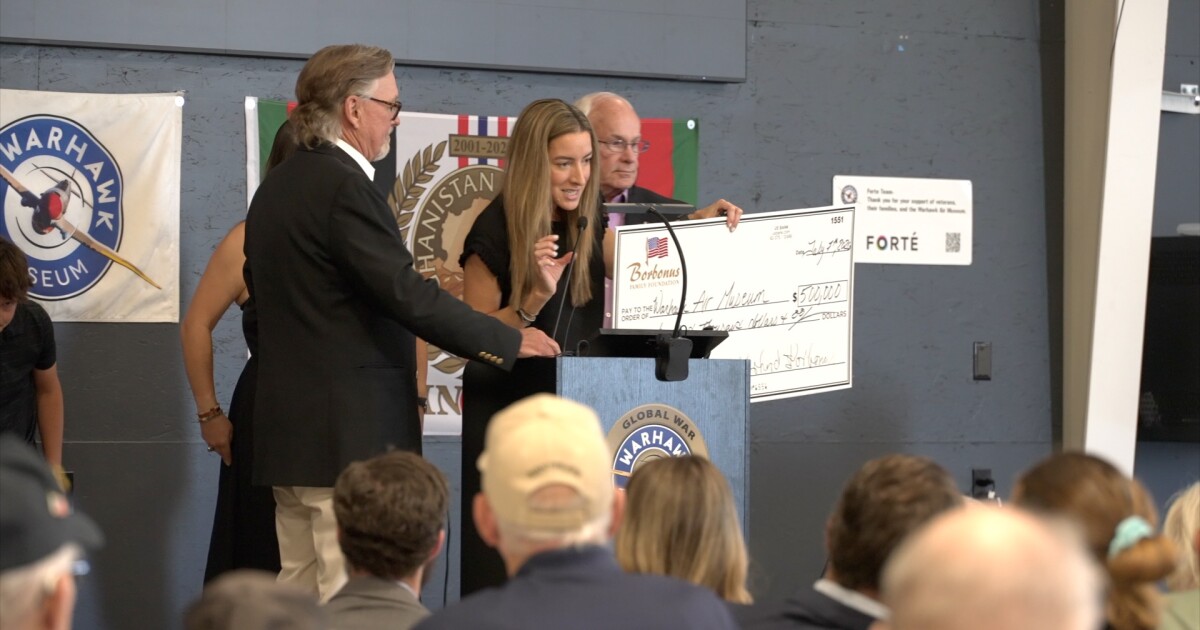
Warhawk Air Museum receives $500K grant honoring fallen Idaho soldier
-

 Connecticut29 minutes ago
Several beaches closed to swimming due to potential bacteria in the water
-

 Delaware36 minutes ago
Delaware Libraries Introduce Digital Literacy Specialists Program – State of Delaware News

