Colorado
Barry Switzer says Deion Sanders isn’t ‘tied to Colorado’ and will go where he fits


Deion Sanders made a powerful entrance at Colorado, dramatically transforming the team through the transfer portal. He brought in his sons and several top players to join the Buffaloes, significantly boosting the program’s profile. The “Prime Effect” was immediate and caused waves. Colorado quickly became the talk of college football, starting the season with a stunning upset against No. 17 TCU and following it up with wins against Nebraska and Colorado State.
However, the initial momentum faced a harsh reality check. As the season progressed, Colorado encountered the stiff competition of the Pac-12, resulting in a series of losses. The team finished with a 4-8 record, losing its final six games. Despite the tough finish, Sanders has remained steadfast in his commitment to Colorado, asserting his intention to stay for the long haul. Nevertheless, many believe that opportunities elsewhere will always tempt him.
One of Sanders’ early mentors, Former Dallas Cowboys and Oklahoma Sooners head coach Barry Switzer, believes that Sanders would eventually leave Colorado for a position that better suits him.
“Deion is going to go where it fits Deion,” Switzer remarked on OutKick’s podcast with Dan Dakich.
He acknowledged that while Sanders might be trying to establish himself at Colorado, coaches typically seek the best fit for themselves. Reflecting on his own career, Switzer noted that even in his prime years at Oklahoma, there was always a sense of looking for better opportunities.
“I don’t say he is tied to Colorado; he is going to try and establish himself there, but Deion is going to go what fits Deion, and I understand. All coaches do that. I did it when I was at Oklahoma. Hell, I had one of the best jobs in the country when I was here in the ‘70s and ’80s. I wasn’t going anywhere. I wished they paid me more, but it was a different time and a different era.”
Barry Switzer EXCLUSIVE: Colorado and the rise of Deion Sanders
Rumors have already linked Sanders to potential openings, notably to replace Lincoln Riley at USC after the 2024 season. This speculation is fueled by the likelihood that his sons, Shedeur and Shilo Sanders, will declare for the NFL Draft, making a transition to professional coaching more appealing.
Despite the rumors and potential opportunities, Sanders has expressed a clear preference for staying in the college game. In a January conversation with Robert Griffin III, Sanders stated he has no desire to coach in the NFL. He explained his reasoning and said the challenge of motivating professional players who are already well-compensated. Sanders highlighted his passion for shaping young athletes in college, appreciating the influence he can have on their development both on and off the field.
“I love the college game,” Sanders said. “I love still having influence on the minds and the games of these young men. I love shaping them and molding them. I couldn’t do that on the next level.”
While the future remains uncertain, Deion Sanders’ impact at Colorado and his dedication to college football are undeniable.

Colorado
Julian Lewis Says Deion Sanders’ Colorado ‘Wasn’t Really Looking at Defenses Much’ Last Season

Colorado quarterback Julian Lewis made a stunning admission that could explain the team’s 3-9 finish to the 2025 season.
While speaking to ESPNU at Big 12 media days, Lewis was asked what the biggest difference was between last year and this year, and he revealed that the Deion Sanders-coached Buffaloes typically didn’t watch film during his first season with the team.
“My play, I’m actually looking at the defenses now,” Lewis said. “Last year, we wasn’t really looking at defenses much, just kind of high school free-balling, just out there playing football. But it’s a lot bigger than that now, so it should be fun.”
Before taking a redshirt year, Lewis played in four games as a true freshman with two starts and threw for 589 yards, four touchdowns and no interceptions while completing 55.3 percent of his passes. He should fare even better this season with the benefit of film study.
Lewis will enter the 2026 campaign as Colorado’s starting quarterback, so he will have the opportunity to show his improvements when the Buffaloes open the year against Georgia Tech on Sept. 3.

State and federal agencies are starting to reopen public lands, state wildlife areas and a segment of the Colorado River that were closed in light of the Snyder Fire in Mesa County.
Stage 2 fire restrictions — banning all open fire or flames, including charcoal grills and wood-burning stoves — remain in effect as extreme fire danger, spurred on by hot and dry conditions, persists across the region.
The Snyder Fire started on Friday, June 26, when several smaller fires burning on the Colorado-Utah border combined. As of July 7, the fire was 98% contained after burning over 30,200 acres and killing three wildland firefighters.
With fire activity decreasing and containment increasing, Colorado Parks and Wildlife and the Bureau of Land Management shared their plans Tuesday to reopen lands impacted by the wildfire.
Parks and Wildlife said in a news release that it, alongside the Bureau of Land Management, had lifted the closure for public access and downstream recreation on the Colorado River, starting at the James M. Robb-Colorado River State Park in Fruita and extending to the Utah state line. It also reopened the boat ramp at the Fruita section of the James M. Robb-Colorado River State Park in Fruita to downstream traffic.
The state agency’s Horsethief State Wildlife Area in Fruita and the Loma Boat Launch State Wildlife Area also reopened.
The BLM said in a news release that all lands within the perimeter of the Snyder Fire burn area remain closed to ensure public and firefighter safety.
“The burned landscape — including vegetation — remains dynamic and unpredictable as it naturally recovers from the fire impacts. This order is effective immediately and will remain in effect until the order is rescinded,” the BLM said.
Both agencies also warned that fire danger remains extremely elevated and Stage 2 fire restrictions are in place.
A map of current federal and state fire restrictions is available on the Rocky Mountain Area Interagency Fire Restriction Dashboard or by visiting DFPC.Colorado.Gov/sections/wildfire-information-center. The Colorado Trails Explorer (or COTREX) app also has wildfire closure alerts.
Under current conditions, Parks and Wildlife advised the following actions to prevent sparking wildfires:
- Use established rings: Where permitted, only build campfires inside permanent metal fire rings in designated campgrounds.
- Clear nearby debris: Remove all dry grass, leaves and pine needles within a 10-foot radius of any flame.
- Drown and stir: Extinguish fires completely with water, stir the ashes, and ensure the debris is cold to the touch.
- Watch campfires constantly: Never leave a fire or portable stove unattended. If you see an unattended fire, call 911.
- Keep vehicles off brush: Avoid parking or idling cars on tall, dry grass where hot exhaust systems can ignite a fire.
- Secure towing equipment: Ensure trailer safety chains do not drag and spark against asphalt. Check them at every stop.
The BLM added that under its Stage 2 restrictions, smoking is prohibited except in an enclosed vehicle or building, a developed recreation site, or while stopped in an area at least three feet in diameter that is barren or cleared of all flammable materials.
Gas-powered stoves or grills with a shut-off valve are still allowed in cleared areas under this stage.
Violating Stage 2 fire restrictions by lighting a campfire is a Class 2 misdemeanor. Violators face an immediate citation, a mandatory court appearance, steep fines and potential jail time. Additionally, you can be held financially liable for all fire suppression costs and property damage if the campfire sparks a wildfire.

A weekend ascent of one of Colorado’s most storied peaks turned fatal Sunday. Rocky Mountain National Park officials say a climber died on Kiener’s Route on the upper east face of Longs Peak, the 14,259-foot summit west of Estes Park, per KMGH. Search and rescue teams were alerted early Sunday afternoon; a Teton County helicopter assisted in the recovery, which wrapped up Monday morning.
Authorities have not released the climber’s identity or explained what went wrong, and the investigation is ongoing. More than 70 people have died climbing Longs Peak, the park’s tallest mountain, since the park was founded more than a century ago, per the Coloradoan. Indeed, the very first ascent via Kiener’s Route in 1925 proved fatal, per USA Today. The route—temporarily closed but since reopened—is considered the least technical way up Longs’ steep east face, requiring “intermediate alpine climbing skills” and a day or two of climbing, the outlet reports.
-

 Alaska6 minutes ago
Climate Change Is Helping an Invasive Predator Wreak Havoc on Iconic Alaskan Fish
-

 Arizona9 minutes ago
Arizona man pleads guilty after illegally living in forest for years among ‘1,000lbs of trash’
-

 Arkansas14 minutes ago
Army names intelligence facility for Arkansas Tech graduate
-

 California21 minutes ago
How California Effectively Legalized an Open-Air Sex Market
-

 Colorado24 minutes ago
Julian Lewis Says Deion Sanders’ Colorado ‘Wasn’t Really Looking at Defenses Much’ Last Season
-
 Idaho29 minutes ago
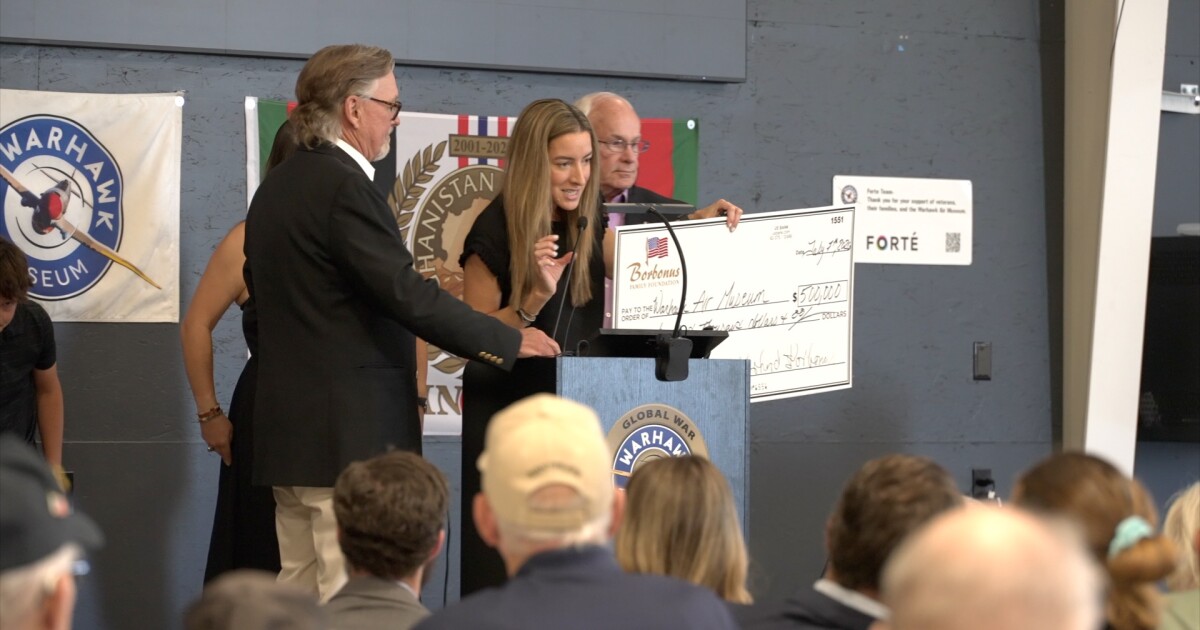
Warhawk Air Museum receives $500K grant honoring fallen Idaho soldier
-

 Connecticut29 minutes ago
Several beaches closed to swimming due to potential bacteria in the water
-

 Delaware36 minutes ago
Delaware Libraries Introduce Digital Literacy Specialists Program – State of Delaware News

