World
More than 270 people arrested in antigovernment rallies in Kenya


Police say protests were co-opted by ‘suspects’ engaging in ‘criminal activities’.
Kenyan police have arrested more than 270 people who they said were masquerading as protesters and suspected of going on a criminal rampage during antigovernment rallies in the country.
“Security forces across the country singled out suspects found engaging in criminal activities in the guise of protesting and took them to custody,” the Directorate of Criminal Investigations (DCI) said in a statement posted on X late on Tuesday.
It said 204 suspects were arrested in Nairobi, the capital, and another 68 in other areas of the country.
“The DCI has further deployed scrupulous investigators across the affected regions to pursue suspects captured on CCTV cameras and mobile phone recordings violently robbing, stealing and destroying properties and businesses of innocent citizens,” the statement added.
During today’s demonstrations that saw massive properties destroyed by various criminal elements, security forces across the country singled out suspects found engaging in criminal activities in the guise of protesting, and took them to custody.
In Nairobi and its environs, 204… pic.twitter.com/pHEbGvjggo
— DCI KENYA (@DCI_Kenya) July 2, 2024
Interior Cabinet Secretary Kithure Kindiki also condemned the protests, describing them as an “orgy of violence”, warning that the government would take action against anyone engaging in “anarchic chaos and cruel plunder”.
“This reign of terror against the people of Kenya and the impunity of dangerous criminal gangs must end at whatever cost,” he said.
Riot police used tear gas and charged at stone-throwing protesters in central Nairobi and across Kenya on Tuesday in widespread unrest since at least two dozen protesters died in clashes last week.
The demonstrations began against a controversial finance bill that contained new taxes, adding to the hardships of people already suffering a cost-of-living crisis.
While President William Ruto later abandoned the measure, protesters have since called for his resignation in a wider campaign against his rule, using the hashtag “RutoMustGo”.
They have also rejected his calls for dialogue.
The Kenya National Commission on Human Rights (KNCHR) said 39 people had been killed and 361 injured during two weeks of rallies, with the worst violence occurring in Nairobi on June 25.
The KNCHR on Monday also condemned the use of force against demonstrators as “excessive and disproportionate”.
In Mombasa, Milan Waudo told the Reuters news agency, “People are dying in the streets, and the only thing he can talk about is money. We are not money. We are people. We are human beings.
“He [Ruto] needs to care about his people, because if he can’t care about his people then we don’t need him in that chair.”
Reporting from Nairobi, Al Jazeera’s Zein Brasravi said the rallies are a “reflection” of the anger that people are feeling after the deaths of protesters.
“Protesters here say that they feel that their voices are still not heard and the government still doesn’t understand why they’re coming out and protesting,” he said on Wednesday.
Activists blamed Tuesday’s violence on infiltrators they said had been unleashed by the government to discredit their movement and said it was now time to disperse.
Still, more demonstrations have been called for Thursday and Sunday.



President Trump said Iran had agreed to the “highest level” inspections, hours after an Iranian official said there were “no detailed discussions on the nuclear issue,” as the two sides continued to present different narratives of their latest talks.
World
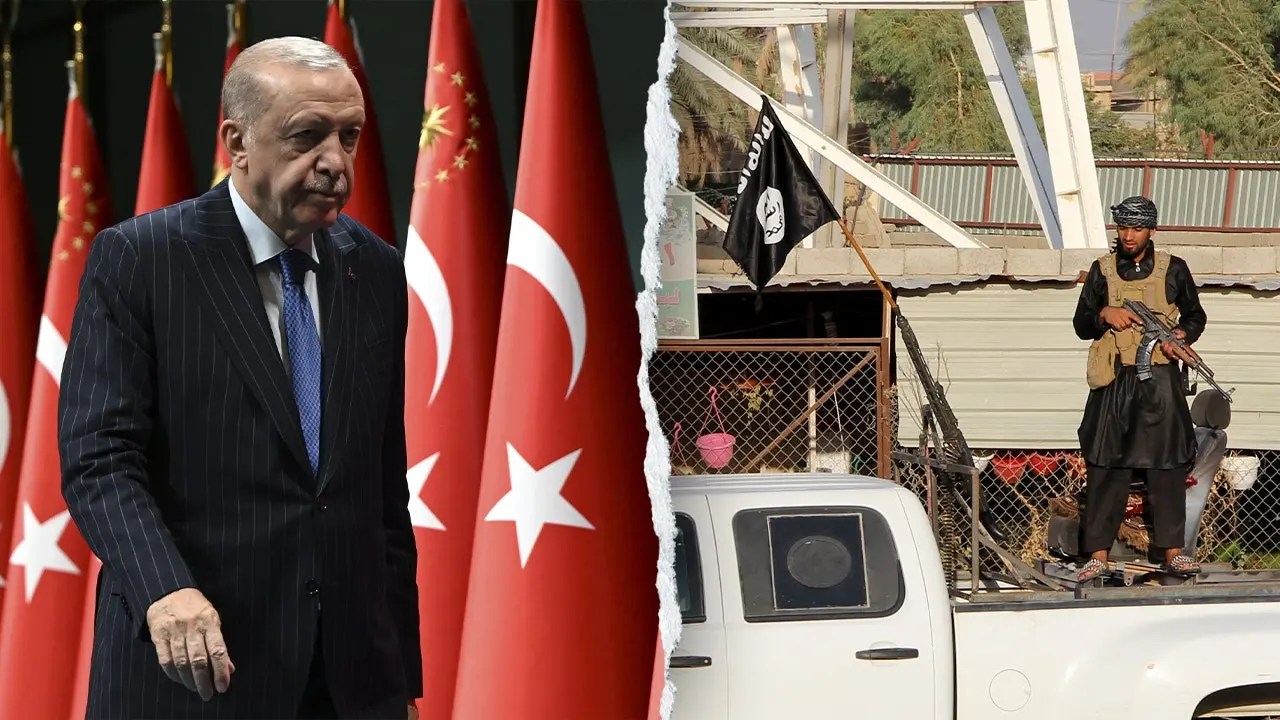
Turkey detains over 200 suspects, including alleged ISIS militants, in sweeping raid ahead of NATO summit
NEWYou can now listen to Fox News articles!
Turkish authorities reportedly detained more than 200 people, including suspected ISIS-linked militants, in a sweeping Tuesday raid in capital Ankara ahead of a July 7-8 NATO summit.
The raid came after Turkish authorities issued detention orders for 241 suspects, 209 of whom were taken into custody, The Associated Press reported, citing a statement from the office of Turkey’s chief prosecutor.
Among the 209 detained, 56 were allegedly ISIS militants, according to the AP. This comes after Turkish authorities said they detained 125 ISIS members in December.
The detention operations occurred just two weeks before a planned NATO summit in Ankara on July 7 that President Donald Trump is expected to attend.
TURKEY’S NATO ROLE UNDER SCRUTINY AMID NEW REPORT ON HAMAS, MUSLIM BROTHERHOOD TIES
President Donald Trump greets Turkey’s President Recep Tayyip Erdogan during a summit in Sharm El Sheikh, Egypt, on Oct. 13, 2025, to support ending the Israel-Hamas war in Gaza after a breakthrough ceasefire deal. (Evan Vucci/AP Photo/Pool)
Other militants scooped up were 35 alleged members of the Revolutionary People’s Liberation Party/Front, which a Turkish statement described as “a far‑left group known for armed attacks and assassinations in Turkey,” according to the AP.
The ISIS-combating operations demonstrate the terrorist group’s ongoing activity in the region, showing the group is still functioning despite the U.S. campaign during Trump’s first term to eliminate the group’s caliphate and its control of large swaths of territory in the Middle East.
Iraqi government forces celebrate while holding an Islamis Sate (IS) group flag after they claimed they have gained complete control of the Diyala province, northeast of Baghdad, on January 26, 2015 near the town of Muqdadiyah. (YOUNIS AL-BAYATI/AFP via Getty Images)
In recent years, ISIS has spread into the African continent, prompting a strong response from the U.S. In May, Trump authorized a series of strikes in Nigeria to combat the group.
PENTAGON SLASHES NATO COMBAT COMMITMENTS AS TRUMP PUSHES EUROPE TO DEFEND ITSELF
A May 16 strike killed ISIS leader Abu-Bilal al-Minuki, who was the group’s second-in-command globally.
U.S. and Nigerian forces conducted kinetic strikes against ISIS fighters in northeastern Nigeria on May 17, 2026, AFRICOM said. (X/U.S. Africa Command)
CLICK HERE TO DOWNLOAD THE FOX NEWS APP
“Abu-Bilal al-Minuki, second in command of ISIS globally, thought he could hide in Africa, but little did he know we had sources who kept us informed on what he was doing,” Trump wrote in a post on Truth Social after the strike. “He will no longer terrorize the people of Africa, or help plan operations to target Americans.”
The group’s renewed activity also includes a call to supporters to make attacks on U.S. soil during the World Cup.
The Associated Press contributed to this report.

By Euronews with AFP
Published on
Two whales were killed off the coast of Iceland overnight Sunday, two days after commercial hunting resumed, local media and animal rights activists reported Monday.
ADVERTISEMENT

ADVERTISEMENT
The kill ends a two-year pause and marks the first catches since 2023.
Icelandic public broadcaster RUV reported that two fin whales were killed. The fin whale is the second largest animal on Earth after the blue whale.
Before the vessels set off on Friday, a protester had attached himself to one of the masts in the port of Reykjavik, but climbed down and was escorted away by police.
Iceland, Norway and Japan are the only three countries that still openly permit whaling, despite international condemnation from the public and animal welfare organisations.
Iceland cancelled its whale hunt over the past two years, partly because economic problems had cut demand and the industry was not deemed profitable enough.
“The first fin whale deaths in Iceland’s hunt this year are devastating,” said Joanna Swabe, European senior public affairs director for animal rights group Humane World for Animals.
“Iceland has killed more than 1,000 fin whales in the past two decades — not only the second largest animal on the planet but also a species classified as globally vulnerable to extinction,” Swabe said in a statement.
Iceland’s government has said it is planning to introduce a bill aimed at banning whaling this autumn.
The International Whaling Commission banned the commercial killing of whales in 1986 amid alarm at the declining stock of the marine mammals.
Iceland’s Marine and Freshwater Research Institute has recommended that no more than 150 fin whales are caught in the 2026 season.
That represents a 28-percent drop on the annual quota it recommended for the period 2018–2025, it said.
The institute has set an annual catch of 168 animals for the minke whale hunt this year, a 23-percent drop on 2018-2025.
-

 Boston, MA8 seconds ago
Woman killed in Mattapan carjacking crash honored at vigil
-

 Denver, CO5 minutes ago
Nuggets trade 26th pick in NBA Draft to Spurs, moving out of first round
-

 Seattle, WA12 minutes ago
NBA Commissioner says Las Vegas, Seattle remain expansion targets for 2028-29 season
-

 San Diego, CA15 minutes ago
Padres cap wild game against Braves with extra-innings win
-

 Milwaukee, WI20 minutes ago
Bucks draft Burries, Ament after Giannis trade: 'We're building'
-

 Atlanta, GA27 minutes ago
Sports with Sam: Hawks draft Kingston Flemmings & Zuby Ejiofor
-

 Minneapolis, MN30 minutes ago
Concerns grow over south Minneapolis homeless encampment near child care center
-

 Indianapolis, IN35 minutes ago
Karl E. Muszar Jr.

