Health
New study suggests ditching BMI for 'roundness'-based system


A recently-published study suggests that a body “roundness” index may be a better measure of health than body mass index (BMI).
The article, called “Body Roundness Index and All-Cause Mortality Among US Adults,” was published in the Journal of the American Medical Association (JAMA) this month. It promotes the use of the body roundness index (BRI), which was created in 2013.
BMI, which has been the standard for measuring obesity since the 1980s, is calculated by dividing a person’s weight by the square of their height in feet. It was first developed by Belgian mathematician Lambert Adolphe Jacques Quetelet in the 19th century.
On the BMI scale, any number lower than 18.5 is considered underweight. A BMI between 25 and 30 is considered overweight, and a BMI score exceeding 30 is considered obese.
VIRAL HOSTAGE TAPE SLEEPING TREND GAINS STEAM AS DOCTORS WARN OF POTENTIAL DANGERS
A new study promotes the use of body roundness index (BRI) instead of body mass index (BMI). (iStock)
Although BMI is the standard way to measure obesity, it does come with its downsides. For example, because muscle adds on pounds, a healthy, muscular person who weighs a certain amount could be deemed overweight or obese using BMI.
BRI, on the other hand, is calculated using height and weight circumference, instead of just height and weight. BRI scores are also determined by using a more complicated mathematical equation.
“Besides weight and height, BRI additionally considers waist circumference, and hence it can more comprehensively reflect visceral fat distribution,” the study explains.
According to the study, BRI was found to be a more effective way of measuring mortality in a group of patients.
MORE AMERICANS SMOKE MARIJUANA DAILY THAN DRINK ALCOHOL, STUDY CLAIMS
BMI is calculated by dividing a person’s weight by the square of their height in feet. (iStock)
“BRI was found to be superior over other anthropometric indicators in estimating the risk for various clinical end points, including cardiometabolic disease, kidney disease, and cancer,” the study claimed.
Researchers also said that their findings suggested that BRI “may be promising as a newer anthropometric measure associated with all-cause mortality.”
“Our findings provide compelling evidence for the application of BRI as a noninvasive and easy to obtain screening tool for estimation of mortality risk and identification of high-risk individuals, a novel concept that could be incorporated into public health practice pending consistent validation in other independent studies,” the article concluded.
The American Medical Association (AMA) has taken aim at BMI in the past. Last year, an AMA report called the use of BMI “imperfect” and “problematic,” and claimed that it has been used for “racist exclusion.”
CLICK HERE TO SIGN UP FOR OUR HEALTH NEWSLETTER
BRI utilizes height and weight circumference, instead of just height and weight. (iStock)
“BMI cutoffs are based on the imagined ideal Caucasian and [do] not consider a person’s gender or ethnicity,” a report presented at the 2023 AMA Annual Meeting read.
Fox News contributor Dr. Marc Siegel criticized the allegations, calling the criticisms “politics, not medicine.”
“I didn’t believe the AMA was going to get involved in cancel culture, but now they’re canceling the body mass index, which is the thing I look at to at least start me off in the direction of obesity,” Siegel said.
The recent study claims that BRI was a more effective way of assessing a people’s health. (iStock)
“It’s not racist — it’s called good medicine.”
Fox News Digital’s Melissa Rudy contributed to this report.


NEWYou can now listen to Fox News articles!
Older adults identified as “super movers” are about half as likely to develop cognitive impairment than their peers.
That’s according to a recent study led by Stony Brook Medicine in New York, which evaluated the cognitive function of 4,000 adults 80 and over who participated in multiple aging and longevity studies over several years.
Among this group, 6% to 10% were classified as super movers, which means they walk at a much faster pace than others of the same age and gender — at speeds comparable to people three decades younger.
COMMON VITAMIN MAY INFLUENCE BRAIN AGING IN WAYS SCIENTISTS DIDN’T EXPECT
The super movers were found to have about half the risk of cognitive decline compared to seniors with typical gait speed.
The findings were published in the journal Neurology on June 16.
Older adults identified as “super movers” are about half as likely to develop cognitive impairment than their peers. (iStock)
“The study reinforces that mobility and brain health are closely connected,” lead study author Dr. Joe Verghese, MD, neurologist at Stony Brook Medicine, told Fox News Digital. “This suggests that preserving mobility may be an important marker of healthy brain aging and resilience.”
‘LONGEVITY GENE’ MAY PROTECT THE BRAIN FROM ALZHEIMER’S BY BOOSTING DNA REPAIR, STUDY FINDS
The most intriguing finding, according to Verghese, was that super movers maintained cognitive function despite having similar dementia-related brain changes as their peers.
In postmortem brain analysis, there was no difference in dementia-related pathologies between the super movers and the slower walkers, the study stated.
TEST YOURSELF WITH OUR LATEST LIFESTYLE QUIZ
“This suggests they may possess resilience mechanisms that help preserve brain function even in the presence of age-related changes,” he said. “Understanding these resilience factors could lead to new strategies for promoting healthy brain aging.”
As the study was observational, there were some limitations, and it does not prove that walking faster prevents dementia, the researchers noted.
Super movers were found to have about half the risk of cognitive decline compared to seniors with typical gait speed. (iStock)
“Other factors, such as cardiovascular health, physical fitness or genetics, may also contribute to both faster walking and better cognitive outcomes,” Verghese said.
CLICK HERE TO SIGN UP FOR OUR HEALTH NEWSLETTER
This study adds to growing evidence that what’s good for the heart and muscles also benefits the brain, he noted, adding that “staying physically active remains one of the most effective, evidence-based ways to support healthy aging.”
“Walking speed is best viewed as a marker of overall health, not a treatment.”
“The broader message is that physical activity is important at any age,” Verghese said. “Walking is an easy step-up point because you don’t need any special equipment. You can do it inside or outdoors, and you can do it on a regular basis. You can walk with a dog, you can walk with a friend.”
Any activity is beneficial if it’s done regularly and with the right intensity, he added.
CLICK HERE FOR MORE HEALTH STORIES
Rather than just trying to walk faster, the neurologist recommends that seniors focus on maintaining mobility through regular physical activity, strength training, balance exercises and good cardiovascular health.
“Walking speed is best viewed as a marker of overall health, not a treatment,” Verghese noted.
Major public health guidelines from the CDC and U.S. Physical Activity Guidelines recommend at least 150 minutes of moderate-intensity aerobic activity each week, such as brisk walking.
Major public health guidelines from the CDC and U.S. Physical Activity Guidelines recommend at least 150 minutes of moderate-intensity aerobic activity each week, such as brisk walking. (iStock)
This can be achieved by walking 30 minutes a day, five days a week, or about 20 to 25 minutes most days. Another option is to engage in shorter sessions that add up over the day.
CLICK HERE TO DOWNLOAD THE FOX NEWS APP
“You have to do it within your health limitations and medical conditions,” Verghese advised. “So if there are any medical concerns, I would get your physician to clear you before starting exercise.” The good thing about walking, he added, is that you can start at a slow pace and then gradually build up to a brisker pace.
“And then adding on strength and balance training, whatever age you are, I think is also important.”

Use left and right arrow keys to navigate between menu items.
Use escape to exit the menu.
Sign Up
Create a free account to access exclusive content, play games, solve puzzles, test your pop-culture knowledge and receive special offers.
Already have an account? Login
Health
Dr Oz warns Medicare scammers are stealing billions — and your personal information could be next

NEWYou can now listen to Fox News articles!
Washington, D.C. – Medicare fraud is a multibillion-dollar problem that government officials say threatens both taxpayer dollars and Americans’ personal identities.
In a July 6 interview with Fox News Digital at the Great American State Fair in Washington, D.C., Dr. Mehmet Oz warned that every dollar stolen through Medicare fraud is a dollar taxpayers lose – a problem that has worsened since the COVID pandemic.
“If I had to just pick one thing to focus on to make healthcare more affordable in America, I’d go to health fraud and all the waste and abuse that accompanies it,” said Oz, who is the administrator of the Centers for Medicare & Medicaid Services. “And just to put this in perspective, we think it’s about $100 billion a year.”
BIG MEDICARE CHANGE SLASHES WEIGHT-LOSS DRUG COSTS FOR ELIGIBLE SENIORS
Medicare fraud can include billing for services that were never provided, overcharging for medical equipment, using stolen patient or doctor information, or performing unnecessary procedures, according to the U.S. Government Accountability Office.
CMS administrator Dr. Mehmet Oz is pictured on stage at the Great American State Fair in Washington, D.C., on July 6, 2026. (Angelica Stabile/Fox News Digital)
As the Trump administration ramped up efforts to combat fraud, CMS reported $41.9 billion in Medicare program integrity savings in 2025, up 59% from $26.3 billion in 2024.
CLICK HERE FOR MORE HEALTH STORIES
Medicare fraud not only harms the federal budget and steals from taxpayers, but exposes seniors to identity theft, unnecessary care, higher premiums and reduced access, Oz cautioned.
CLICK HERE TO SIGN UP FOR OUR HEALTH NEWSLETTER
Removing corruption from the healthcare system will have the greatest impact among seniors, since “so much of the fraud is perpetrated against them,” the administrator said.
“I’m talking about people tricking seniors to give up their Medicare beneficiary numbers, which is like a credit card basically,” he said. “These scammers can take those numbers and use them for all kinds of illegitimate purposes.”
“If I had to just pick one thing to focus on to make healthcare more affordable in America, I’d go to health fraud and all the waste and abuse that accompanies it,” said Oz. (Fox News Digital)
“People are stealing from you by pretending to send you drugs you don’t want, wheelchairs you don’t need, [and] services you never asked for or don’t benefit from,” Oz added.
To prevent this, he shared his top advice for seniors: Do not give your Medicare beneficiary number to anybody, do not answer questions on a phone call from an unknown person and do not give away personal information.
TEST YOURSELF WITH OUR LATEST LIFESTYLE QUIZ
“These scammers are calling seniors, tricking them, and once they have key information, they can steal it,” he said. “And I won’t know it and you won’t know it.”
“We want to protect people who need these programs the most,” Oz went on. “You do that by making sure scoundrels don’t corrupt the systems and steal money out of the till that is designed to help folks in dire straits when they’re vulnerable and in need of services.”
Seniors should never share their Medicare information with unknown people, the administrator advised. (iStock)
Removing fraud could “double the life expectancy of the trust fund that makes all this possible,” Oz predicted.
“If you’re worried about Medicare being there when you’re ready to retire in a couple decades, depending on how old you are, and you’re concerned that it might not last because of all the fraud that’s hitting it … you’ve got a good [reason to] worry,” he said.
CLICK HERE TO DOWNLOAD THE FOX NEWS APP
“If we take the fraud out, we could double the life expectancy, which means you, your kids, your kids’ kids … they could all benefit from this beautiful safety net program.”
-

 Alaska6 minutes ago
Climate Change Is Helping an Invasive Predator Wreak Havoc on Iconic Alaskan Fish
-

 Arizona9 minutes ago
Arizona man pleads guilty after illegally living in forest for years among ‘1,000lbs of trash’
-

 Arkansas14 minutes ago
Army names intelligence facility for Arkansas Tech graduate
-

 California21 minutes ago
How California Effectively Legalized an Open-Air Sex Market
-

 Colorado24 minutes ago
Julian Lewis Says Deion Sanders’ Colorado ‘Wasn’t Really Looking at Defenses Much’ Last Season
-
 Idaho29 minutes ago
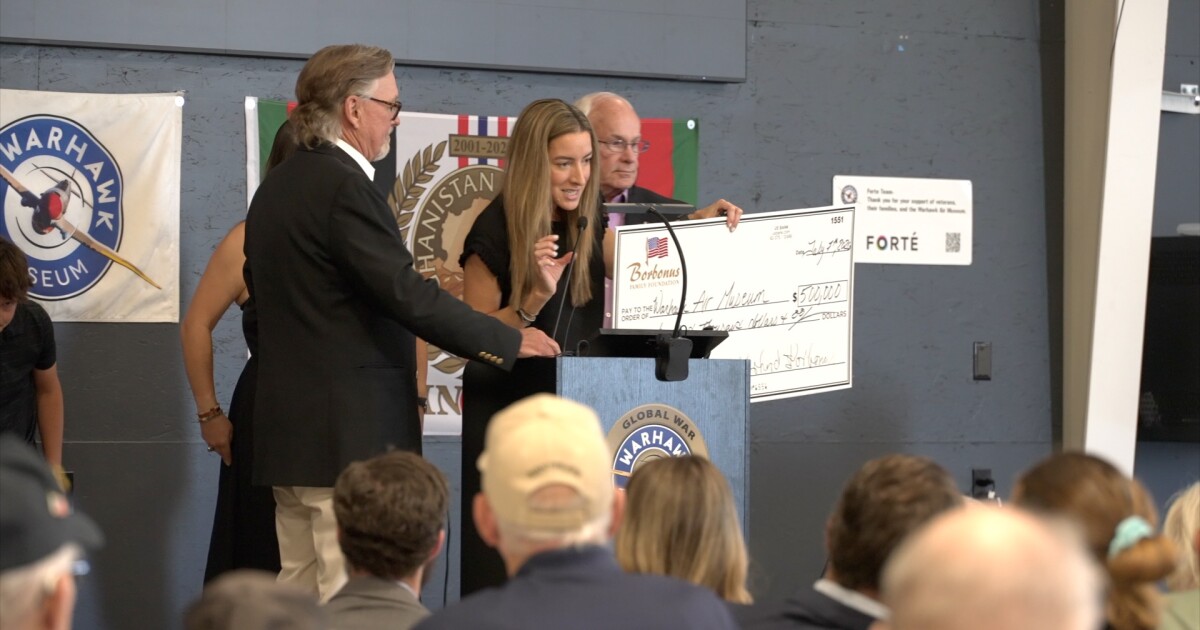
Warhawk Air Museum receives $500K grant honoring fallen Idaho soldier
-

 Connecticut29 minutes ago
Several beaches closed to swimming due to potential bacteria in the water
-

 Delaware36 minutes ago
Delaware Libraries Introduce Digital Literacy Specialists Program – State of Delaware News

