Business
How a blunder by a respected medical journal is fueling an anti-vaccine lie

The paper published by the respected British Medical Journal earlier this month was eye-opening, to say the least. It questioned why excess deaths in Western countries remained unusually elevated during the COVID-19 pandemic even after vaccines were introduced in 2021.
The implication seemed clear: Rather than reducing cases and deaths, the COVID vaccines had fueled the tragic tide.
That finding was picked up within 48 hours by the Telegraph, a conservative British daily. It leaped across the Atlantic Ocean to the New York Post, a part of the Murdoch media empire, one day later.
Various news outlets have claimed that this research implies a direct causal link between COVID-19 vaccination and mortality. This study does not establish any such link.
— British Medical Journal
Since then, it has been widely spread on social media by the anti-vaccination camp. The repetitions have become increasingly febrile, with some tweets blaming the vaccines for tens of millions of deaths.
Here’s what you need to know: There is no truth to this finding, or to the anti-vaccine camp’s interpretation of the BMJ paper.
The journal, which posted the paper on its Public Health webpage on June 3, has acknowledged that. In a public statement issued June 6, after the faulty interpretation began to spread worldwide, the journal observed: “Various news outlets have claimed that this research implies a direct causal link between COVID-19 vaccination and mortality. This study does not establish any such link.”
On the contrary, the journal wrote, “Vaccines have, in fact, been instrumental in reducing the severe illness and death associated with COVID-19 infection.”
Alas, the journal’s warning came too late. As I write, the Telegraph’s June 4 tweet hawking its misleading story has received 1.5 million views on X (formerly-Twitter), but the BMJ’s warning notice, only 388,000 views.
These figures are proof positive of the old saw (attributed to Winston Churchill, among many others) that “a lie can make it halfway around the world before the truth can get its boots on.”
Some researchers argue that the original paper, by a team of Dutch scientists, was so shoddy and inconsequential that it should not have been published at all.
Among the critics is Ariel Karlinsky, an Israeli economist and statistician whose data constituted the core of the Dutch paper. Karlinsky has written that the BMJ should retract the paper and “open an inquiry into what happened there with editors and reviewers.” The journal hasn’t responded.
The use that anti-vaccine propagandists have made of the BMJ paper underscores the dangers of disinformation in public health today.
A recent study in Science analyzed the impact of what its authors labeled “vaccine-skeptical” published content on vaccine refusal. The authors examined anti-vaccine posts on Facebook during the first three months of the COVID vaccine rollout in early 2021.
They found that posts flagged by third-party fact-checkers as false received a relatively minimal 8.7 million views in that period. Posts that were not flagged by fact-checkers but “nonetheless implied that vaccines were harmful to health — many of which were from credible mainstream news outlets — were viewed hundreds of millions of times.”
The flagged posts were more likely to inspire vaccine resistance, the authors wrote. Although unflagged posts individually had less impact on vaccine sentiment, the volume of those posts was so immense that cumulatively they did more damage to vaccine rates.
A single vaccine-skeptical article in the Chicago Tribune — headlined “A healthy doctor died two weeks after getting a COVID vaccine; CDC is investigating why” — was viewed by more than 50 million users on Facebook, more than 20% of the platform’s U.S. user base. That was “more than six times the number of views than all flagged misinformation combined.”
It’s also true that articles that may be innocuous or inconclusive at their core can be distorted and magnified into explicitly anti-vaccine messages by being passed through the anti-vax network.
Something of the kind happened with the BMJ paper. Its language alluding to “serious concerns” about the impact of vaccines and “containment measures” such as lockdowns on excess deaths was transmogrified into the Telegram’s headline stating that “Covid vaccines may have helped fuel rise in excess deaths” and similar language in the New York Post.
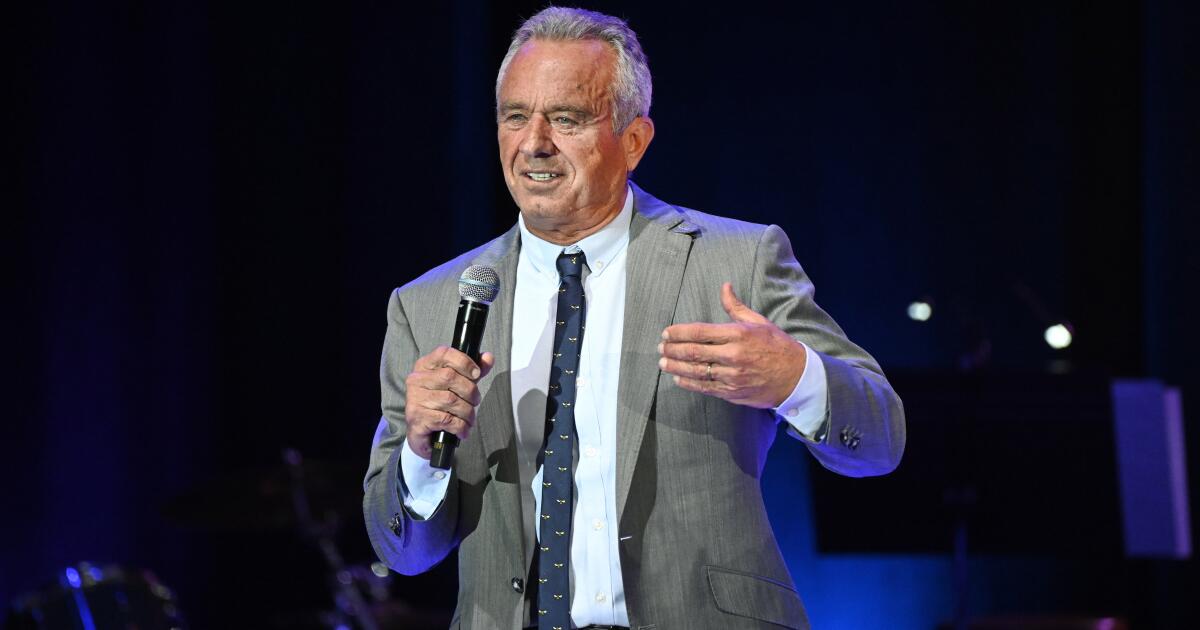
The anti-vaxx camp, in repeating these claims, did so after removing or minimizing most of the qualifying language. The headline on a report published by Robert F. Kennedy Jr.’s anti-vaccine organization, Children’s Health Defense, stated that the COVID vaccines “likely fueled rise in excess deaths,” attributing that conclusion to “mainstream media.”
The CHD report cited a blog post by anti-vaxx crusader Meryl Nass, republishing the Telegraph article. The Nass post was headlined “The Dam Has Broken,” suggesting that major news sources were now accepting the dangers of the COVID vaccines.
Nass, by the way, is a Maine physician who has had her license suspended and been fined $10,000 for having prescribed ivermectin and hydroxychloroquine, two medicines known to be useless in treating COVID-19, to patients.
Put it all together, and the evolution of the BMJ paper into a brief claiming that the COVID vaccines are harmful to health plays into the most extreme anti-vaccine disinformation in circulation — such as the incredibly ignorant and dangerous recommendation by Joseph Ladapo, the anti-vaccine quack appointed as Florida surgeon general by Gov. Ron DeSantis, that no one under 65 take a COVID vaccine.
The medical and immunological communities have overwhelmingly concluded that the COVID-19 vaccines have massively reduced hospitalizations and death from the disease. A December 2022 report card by the Commonwealth Fund concluded that after two years of administration, the vaccines had prevented more than 18 million additional hospitalizations and more than 3 million additional deaths.
This is the progress placed at risk by the torrent of anti-vaccine propaganda purveyed by RFK Jr.’s organization and other vaccination opponents.
That brings us back to the BMJ paper and its manifest flaws.
“Excess deaths,” the metric purportedly examined by the Dutch authors, is simply the number of deaths in a country during a given period over and above those that would have been expected “under normal conditions,” based on historical patterns.
In more than 40 Western countries during the three peak years of the pandemic, the authors reported, there were 1.033 million excess deaths in 2020, about 1.26 million in 2021 and 808,000 in 2022.
The authors expressed perplexity about why excess deaths actually rose in 2021, despite the arrival of the vaccines and the implementation of social anti-pandemic measures, and remained elevated the following year. “Government leaders and policymakers,” the authors wrote, “ need to thoroughly investigate underlying causes of persistent excess mortality.”
The authors further commented that “consensus is also lacking in the medical community regarding concerns that mRNA vaccines might cause more harm than initially forecasted.” That’s a gross misrepresentation.
The consensus in the medical community is indisputably that the vaccines are safe and effective. Although they do cause occasional side effects (as do all vaccines), the health threats caused by COVID-19 itself are immeasurably more hazardous.
The truth is that the factors causing elevated excess mortality throughout the pandemic are not mysterious, but well-understood. Statistical data scientist Jeffrey S. Morris of the University of Pennsylvania put his finger on some of the most important.
One is that far more people were exposed to COVID-19 in 2021 than in 2020. By the end of 2020, according to the World Health Organization, there were about 10,000 cases and about 238 deaths per million population; one year later, there 35,186 cases and 683 deaths per million. Furthermore, the COVID variants that appeared in 2021 — the Delta and Omicron waves — were far more transmissible and virulent (causing more hospitalization and death) than the initial variants.
Also in 2021, many of the most stringent anti-pandemic measures implemented in 2020 — school closings, lockdowns, business closures, mask mandates — were getting lifted by local authorities. This raised the level of exposure to the virus in the general public.
As for the vaccines, the Dutch authors seemed to conjecture that vaccination happened as if with the turning of a switch in January 2021. Of course that’s untrue.
Figures compiled by the independent statistical clearinghouse Our World in Data — which were used by the Dutch researchers — show that the vaccines were rolled out only gradually through 2021. By mid-year, only about 20% of the population of countries that submitted figures had received even a single dose; by the end of 2021, nearly 50% were still unvaccinated.
“Even with a 100% effective vaccine, we would have seen high levels of morbidity and mortality from COVID-19 in 2021, leading to high number of excess deaths,” Morris observes.
Statisticians have shown that the peaks and valleys of excess mortality during the pandemic coincide almost exactly with the emergence and peaks of Delta, Omicron and other variants of concern, indicating that excess deaths are almost certainly the result of COVID, not the COVID vaccines.
One other data point: As the British actuary Stuart McDonald points out, of the 47 countries surveyed by the Dutch researchers, the 10 with the lowest rates of excess deaths are those with the highest vaccine uptakes, such as Canada (83% vaccination rate in 2022 and only 5% excess deaths in 2020-22) and Germany (76% vaccinated and 6% excess deaths). By contrast, those with the lowest vaccination rates tended to have the most excess deaths, including North Macedonia (40% vaccinated at 28% excess deaths) and Albania (45% vaccinated, 24% excess deaths).
Is there a remedy for claptrap like the BMJ article? Sadly, very little. Qualified scientists and epidemiologists have risen up almost as one to expose the flaws of the BMJ paper. But the first line of defense against disinformation must be scientific journals themselves. In this case, if not for the first time, the BMJ has failed its responsibility for being a gatekeeper of sound science.


Gov. Gavin Newsom signed a law Thursday to crack down on inflated profits stemming from car crash lawsuits, blessing a hard-fought compromise between Uber and the state’s trial attorneys that averts a November showdown between two of California’s most powerful and moneyed lobbying forces.
The deal, the fruit of months of negotiations, takes aim at the lucrative way doctors can charge for procedures on patients referred to them by personal injury lawyers.
If a law firm has a client who was hurt in a car accident, the lawyer will often send them to a doctor who will perform surgery on a “lien” basis, meaning the doctor will be paid from money that comes from a lawsuit settlement rather than through insurance.
Uber contends this arrangement has created an incentive for doctors and attorneys to collude to dramatically inflate medical bills. The more expensive the bill, they say, the bigger the resulting payout.
The law, SB 623, caps how much these doctors can charge when their patient is involved in a lawsuit against a ride-share company, which are frequent targets of litigation due to their top-of-the-line insurance policies. The new law will also require Uber to ramp up background checks of its drivers.
“We’re going to have a much safer state both for medical patients and passengers in Ubers,” said Nicholas Rowley, a prominent Texas attorney who helped bankroll the fight and took a leading role in the negotiations.
The law only applies to cases that involve ride-share accidents that take place after Jan. 1, 2027.
“This legislation puts meaningful guardrails in place to better protect accident victims, increase transparency and accountability in the medical lien system and strengthen safety,” said Ramona Prieto, Uber’s head of public policy for the Western U.S., in a statement.
For months, Uber and lawyers from across the state poured tens of millions into dueling ballot measures that threatened to devastate the profits of whichever side lost.
Uber fired the first shot with a ballot measure that sought to cap how much attorneys can earn in lawsuits involving auto accidents. The company argued attorneys were swindling their own clients, inflating medical bills of car crash victims to increase the value of the settlement and then pocketing a hefty chunk of the payouts.
The state’s trial attorneys countered that the fee cap would make small or difficult cases a money-losing endeavor and block scores of accident victims from the courts. They shot back with their own ballot measure that would increase legal liability for ride-share companies if a passenger or driver is sexually assaulted while on a ride, seizing on investigative reporting that highlighted assaults in Ubers.
“They were waiting for us to blink and we didn’t,” said Douglas Saeltzer, the head of the Consumer Attorneys of California, the lawyer trade group that pushed for the measure against Uber. “Their starting place, I don’t believe, was in the interest of protecting victims — it was in the interest of protecting Uber.”
With the passage of Thursday’s law, both sides have agreed to pull their respective measures from the November ballot, halting campaigns that had both parties amassing tens of millions in funding and blanketing the airwaves with ads.
“Now we can stop seeing all the commercials,” said Assemblymember Blanca Pancheo (D-Downey) at a Tuesday hearing.
The law, put forward by Assemblymember Diane Papan (D-San Mateo) and Sen. Thomas Umberg (D-Santa Ana), also caps the amount that can be earned by third-party investors who buy out a doctor’s lien in a personal injury case. These companies will purchase a doctor’s stake in the case at a reduced rate, then pocket a share of the payout if the case settles.
“Private equity and hedge funds buy them at a steep discount, then turn around and collect the full inflated amount,” Saeltzer said at a Tuesday hearing on the bill. “That’s money flowing to Wall Street investors, not patients.”
The law will require annual background checks for ride-share drivers and expand the list of offenses that disqualify someone from the job.
In addition to the ballot battle, has Uber sued two of LA’s most well-known personal injury firms — the Law Offices of Jacob Emrani and Downtown L.A. Law Group — accusing them of inflating medical bills and forcing clients to undergo needless and expensive surgeries to inflate the value of the claim. The firms asked the judge to dismiss the case Wednesday, arguing Uber had failed to prove fraud. Both firms have vehemently denied wrongdoing.
The lawsuit, filed last year, has put the plaintiff lawyers in the unusual position of playing defense. Listening in the audience at Wednesday’s hearings were the partners of Downtown L.A. Law Group and Jacob Emrani.
“Let’s be clear about what this Uber case really is,” said John Hueston, outside counsel for Emrani. “It’s brought by a $150 billion dollar company … to intimidate the plaintiff’s bar, exhaust its resources and chill the suits that hold Uber accountable.”
Michael Huston, one of the lawyers who represents Uber, countered that the case is “not an attack on the plaintiff’s bar.”
“We have brought suit against the two in this state … that are engaged in naked fraud,” he said.
Business
Snap CEO Evan Spiegel and Miranda Kerr help erase $550 million in medical debt for Californians

Snap Chief Executive Evan Spiegel and his wife, supermodel Miranda Kerr, have helped pay off $550 million in medical debt for more than 261,000 Californians.
The couple made a multimillion-dollar donation to Undue Medical Debt, a nonprofit that provides debt relief to people in financial need. The organization acquires medical debt in bulk from hospitals, physician groups, collection agencies and other groups for a fraction of the cost.
“When someone you love is sick. All you want to do is focus on helping them get better,” Kerr said in a video with Spiegel. “That’s why we wanted to support this effort and help relieve medical debt, so families can focus on caring for their loved ones and really supporting their healing.”
The couple and the nonprofit didn’t disclose the exact amount of the donation, but a small gift can go a long way. Every $10 donated to Undue Medical Debt relieves an average of $1,000 in medical debt.
The gift comes as Americans struggle with the medical debt and rising cost of living. California is one of the most expensive states to live in because of soaring housing costs and energy prices. Concerns about wealth inequality have sparked heated political debates about how much billionaires should contribute.
In the United States, 1 in 4 adults are in medical debt, said Undue Medical Debt President and Chief Executive Allison Sesso in a statement.
“It’s a growing crisis undermining healthcare access, economic wellbeing and mental health and we’re so grateful that Evan Spiegel and Miranda Kerr share our belief that no one should go bankrupt because of a cancer diagnosis and no family should have to choose between insulin and groceries,” she said.
Californians whose medical debt have been paid off will start receiving a letter in mid-July from Undue Medical Debt informing them of the debt relief. Individuals can’t request debt relief because the nonprofit acquires bundled debt for thousands of people at once. Those who qualify for debt relief either earn at or below 400% of the federal poverty level or have medical debt that is more than 5% of their income, the nonprofit says on its website.
San Diego County residents benefited the most from the donation with total medical debt relief through the couple’s gift totaling roughly $99 million and affecting 40,369 people. In Los Angeles County, the gift provided $26.7 million in medical debt relief to 17,466 people, according to the nonprofit.
Spiegel, whose net worth is roughly $2 billion, and Kerr have helped relieve debt for others in the past. In 2022, the couple paid off the student loans for the Otis College of Art and Design’s graduating class.
In 2025, Spiegel was among business leaders and philanthropists who helped form the Department of Angels, a group that aims to help L.A.’s fire recovery efforts. The California Community Foundation, Snap, Spiegel and Snapchat co-founder Bobby Murphy committed $10 million to help start that group.
Roughly 200,000 people lost their homes in the January 2025 Los Angeles County wildfires. Spiegel, who grew up in Pacific Palisades and lost his childhood home in the fires, donated $5 million in immediate aid with Snap and Murphy that month.
He said in a statement that California has given so much to him and his family and that he cares “deeply about the wellbeing of our communities.”
“At a time when many families are already facing rising costs across nearly every aspect of daily life, an unexpected medical bill can create financial stress that lasts for years,” Spiegel said.
Undue Medical Debt said it’s abolished more than $40 billion of medical debt in all 50 states.

The electric vehicle company Slate Auto set out in 2022 to make the most affordable electric truck in the country. This week, it unveiled the price tag: $24,950.
At a time when demand for new electric vehicles is cooling and cars are getting harder to afford, Slate’s customizable truck could bring a fresh wave of excitement to the industry.
Deliveries will begin later this year and accelerate in 2027, the company said. Slate’s vehicle is built around a simple concept — pay only for what you actually want.
Buyers will start with a basic truck without power windows or even paint and can then customize it however they like. They can tailor-make their “blank slate” by paying extra for smart phone-compatible screens, speakers, colored wrap or paint. A $5,000 kit even converts the truck into an SUV.
Slate’s design team is based in Los Angeles County and recently moved into a new space in Carson, which employs about 50 workers. The company’s headquarters are in Troy, Mich., and its vehicles will be produced in Warsaw, Ind.
Squeezing out as much cost as possible while making it as easy as Legos to snap on different options has required complex engineering, which is why the company decided to set up its design studio in Southern California. The region is full of experts.
“Slate has done something smart,” said auto industry analyst Brian Moody. “Their EV isn’t only about price, there’s also a strong personalization element. In Southern California, the boxy, retro look will earn it a lot of attention.”


Slate is an EV startup that makes electric trucks and SUVs. Customers buy only the features they want. Photographed on Friday, Dec. 19, 2025. (Myung J. Chun/Los Angeles Times)
The company is building a marketplace of accessories for customers to choose from, including 54 basic wraps that cost less than $500 each. In contrast, a paint job on a car can cost thousands of dollars. The marketplace also offers roof stacks, zip-on seat covers and stereos.
For just under $30,000 total, customers can get a basic SUV in a fastback or squareback style. Whether it’s configured as a truck or SUV, the EV will have an estimated range of 205 miles and will be compatible with Tesla chargers.
“This is the first time in automotive history that consumers are going to get to choose,” said Slate Chief Executive Peter Faricy, who joined the company in March after 13 years with Amazon.
“It started with design, then engineering, and eventually manufacturing, and we figured out innovations in all three of those phases that make the vehicle less expensive,” he said.
For example, Slate vehicles were designed from the beginning to be wrapped instead of painted. The company will offer more than 100 colors of wrap at its launch, or customers can choose a custom color.
Slate did not disclose financial information or how much the vehicles cost to produce. However, Faricy said the company will generate a positive gross margin on its vehicles, meaning they are selling for more than what they cost to make.
“Whether Slate succeeds or fails, it has already influenced the conversation … forcing the industry to ask why affordable vehicles have become so rare,” said Jesse Toprak, an industry analyst and founder of OptiCar.ai. “They are betting on making higher profit margins on the accessories and do-it-yourself angle.”
Slate says it has already received more than 180,000 reservations. The earlier a customer placed their reservation, the sooner they’ll get their vehicle. Pre-orders opened Wednesday for $300, or $250 if the customer has already paid a $50 reservation fee.
Despite the hype, Slate is still a startup that has yet to prove itself in the market. The company has about 750 employees and has raised more than $700 million from Amazon’s Jeff Bezos and others.
“For the vehicle itself, the concept is brilliant,” Toprak said. “I think the execution risk is enormous.”
The EV industry has been under fire from the Trump administration, which has removed incentives for ownership and clean-car goals. Major automakers including Ford and Stellantis have pared back their EV offerings, and other startups have struggled to turn a profit.
The Irvine-based EV company Rivian, which hasn’t reached profitability since its founding in 2009, recently laid off hundreds of workers. It launched its highly anticipated R2 SUV earlier this month, which will eventually be available for less than $45,000.
Lucid, the luxury electric vehicle maker based in Newark, Calif., announced this week that it’s reducing its workforce by 18%. The cuts come just months after it laid off 319 Bay Area employees in February.
Faricy, Slate’s chief executive, said the company’s vehicle will appeal to a wide range of customers.
“There will be a lot of people that are attracted to the affordability but have never had an EV before,” he said.
According to Cox Automotive, the average transaction price for a new EV in the U.S. is $55,000, compared with $49,000 for a gas-powered vehicle.
“The EV market at this point doesn’t have a technology problem anymore,” Toprak said. “It has an affordability problem. Slate is one of the first companies built entirely around solving that.”
-

 Florida5 minutes ago
Florida tattoo shop refuses service to military and veterans for being ‘war criminals’
-

 Georgia8 minutes ago
What would it take for Missouri football to stun Georgia in 2026?
-

 Hawaii13 minutes ago
Scientists say major earthquakes feel frequent, but activity is on track
-
 Idaho20 minutes ago
Eagle Road’s long-awaited variable speed signs one step closer to operation
-

 Illinois23 minutes ago
Illinois Lt. Gov. candidates focus on affordability in pitch to Rockford voters
-

 Indiana28 minutes ago
Indiana Fever President Addresses Player Safety After Alyssa Thomas' Suspension
-

 Iowa35 minutes ago
Iowa City Regina baseball finds winning formula under new leadership
-
 Kansas38 minutes ago
Video shows disruption during Osawatomie City Council meeting with data center developer

