Maryland
Maryland hopes to recruit young dentists to workforce shortage areas – Maryland Matters


Maryland has about 70 dentists per 100,000 residents, according data from the Centers for Disease Control and Prevention in 2020, but that doesn’t mean that they are equally distributed across the state.
State health officials and dental health advocates say that Baltimore and parts of the Eastern Shore and Western Maryland not only lack dentists, but have other barriers that make it difficult for residents to keep up with their oral health.
The Maryland Department of Health aims to change that with a new program urging dental students to launch their careers in areas with dental health care shortages.
The Pathways to Bright Futures program, which launched Wednesday, will educate those students about the dentistry profession in hopes of easing shortage in targeted areas.
Dr. Nilesh Kalyanaraman, the health department’s deputy secretary for public health services said Wednesday that fixing the workforce shortage “won’t be easy and is not going to happen overnight,” but improving access to dental services will help improve overall health equity in Maryland.
“When I think about our vision for health equity in Maryland, I see everyone in our state having a fair and just opportunity to be as healthy as possible. It’s going to take hard work … to ensure that health equity includes healthy mouths, teeth and gums for all Marylanders,” he said.
Dr. Debony Hughes, director of the department’s Office of Oral Health, said that many areas in Western Maryland, the Eastern Shore and Baltimore have fewer than 20 dentists per 100,000 residents, well below the national average of 61 dentists per 100,000 residents.
“This program is a collaborative effort to work with students and foster their interests in the oral health field and provide support to those who know they want to practice in the profession,” Hughes said Wednesday during the program kickoff at the Dr. Samuel D. Harris National Museum of Dentistry in Baltimore
Pathways to Bright Futures is funded by a grant to the state from the federal Health Resources and Service Administration. At Wednesday’s event, six dental health students were awarded funds to help pay their dental school tuition.Each of the students plan to practice dentistry in one of the state’s dental shortage areas.
“Cavities in children and adults, and gum disease especially in adults, are among the most prevalent chronic diseases in the United States,” Kalyanaraman said. “The main reason why oral disease is so prevalent is that far too many Marylanders experience barriers to preventative and essential dental care.”
He noted that when Maryland dentists set up their practice, they tend to gather in “more populated and higher income areas, creating significant gaps in access to dental care across other regions of the state.”
“This shortage creates an uneven distribution of dental professionals across the state, which leads to decreased access to dental care, especially in already underserved communities,” Kalyanaraman said.
Dr. George Shepley, a general dentist in Baltimore since 1978 who previously served as president of the American Dental Association, said dental care can help identify other health needs.
“They’re connected. Totally. Especially with things like diabetes and cardiac disease,” Shepley said Wednesday. “And in the world of dentistry, you’ll get insight into well-being overall. You’ll help diagnose other conditions and empower people to really take responsibility for their lives.”
Mary Backley, CEO of the Maryland Dental Action Coalition, said there are a multitude of logistical and economic barriers that can make it challenging for some Marylanders to get to a dental appointment.
Besides a lack of equal access to the state’s 4,300 registered dentists, another issue in dentist shortage areas is transportation, particularly for the more rural communities in Western Maryland and on the Eastern Shore.
“The biggest barriers, rural-wise, is the distance … It can take miles and miles and miles to get to a provider,” Backley said after Wednesday’s event.
Baltimore residents are more likely to be face a long waitlist to get a dental appointment, according to Backley. And both rural and city residents may struggle to afford child care or take time off work to go to the dentist in the first place.
There are also financial hurdles that make it harder for families to afford a trip to the dentist.
As of January 2023, Medicaid in Maryland began to cover certain dental services for adults. And the General Assembly this year passed legislation to study the feasibility of including full and partial dentures under Medicaid coverage. Gov. Wes Moore (D) signed the bill in May.
The state Medicaid expansions can help many low-income families receive dental health care, so long as they have access to a provider that accepts Medicaid. Not all dentists in Maryland do.
Backley hopes that the Pathways to Bright Futures program will encourage more young people to look to dentistry as a career path and help fill in some of the coverage gaps in the state.
On the bright side, Backley said that residents and Maryland health officials are taking dental health care seriously.
“It’s been incremental, but each year there has been progress,” she said. “People understand the importance of oral health. And the importance of oral health to overall health.”



(Photo by Celal Gunes/Anadolu via Getty Images)
WASHINGTON – The Department of Justice is suing Maryland and State Attorney General Anthony Brown, alleging the state’s “sanctuary” policies hinder the enforcement of federal immigration laws.
The lawsuit claims that Maryland’s sanctuary policies are illegal under federal law and that the state’s “refusal to cooperate with federal immigration authorities” has had negative consequences for immigration law enforcement officials.
What we know:
According to the lawsuit, the state’s refusal to cooperate has led to facilities refusing to help transfer immigrants to federal custody.
Under the direction of Acting Attorney General Todd Blanche, the DOJ’s Civil Division will identify state and local laws, policies and practices that violate federal laws or impede federal operations.
“When sanctuary jurisdictions enact laws to shield [undocumented immigrants] from federal law enforcement, it is not merely federal law that is violated, but the voices of everyday American voters silenced,” said Associate Attorney General Stanley Woodward.
The lawsuit cites Maryland’s Community Trust Act, a law that went into effect in May, which prevents local law enforcement from holding an individual without a warrant on behalf of U.S. Immigration and Customs Enforcement (ICE). There is an exception for those who commit felonies or sex offenses.
What they’re saying:
The Community Trust Act law sparked pushback from local law enforcement leaders across the state, with 17 of Maryland’s 24 sheriffs suing, and saying the law “undermines public safety and restricts cooperation” between local and federal officials.
“Such blatant disregard for federal laws that have been on the books for decades is not merely a political disagreement or passive abstention; it is deliberate, disruptive action that jeopardizes the public safety for all Americans,” the DOJ lawsuit reads. “The Supremacy Clause of the United States Constitution prohibits a state from obstructing Congress and the Executive in this manner.”
The Source: This information is from a Department of Justice lawsuit.

GLEN BURNIE, Md. (WBFF) — An office building in Glen Burnie was evacuated on Thursday afternoon after its underground parking garage experienced a shift in one of its floors.
The Anne Arundel County Fire Department initially responded to the 7300 block of Ritchie Highway around 2:30 p.m. on July 9 after reports of a partial building collapse.
However, the department later clarified that there has been no collapse of the 10-story building.
Officials said crews are evaluating the building’s structural integrity after work was being performed in the parking garage.
All occupants were safely evacuated, and no injuries have been reported, according to Fire Captain Jenny Macallair.
The fire department is asking drivers to avoid the area while crews continue their assessment.
FOX45 News has a crew on the way to the scene, and we will provide updates as they become available.


See America’s most iconic hot dogs
Welcome to the United States of Hot Dogs! We’ve compiled a few of the best hot dogs eaten across the country.
Although Maryland is often celebrated for its seafood, one over-the-top creation has carved out its own loyal following among locals and visitors alike: The Baltimore-style hot dog.
Sausage is merely its first layer of meat. It’s wrapped in a thick slice of fried beef bologna and piled high with toppings.
It’s proof that while hot dogs are truly an All-American food, their real power lies in how they adapt to local tastes.
Hot dogs were “invented” in the U.S. after German sausages were served in buns. They’re a staple of baseball games — the all-American pastime. And they are truly a democratic food: nearly anyone can afford to enjoy them.
But even more, hot dogs are American because of their adaptability, reflecting the ingenuity and diversity that gives our country such a rich culinary tapestry.
“You can tell the story of America through hot dogs. There are probably other things you could use, other objects or icons, but I think hot dog is a really good one,” said Bruce Kraig, a Ph.D. food historian and author of “Hot Dog: A Global History’ and ‘Man Bites Dog: Hot Dog Culture in America.”
Regional hot dog toppings, from chili in Cincinnati to celery salt in Chicago to jalapeños in the Southwest, tell distinct stories of place.
Here in Baltimore, Maryland, our contribution to the United States of Hot Dogs is the Baltimore-style hot dog.
What is a Baltimore-style hot dog?
At its core, the Baltimore dog is a meat-on-meat masterpiece. It starts with a kosher all-beef sausage that is split, fried and wrapped alongside thick, charred bologna slices.
It’s traditionally topped with raw onions and yellow mustard, with a pickle spear on top or on the side. Some variations include the addition of sweet relish, ketchup or cheese.
“In this creation, grease from the bologna mixes with the grease from the hot dog, and both find their way into the bread to form an unforgettable aroma, taste and aftertaste — and 200 points on your cholesterol count,” Baltimore historian Gilbert Sandler told The Baltimore Sun in a 2019 story.
Where did the Baltimore-style hot dog come from?
Its origins are often somewhat unclear, but it’s believed to have originated during the Great Depression when, according to TasteAtlas.com, “people added bologna slices to the hot dog in order to make it a fuller, heartier meal.”
Jewish delis along Baltimore’s historic “Corned Beef Row” were looking for ways to offer working-class customers a filling, calorie-dense meal for a small chunk of change, leading to the birth of the Baltimore-style hot dog.
First becoming popular in the early 1940s at Mandell and Ballow deli, the bologna-wrapped hot dog spread throughout Baltimore, The Sun reported.
“Despite being a nutritionally questionable combo of two of the world’s least-healthful meats, the bologna dog continues to be a local favorite, enjoyed without apology,” FoodRepublic.com wrote in 2023.
Four best places to try a Baltimore-style hot dog
Attman’s Delicatessen: A Baltimore institution since 1915, Attman’s version of the Baltimore-style hot dog sits at the top of its menu. Its dog — for $7.99 — comes with your choice of mustard, relish, chopped onions and ketchup. Details: 1019 East Lombard St., Baltimore; 410-563-2666, attmansdeli.com.
Weiss Deli: Another Baltimore staple, Weiss serves speciality sandwiches and, of course, the Baltimore-style hot dog. You can customize the $7.49 dog with up to eight toppings, but its most popular version comes with just deli mustard and raw onions on top of the bologna-wrapped sausage. Details: 1127 East Lombard St., Baltimore; 410-276-7910, baltimoreweissdeli.com
The Dog House Carryout: A legendary landmark in Baltimore, The Dog House Carryout has been slinging its classic comfort food for more than 75 years. You can get a quarter-pound all-beef hot dog for $6.95, with bologna added for an extra $1.25. The dog comes with your choice of mustard, relish, onions and ketchup. Details: 617 Fallsway, Baltimore; 410-685-7269, thedoghousebaltimore.com
Killa Dogz: Killa Dogz, one of the more modern hot dog spots in the city, offers a wide variety of options, including what it calls the “Bmore” dog. At $7, its version is deep fried, wrapped in bologna and “served on a squishy bun with mustard.” Chili and cheese are among the top ways to customize its dog. Details: 6106 Belair Rd, Baltimore; 443-438-7822. killadogz.com.
Jennifer Borresen contributed the interactive graphic to this story. She is a graphic journalist at USA TODAY, specializing in explanatory graphics and illustrations in various fields, including politics, science, weather and entertainment.
-

 Iowa7 seconds ago
McKeever’s 7′3″ frame made Iowa the ‘obvious choice’ in the transfer portal
-
 Kansas7 minutes ago
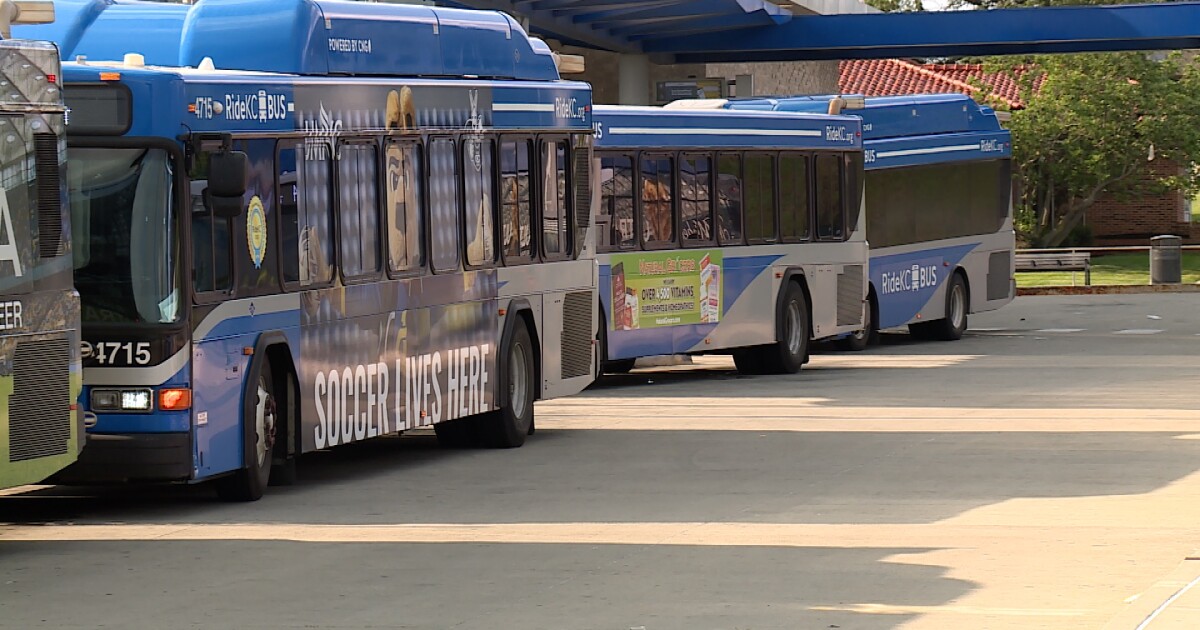
Kansas City to reduce bus transit frequency, extended hours after World Cup matches end
-

 Kentucky10 minutes ago
Public Health Student Hollie Hagan found her calling in rural Kentucky
-

 Louisiana15 minutes ago
Inside the lab at the heart of Louisiana’s mosquito-borne disease prevention network
-
 Maine22 minutes ago
Meet 16 obscure Maine Democrats shaping Graham Platner’s replacement
-

 Maryland25 minutes ago
Justice Department sues Maryland over immigration policies
-

 Michigan30 minutes ago
How two Michigan stamping plants power Stellantis turnaround plan
-

 Massachusetts37 minutes ago
3 hospitalized after vehicle crashes into Danvers business

