Southwest
Pillowcase Murders: Suspected Texas serial killer smothered elderly women in upscale nursing homes

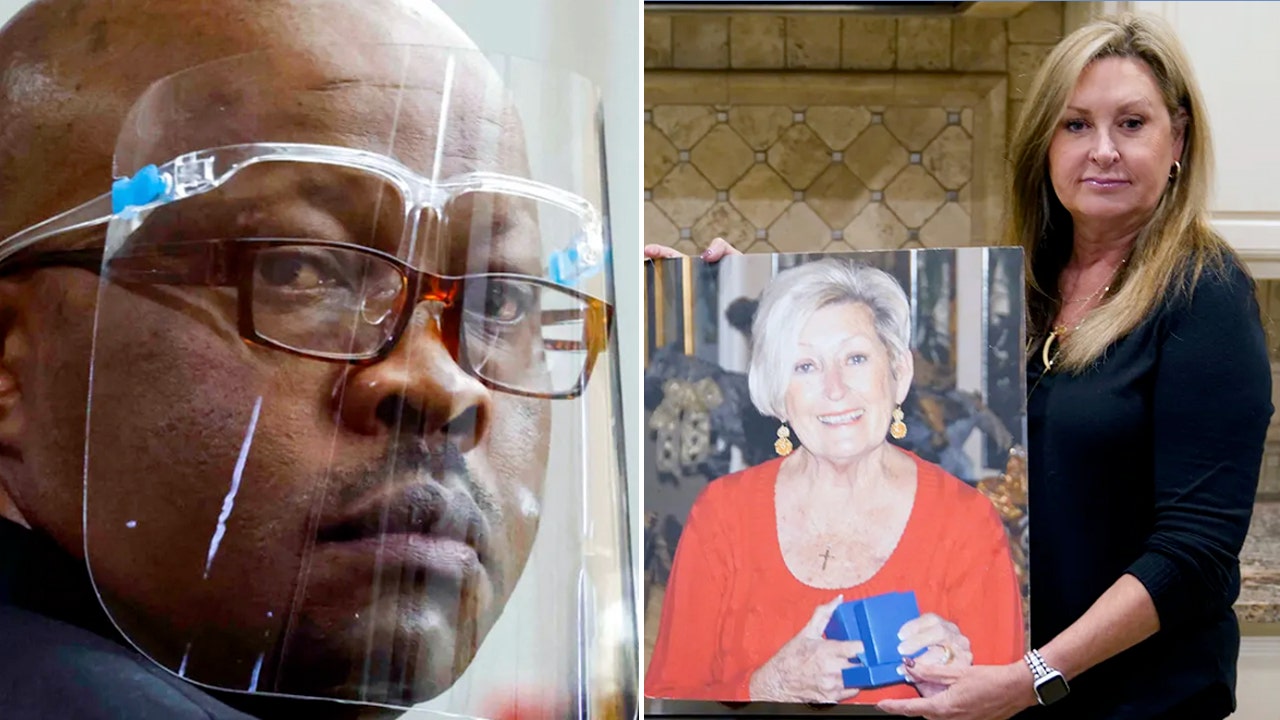
Billy Chemirmir was convicted in the slayings of two elderly women at high-end Texas retirement homes and indicted for the killings of 20 more, but if one woman had not survived his attempt at smothering her, he may have never been caught.
Less than a year after he was killed by his cellmate, suspected serial killer Billy Chemirmir is the subject of a just-released Paramount+ docuseries “Pillowcase Murders.” He was killed in a Texas prison by a cellmate in 2023, officials said.
Over a two-year span, authorities said Chemirmir used his work as a caregiver to prey on elderly women in the Dallas area, posing as a maintenance person or medical professional to get into their homes before asphyxiating them and stealing their valuables, including $30,000 worth of jewelry in one instance.
Smothering leaves little evidence of foul play, and due to the women’s advanced ages, their deaths were repeatedly attributed to natural causes.
TEXAS ALLEGED SERIAL KILLER’S VICTIMS’ FAMILIES PUSH FOR DEATH PENALTY: ‘HE JUST REEKS OF EVIL’
Accused serial killer Billy Chemirmir looks back during his retrial on April 25, 2022, at Frank Crowley Courts Building in Dallas. (Shafkat Anowar/The Dallas Morning News via AP)
The daughter of Marilyn Cardillo Bixler, who was found dead on the floor of her apartment in September 2017, previously told Fox News Digital that she did not suspect her mother had been murdered when she found her dead.
“I thought it was strange where her body was. I thought it was strange that her glasses were across the room with the frames bent and the lens popped out, so much so that I set them on the console of my car and took a picture. The back of her hair, which she had done every Friday, was an absolute mess and that just didn’t make sense to me,” Cheryl Pangburn said in 2022.
Shannon Dion told Oxygen.com that she found it suspicious that her mother’s jewelry, including the gold guardian angel necklace she always wore around her neck, and wallet were missing when her mother died in 2016. Dallas Police Department officers allegedly told her that they believed someone had robbed her after she died of natural causes.
SIGN UP TO GET TRUE CRIME NEWSLETTER
M.J. Jennings looks at a photo of her mother, Leah Corken, while sitting at her home in Dallas, Wednesday, Nov. 3, 2021. Corken was one of 22 women in the Dallas area who Billy Chemirmir was charged with killing. Officials say Chemirmir was killed by his cellmate on Sept. 19, 2023 in a Texas prison. (AP Photo/LM Otero)
“It flat out didn’t make any sense,” Dion told the outlet. “But I grew up to trust police. I had nothing else to go on. What else do I do?”
Dion would later learn that her mother, Doris Gleason, was the seventh resident of Tradition-Prestwood to die in under four months, the outlet reported.
In March 2018, a 91-year-old Mary Bartel told police that Chemirmir had forced his way into her apartment at an assisted living community, tried to smother her with a pillow and stole her jewelry.
Police quickly identified Chemirmir as a suspect, according to the documentary. The next day, they arrested the Kenyan national in the parking lot of his apartment complex while he held jewelry and cash, having just thrown a large red jewelry box into a dumpster.
SUSPECTED SERIAL KILLER BILLY CHEMIRMIR KILLED BY CELLMATE IN TEXAS PRISON
Billy Chemirmir, 50, was reportedly murdered in prison by cellmate Wyatt Busby, who was serving a 50-year sentence for a fatal stabbing. (Texas Department of Criminal Justice)
Documents inside the box led them to Lu Thi Harris, 81, who was found dead in her bedroom, Fox News Digital previously reported. The elderly woman had red lipstick smeared on her mouth, and a matching red stain on the pillow beside her indicated that she had been smothered, Fox News Digital previously reported.
Detectives looking at unexplained or suspicious deaths of elderly women in the Dallas-Fort Worth area began to connect more deaths to Chemirmir. As details of the suspected killer’s crimes became public, more family members came forward.
The strange details surrounding her mother’s death came back to Pangburn when she received a Facebook message from a high school friend.
“She sent me a message that said, ‘My mom was also a victim of Billy Chemirmir. My condolences. If you would ever feel comfortable talking, here’s my number,’” Pangburn previously told Fox News Digital.
FOLLOW THE FOX TRUE CRIME TEAM ON X
Sitting among photos of her late mother, Doris Gleason, Shanon Dion talks about her in Carrolton, Texas, on Wednesday, Nov. 3, 2021. (AP Photo/LM Otero)
“As I’m sitting in this appointment, I have no idea what she’s talking about. I Google search the name Billy Chemirmir, and it just pulls up this serial killer’s story,” she said. “I’m horrified, but things are starting to make sense.”
During her deposition at Chemirmir’s murder trial, survivor Bartel told jurors that the man smothered her until she lost consciousness. However, she survived, came to and went to a hospital. Her gold wedding band, a diamond gold ring, a gold locket with a picture of her late husband, two gold crucifixes and a silver bracelet were missing when she returned home, she said.
That capital murder trial ended in mistrial after a jury was left deadlocked in an 11-1 vote after 11 hours of deliberation, NBCDFW reported.
However, in April 2022, Chemirmir was convicted of murder in Harris’ death, then was convicted in a separate case in the death of 87-year-old Mary Brooks.
“I am not a killer,” Chemirmir told The Dallas Morning News before his conviction. “I’m not at all what they’re saying I am. I am a very innocent person. I was not brought (up) that way. I was brought (up) in a good family. I didn’t have any problems all my life… I am 100 percent sure I will not go to prison.”
CELLMATE WHO KILLED SUSPECTED TEXAS SERIAL KILLER BILLY CHEMIRMIR IDENTIFIED
Defendant Billy Chemirmir listens to motions and language being discussed and sent to the jury after one juror is hanging up the deliberations in his capital murder trial at the Frank Crowley Courts Building in Dallas on Friday, Nov. 19, 2021. (Tom Fox/The Dallas Morning News via AP, Pool)
Rather, Chemirmir told the newspaper he was just in the wrong place at the wrong time and noted that he had family members who operated nursing homes in the area.
“If I was a killer, I could’ve killed all those ladies,” he said. “Nobody has been killed there.”
In her victim impact statement after his conviction, Ellen French House told Chemirmir that she wanted him to see two photos of her mother Norma French, one when she was still alive and the next after he had allegedly killed her.
“This is my beautiful mother,” House said as she displayed the first photo, according to KHOU 11. “This is my mother after you pried her wedding ring off of her finger that she couldn’t even get off.”
Chemirmir was sentenced to life in prison and sent to Coffield Unit in Tennessee Colony, located about 100 miles southeast of Dallas, Fox News Digital previously reported.
GET REAL TIME UPDATES DIRECTLY ON THE TRUE CRIME HUB
After he was sentenced to life, prosecutors dismissed 20 more capital murder charges against Chemirmir, prompting his alleged victims’ families to hold a demonstration.
“Not only was it another horrible feeling, but the paperwork doesn’t even have her name on it,” House told Fox News Digital at the time. “Just a number now I guess.”
Although he was spared the death penalty in Dallas County, families were hopeful that Collin County would pursue capital punishment.
“She was a joy and she was absolutely thriving where she was, she absolutely loved living where she lived, and it just ended tragically,” Pangburn told Fox News Digital. “It’s the ultimate crime, it deserves the ultimate punishment.”
However, in September 2023, Chemirmir was beaten and stabbed to death by his cellmate Wyatt Busby, who was serving a 50-year sentence for killing a Houston man in 2016, according to WFAA. Dallas County District Attorney John Creuzot told the outlet that Chemirmir had apparently made inappropriate sexual comments about the man’s children.
Read the full article from Here


A former Riverside County man was found guilty of sex trafficking a female victim and forcing her to engage in commercial sex acts along L.A.’s notorious Figueroa Corridor.
Elias Abdul Shabazz, 34, formerly of Perris, was found guilty by a jury following a five-day trial, the U.S. Attorney’s Office said.
Prosecutors said Shabazz had led the victim to believe they were in a romantic relationship before he turned physically and sexually violent. He began demanding that the victim engage in commercial sex acts from May to October of 2021, court documents said.
He carried a handgun with him and, on occasion, was accused of using it to pistol-whip the victim. He also fired the gun at her feet while threatening to kill her, prosecutors said.
At trial, the victim said Shabazz demanded that she meet a daily quota of commercial sex proceeds and that she was terrified of the consequences of not meeting that quota.
She testified that Shabazz compelled her to work in the notorious Figueroa Corridor in South L.A., a dangerous area known for human trafficking and prostitution.
Shabazz had confiscated her identification card, Social Security card and birth certificate. He constantly monitored her cell phone to stop her from communicating with any friends or family.
“He also introduced her to addictive narcotics and controlled every aspect of her life, including when she ate, slept and showered,” prosecutors said.
In May 2025, Shabazz was arrested and has remained in federal custody. His last known address at the time was in Washington, D.C.
On June 26, 2026, Shabazz was found guilty of one count of coercing or enticing interstate transportation for purposes of prostitution.
A sentencing hearing is scheduled for Oct. 6, where he faces 15 years to life in prison.
“Sex trafficking matters rank among the most tragic cases our office prosecutes,” said First Assistant U.S. Attorney Bill Essayli. “This defendant will now face many years in a federal prison cell for his sick, disgusting, and disturbing behavior.”
“Elias Shabazz preyed on a vulnerable victim using physical and sexual violence and cruel psychological coercion to compel commercial sex acts for his own profit,” said Assistant Attorney General A. Tysen Duva of the Justice Department’s Criminal Division. “There is no place for this type of conduct in civilized society. We deeply respect the victim’s courage to face her trafficker in court. The Criminal Division will continue to bring these cases and try them.”
Anyone with information about human trafficking can report tips to the National Human Trafficking Hotline at 888-373-7888

The star-studded feel-good giveback event of the summer has returned. KTLA 5 is teaming up once again with Project Angel Food for the annual “Lead with Love: Going the Distance” telethon to raise critical funds for medically tailored meals delivered to people living with serious illnesses throughout Los Angeles County. The seventh annual telethon airs […]

A woman was hospitalized with serious injuries after she was violently attacked by a robber in downtown Long Beach. On June 18, Jennifer Silva, 34, was attending a World Cup watch party at a Hooters restaurant at 90 Aquarium Way. After the game ended, she left the restaurant just before 11 p.m. As she walked […]
-

 News11 minutes ago
Utah County declares State of Emergency as wildfires ‘ravage’ the state
-

 Los Angeles, Ca1 hour ago
Man found guilty of sex trafficking victim along L.A.’s Figueroa Corridor
-

 Detroit, MI2 hours ago
No. 23 overall pick in the 2026 NHL draft | Detroit Red Wings
-

 San Francisco, CA2 hours ago
San Francisco Pride kicks off with rainbow lasers, ValQueeries celebrate at Valkyries Pride Night
-

 Dallas, TX2 hours ago
How to buy Egypt vs. Australia World Cup soccer tickets
-

 Miami, FL2 hours ago
Helping Venezuela: Miami search-and-rescue team prepares to deploy
-

 Boston, MA2 hours ago
How to buy Paraguay vs. Germany 2026 World Cup tickets in Boston
-

 Denver, CO2 hours ago
Denver Broncos Roster Breakdown: Center—The Depth Question

