West
McDonald's franchise owner backed by top Dems wins key primary that could swing control of Congress

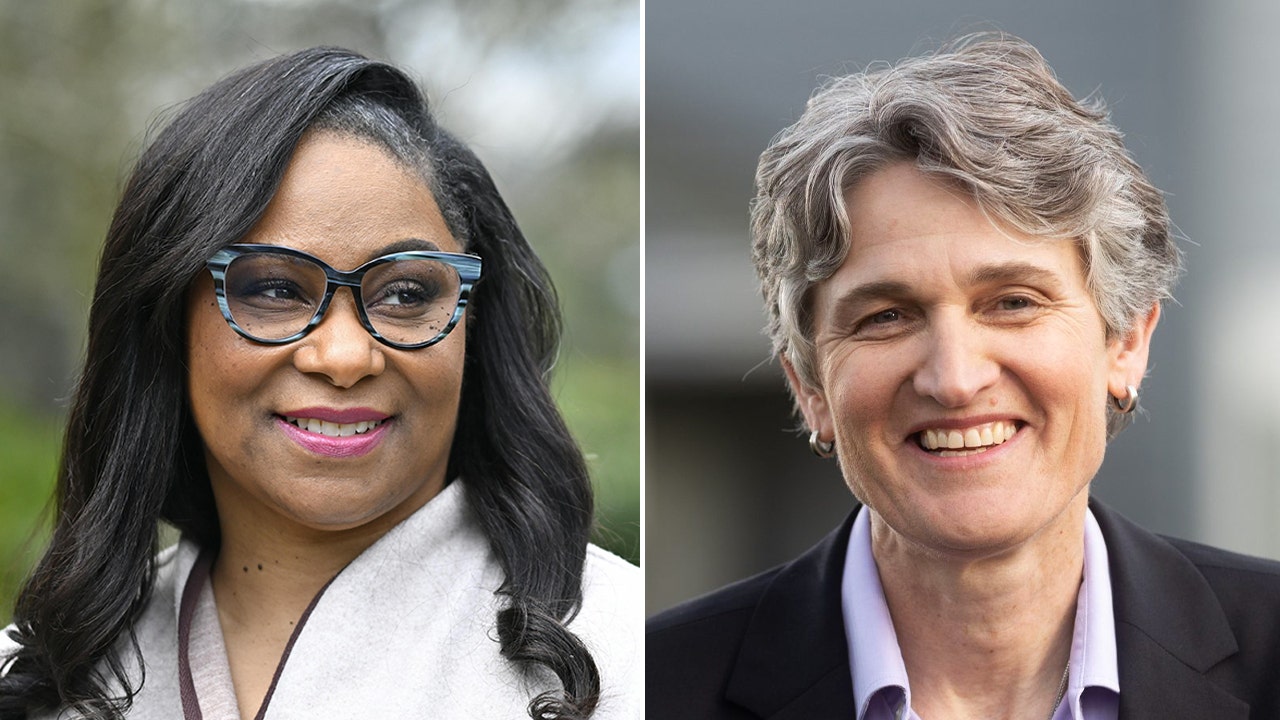
Oregon State Rep. Janelle Bynum won the Democratic primary in Oregon’s 5th Congressional District on Tuesday, putting her on a collision course with the Republican incumbent, Lori Chavez-DeRemer, this fall.
Bynum defeated Jamie McLeod-Skinner to advance to face Chavez-DeRemer in a race widely expected to play a significant role in deciding which party controls the House of Representatives.
McLeod-Skinner narrowly lost to Chavez-DeRemer two years ago after defeating longtime Democratic Rep. Kurt Schrader in the 2022 primary by running as a progressive to his left.
Some top Democrats believe Bynum, who represents Portland’s southeast suburbs in the state House, is more likely to win in a general election. Democratic Gov. Tina Kotek and three U.S. House Democrats endorsed Bynum.
EMBATTLED TRUMP PROSECUTOR FIGHTS TO KEEP JOB AS GEORGIA AMONG FIVE STATES HOLDING ELECTIONS TUESDAY
Oregon State Rep. Janelle Bynum (left) defeated progressive Jamie McLeod-Skinner (right) in the Democratic primary in Oregon’s 5th Congressional District Tuesday night. (Janelle Bynum for Congress I Jamie McLeod-Skinner for Congress)
“This is one of the big swing districts nationally that both parties are really looking for to hold on to, or recapture, the House,” Ben Gaskins, associate professor of political science at Lewis & Clark College, told The Associated Press about Oregon’s 5th District.
“I think that the big question is to what degree are the Democratic voters really going to prioritize electability?”
VAST MAJORITY OF PORTLAND RESIDENTS ARE ‘DISSATISFIED’ WITH PROGRESSIVE LEADERSHIP OF THE CITY
Bynum will now face Rep. Lori Chavez-DeRemer, R-Ore., (above) in the November general election. (Al Drago/Bloomberg via Getty Images)
Bynum, from Washington, D.C., was elected to the Oregon House in 2016 and has served on the chamber’s small business committee. She is also the owner of four McDonald’s franchises.
Oregon’s 5th Congressional District includes all of Linn County, most of Clackamas and Deschutes counties, and parts of Marion and Multnomah counties.
Oregon’s 5th Congressional District includes all of Linn County, most of Clackamas and Deschutes counties, and parts of Marion and Multnomah counties, including Portland. (Fox News)
Chavez-DeRemer, who does not have a primary opponent, is the first Republican woman to represent Oregon in the U.S. House.
The Associated Press contributed to this report.
Read the full article from Here



SCOTUS upholds state bans on transgender athletes in female sports
The Supreme Court ruled that states can bar transgender women and girls from competing on female sports teams.
States can ban transgender women and girls from competing on female sports teams, the U.S. Supreme Court decided in a June 30 ruling celebrated by Oregon’s Republican candidate for governor and criticized by Democrats.
The decision is another setback for the LGBTQ+ community from the high court, which has issued a series of recent rulings against transgender Americans.
The court said West Virginia’s and Idaho’s bans on female transgender athletes do not violate either the Constitution or a federal law barring sex discrimination in education.
Writing for the majority, Justice Brett Kavanaugh said schools “may determine eligibility for women’s and girls’ sports based on biological sex.”
“Separate sports teams for biological males and biological females are reasonable,” he wrote.
In a partial dissent that was joined by her two liberal colleagues, Justice Sonia Sotomayor said she would have given the student challenging West Virginia’s law a chance to show that the ban should not apply to her.
“In opting otherwise, the majority extends great sympathy to those it favors: the young cisgender girls and women who play sports,” she wrote. “Because the majority, however, inflicts a hardship on those it disfavors without giving them the fair and full opportunity the Constitution requires to litigate their contentions, I respectfully dissent.”
Twenty-seven states have passed similar bans, saying they are trying to ensure fairness and address safety concerns for non-transgender women. Similar proposals have not been successful in Oregon.
The transgender students who challenged the laws said hormone therapy and other medical treatments they’ve taken have blocked any physiological advantages from being born male. The laws, they said, should not apply to them for that reason.
The students were also banking on a landmark 2020 Supreme Court decision protecting transgender employees from workplace discrimination.
But since that unexpected 6-3 decision by a conservative court, the justices have often ruled against transgender Americans. That includes their 2025 decision that states can ban gender-affirming care for transgender minors.
Sen. Christine Drazan, Oregon Republican gubernatorial candidate, celebrates ruling
Oregon Republicans have proposed legislation to ban transgender students’ participation in sports.
Sen. Christine Drazan, R-Canby, who will face off against Gov. Tina Kotek in November, raised the issue during an April Republican gubernatorial debate.
“We’ve got to get politics off of our sports fields. No more boys in girls’ sports, no more men in girls’ locker rooms,” Drazan said.
Rep. Ed Diehl, R-Scio, and Chris Dudley, who unsuccessfully ran for the Republican Party’s gubernatorial nomination, promoted similar stances while campaigning.
Drazan issued a statement June 30 in support of the Supreme Court’s ruling.
“This ruling is a victory for fairness, common sense and for the progress achieved by generations of women who fought for and earned the right to compete,” Drazan said. “Girls and young women across Oregon are still competing on an unfair and unsafe playing field.”
Drazan said she’s always supported women’s right to compete and as governor would do everything she could to ensure girls can have a chance to compete.
Diehl also thanked the court for the ruling on social media, saying in part, “this ruling upholds Equal Protection and clarifies Title IX does not force male athletes onto girls’ teams.”
OSAA reviewing ruling, Oregon Democrats speak against court decision
The Oregon School Activities Association, which oversees high school sports and other extracurriculars in Oregon, said it was reviewing the ruling with its legal team.
OSAA’s policies allow students to participate on the team that aligns with their gender identity.
“The association will work with the Oregon Department of Education on the ruling’s impacts on state law and OSAA policy in order to provide updated guidance to member schools as needed,” a spokesperson said in a statement to the Statesman Journal. “The OSAA remains committed to ensuring interscholastic activities remain a safe and welcoming environment for all student-athletes.”
Kotek’s office did not provide comment by deadline.
Two Democratic state representatives issued statements against the justices’ decision.
“Today’s ruling is a devastating departure from decades of civil rights progress. By inviting discrimination, the court has empowered a coordinated effort to push transgender people out of public life altogether. We cannot go backwards on the road to inclusivity,” Rep. Jules Walters, D-West Linn, said.
Rep. April Dobson, D-Happy Valley, similarly criticized the ruling and said she would fight to defend Oregon’s laws.
Kyndall Mason, executive director of Basic Rights Oregon, a nonprofit group that advocates for LGBTQ rights, said in part the group wants to “assure Oregonians that trans kids are still allowed to play in our state.”
Anastasia Mason covers state government for the Statesman Journal. Reach her at acmason@statesmanjournal.com or 971-208-5615.

State Sen. Todd Weiler previously shared a six-post thread about opponents of the Box Elder data center allegedly being paid by China.
(Rick Egan | The Salt Lake Tribune) Sen. Todd Weiler, R-Woods Cross, says a few words during a ceremonial bill signing to highlight landmark legislation that establishes Utah as a national leader in protecting kids online, in the Gold Room at the Capitol, on Friday, April 4, 2025.

Photo by Elman Studio.
June 30, 2026 (Washington, D.C.) – The Washington Chorus (TWC), DC’s most dynamic choral ensemble, celebrates its 65th anniversary during the 2026-2027 season. Through thought-provoking pairings of classic major choral works, artistic collaborations, and groundbreaking premieres, TWC celebrates its history of providing an inclusive community where choral music connects, reflects, and inspires everyone while continuing its mission of creating transformative musical experiences that bring people together through the joy of choral music.
“Our 65th season showcases TWC’s commitment to honoring choral tradition while embracing the living voices shaping American music today,” said TWC Artistic Director Eugene Rogers. “We look forward to serving the entire D.C. community, bringing new audiences into our special anniversary celebration through this repertoire and outstanding guest artists.”
The season begins with TWC’s guest appearance with the National Symphony Orchestra for Beethoven’s Ninth Symphony, conducted by Gianandrea Noseda at Wolf Trap’s Filene Center on Friday, August 14, 2026 at 8:00 p.m. On Thursday, October 15, 2026 at 7:30 p.m. at Joseph Myerhoff Symphony Hall; Saturday, October 17, 2026 at 8:00 p.m. at Music Center at Strathmore; and Sunday, October 18, 2026 at 3:00 p.m. at Meyerhoff TWC joins Marin Alsop and the Baltimore Symphony Orchestra for John Adam’s On the Transmigration of Souls as part of the BSO’s Alsop Conducts Tchaikovsky’s Pathétique concert.
The Washington Chorus’s own season kicks off with two weekends of A Candlelight Christmas concerts in December, continuing its beloved holiday tradition now reimagined in new venues across the city. This cherished program brings together The Washington Chorus with the National Capital Brass and Percussion Ensemble, alongside award-winning music director, organist, and conductor Paul Byssainthe Jr., soprano Colleen Daly, and jazz-mezzo Christie Dashiell. The program will also feature the premiere of a new work by Evelyn Simpson-Curenton. Blending timeless carols with vibrant new voices, A Candlelight Christmas offers a warm and luminous celebration of the season – honoring tradition while embracing the rich musical spirit of our community. Venue and performance info are listed below.
In the new year, The Washington Chorus presents A Song Flung Up to Heaven: Honoring 65 Years of TWC on Sunday, February 28, 2027 at 3:00 p.m. at DAR Constitution Hall. The program juxtaposes two major works from contrasting origins – Nkeiru Okoye’s When the Caged Bird Sings and Poulenc’s Gloria – that treat sacred themes with a striking blend of reverence and theatricality. Together, these two major works meld European and American musical traditions into a powerful, life-affirming concert experience with a deep connection to spiritual rituals, while each composer’s innovation imbues them with new discoveries and uncovers mysteries of the human condition.
The centerpiece of this performance is the East Coast premiere of Dr. Nkeiru Okoye’s dramatic work When the Caged Bird Sings – a “musical ceremony” fusing many genres, including opera, musical theater, spoken word, and choral singing, and American musical styles including gospel, spirituals, traditional anthems, and jazz. Okoye’s evocative new piece celebrates the spirit of rising above expectations and transforming adversity into triumph through the milestones in the life of one Black woman. Partly in tribute to the activist and poet laureate Maya Angelou, the work celebrates and explores the transformative ability of the human spirit, commemorating those who have paved a path for future generations. The concert opens with a cornerstone of 20th-century sacred music, Francis Poulenc’s Gloria, which first premiered in 1961, the same year as TWC’s founding.
In May, TWC partners with the National Philharmonic to present Requiem and Renewal featuring Mozart’s monumental Requiem. This will be preceded by Jocelyn Hagen’s large-scale symphonic work, What the Soul Already Knows, on Saturday, May 8, 2027 at 7:30 p.m. at Music Center at Strathmore. Jointly commissioned by Pacific Chorale under the direction of Robert Istad and The Washington Chorus, the work will have its East Coast premiere as part of TWC’s 65th Anniversary Season.
Rooted in an exploration of the sacred – in both the physical world and the unseen – the work invites listeners to reflect on the deep interconnectedness of all life. At its core, What the Soul Already Knows is a meditation on our shared humanity and the potential for beauty that arises when we live in alignment with gratitude, unity, and service. The title received inspiration from the book Sacred Earth, Sacred Soul by Celtic spiritual teacher John Philip Newell, whose writings illuminate the sacred as present not only in heaven, but within the earth and all living beings. Both Hagen’s and Mozart’s works are meditations on the soul in a program that asks: What is the soul, what is sacred, and how should we live – before and beyond death?
Closing the season is a theatrical version of Giuseppe Verdi’s Requiem with the Baltimore Symphony Orchestra and conducted by its Artistic Director Jonathon Heyward on Friday, June 11, 2027 at 8:00 p.m. at Joseph Meyerhoff Symphony Hall; Saturday, June 12, 2027 at 6:00 p.m. at Music Center at Strathmore; and Sunday, June 13, 2027 at 3:00 p.m. at Joseph Meyerhoff Symphony Hall. This staged performance of Verdi’s masterpiece is our third collaboration with Heyward and the BSO’s multi-year Verdi Opera Initiative.
Performance Information
Beethoven’s Ninth Symphony
Friday, August 14, 2026 at 8:00 p.m.
Filene Center, Wolf Trap | 1551 Trap Road | Vienna, VA 22182
Tickets: $57 – $132
Link: wolftrap.org/show/26filene/081426/
Program:
Beethoven – The Consecration of the House – Overture
Beethoven – Elegiac Song, Op. 118
Beethoven – Symphony No. 9
Artists:
National Symphony Orchestra
Gianandrea Noseda, conductor
Tessa McQueen, soprano
Cecelia McKinley, alto
Demetrious Sampson, tenor
Jonathan Patton, baritone
The Washington Chorus
Eugene Rogers, artistic director
_______________________________
Alsop Conducts Tchaikovsky’s Pathétique
Thursday, October 15, 2026 at 7:30 p.m.
Joseph Meyerhoff Symphony Hall | 1212 Cathedral Street | Baltimore, MD 21201
Saturday, October 17, 2026 at 8:00 p.m.
Music Center at Strathmore | 5301 Tuckerman Lane | North Bethesda, MD 20852
Sunday, October 18, 2026 at 3:00 p.m.
Joseph Meyerhoff Symphony Hall | 1212 Cathedral Street | Baltimore, MD 21201
Tickets: Subscriptions are on sale now, with single tickets on sale August 2026
Link: my.bsomusic.org/20342/20381
Program:
Barber – Adagio for Strings
John Adams – On the Transmigration of Souls
Tchaikovsky – Symphony No. 6, “Pathétique”
Artists:
Baltimore Symphony Orchestra
Marin Alsop, conductor
The Washington Chorus
Eugene Rogers, artistic director
_______________________________
A Candlelight Christmas
Saturday, December 11, 2026 at 3:00 p.m.
Sunday, December 12, 2026 at 3:00 p.m.
Cramton Auditorium, Howard University | 2455 6th St NW | Washington, DC 20059
w/Howard University Chorale
Friday, December 18, 2026 at 7:30 p.m.
Saturday, December 19, 2026 at 11:00 a.m. & 3:00 p.m.
Lisner Auditorium, George Washington University | 730 21st St NW | Washington, DC 20052
Monday, December 21, & Tuesday, December 22, 2026 at 7:30 p.m.
Music Center at Strathmore | 5301 Tuckerman Lane | North Bethesda, MD 20852
Link: thewashingtonchorus.org/2026-27-season
Program:
Evelyn Simpson-Curenton – NEW WORK (World Premiere)
Artists:
Eugene Rogers, conductor
Christie Dashiell, soloist (Dec. 11, 12, 21 & 22)
Howard University Concert Choir (Dec. 11 & 12)
Eric Poole, conductor
National Capital Brass and Percussion Ensemble
Paul Byssainthe Jr., organ & piano (Dec. 18 -22)
Reservoir High School (Dec. 18 & 19)
Gregory Knauf, conductor
South Loudon Youth Chorale (Dec. 21 & 22)
Laura Lazarevich, conductor
_______________________________
A Song Flung Up to Heaven: Honoring 65 Years of TWC
Sunday, February 28, 2027 at 3:00 p.m.
DAR Constitution Hall | 1776 D Street NW | Washington, D.C. 20006
Link: thewashingtonchorus.org/2026-27-season
Program:
Poulenc – Gloria
Nkeiru Okoye – When the Caged Bird Sings
Artists:
Eugene Rogers, conductor
Denyce Graves, narrator
Cyrus Chestnut, piano
Angela Brown, soprano
Christie Dashiell, jazz mezzo
Issachah Savage, tenor
Michael Preacely, baritone
The Washington Chorus
Howard University Chorale
Dr. Eric Poole, director
_______________________________
Requiem and Renewal
Saturday, May 8, 2027 at 7:30 p.m.
Music Center at Strathmore | 5301 Tuckerman Lane | North Bethesda, MD 20852
Tickets: Single tickets are on sale beginning Thursday, July 23, 2026
Link: nationalphilharmonic.org/event/what-the-soul-already-knows-requiem-renewal/
Program:
Jocelyn Hagen – What the Soul Already Knows
Mozart – Requiem in D Minor
Artists:
National Philharmonic
The Washington Chorus
Eugene Rogers, conductor
Rabihah Dunn, soprano
Ashley Dixon, mezzo-soprano
Brian Giebler, tenor
Alan Williams, baritone
_______________________________
Heyward Conducts Verdi’s Requiem
Friday, June 11, 2027 at 8:00 p.m.
Joseph Meyerhoff Symphony Hall | 1212 Cathedral Street | Baltimore, MD 21201
Saturday, June 12, 2027 at 6:00 p.m.
Music Center at Strathmore | 5301 Tuckerman Lane | North Bethesda, MD 20852
Sunday, June 13, 2027 at 3:00 p.m.
Joseph Meyerhoff Symphony Hall | 1212 Cathedral Street | Baltimore, MD 21201
Tickets: Subscriptions are on sale now, with single tickets on sale August 2026
Link: my.bsomusic.org/overview/20358
Program:
Giuseppe Verdi – Requiem
Artists:
Baltimore Symphony Orchestra
Jonathon Heyward, conductor
The Washington Chorus
Eugene Rogers, artistic director
___________________________
About The Washington Chorus
The Washington Chorus (TWC) is one of the foremost symphonic choruses in the nation and a cultural leader in our nation’s capital—creating joyous and transformative choral music since 1961. TWC is noted for the superb artistry of its performances and recordings of the entire range of the choral repertoire. A three-time nominated and two-time Grammy Award-winner, the 220-voice Chorus presents performances annually across the DMV region. TWC is also a longtime artistic partner and collaborator with many of the nation’s leading organizations and artists, including the National Symphony Orchestra (NSO), National Philharmonic (NatPhil), Washington Performing Arts (WPA), and the Baltimore Symphony Orchestra (BSO). TheWashingtonChorus.org
About Eugene Rogers
Lauded for leading performances of “pure magic” (Washington Post), conductor Eugene Rogers is at the vanguard of American musicians, recognized for his musical and educational leadership around the world. Rogers is a committed conductor, teacher, arranger, and industry thought leader, championing timely new works, bringing historically overlooked music to life, and supporting next-generation talents.
Rogers is a two-time Michigan Emmy Award winner, a 2017 Sphinx Medal of Excellence recipient, and was nominated for a Grammy Award in 2015. Musical America magazine has named him one of the top music industry professionals, and his work has been profiled on CNN, PBS, and on radio stations and in print and online publications across the world.
Since 2020, Rogers has served as Artistic Director of The Washington Chorus. He is also the Founding Director for EXIGENCE, a professional vocal ensemble affiliated with the world-renowned Sphinx Organization, highlighting artistry within Black and Latinx communities. Alongside his own appearances as guest conductor for orchestra, chorus, and opera, he has also proudly acted as chorus master to leading conductors including Gianandrea Noseda, Marin Alsop, Jonathan Heyward, Joe Hisaishi, and James Conlon.
Rogers is a Professor of Music and the Director of University Choirs at the University of Michigan School of Music, Theatre, and Dance. He is a former board member of Chorus America and is the former national chair of the Diversity Initiatives Committee for the American Choral Directors Association. Rogers is also active as an arranger, with publications including the Eugene Rogers Choral Series with ECS Publishing and the EXIGENCE Choral Series for Mark Foster Publishing.

-

 Ohio7 minutes ago
Four arrested, 16 children removed from southeast Ohio home
-

 Oklahoma10 minutes ago
Oklahoma AG announces settlement that would cut PSO rate increase from 15% to 1%
-

 Oregon15 minutes ago
Oregon leaders celebrate, slam Supreme Court ruling on trans athletes
-

 Pennsylvania22 minutes ago
What to know as Pennsylvania’s state budget deadline arrives
-

 Rhode Island25 minutes ago
Foulkes still holds 20-point lead over McKee, but gap is narrowing
-

 South-Carolina30 minutes ago
Live nightly lottery drawings hit ABC15 as SC Education Lottery partner
-

 South Dakota37 minutes ago
130 mph straight line winds devastate South Dakota wind farm – Oklahoma Energy Today
-

 Tennessee40 minutes ago
Former Tennessee baseball pitcher Garrett Stallings called up by Milwaukee Brewers

