Northeast
Numerous members, associates of violent Boston gang face racketeering, drug trafficking and other charges

Over 40 members and associates of a violent Boston gang allegedly responsible for multiple murders, racketeering, COVID loan fraud and other crimes were arrested on Wednesday during an operation involving federal and local agencies.
The U.S. Attorney’s Office for the District of Massachusetts, led by Joshua S. Levy, announced the crack-down on Wednesday, following a two-year investigation into gang violence in Boston.
In a press release, Levy’s office said the Heath Street Gang operates out of the Mildred C. Hailey Apartments, which is a public housing development in Jamaica Plain.
The gang was formed in the 1980s, the release read, and is alleged to have over 150 members and to have been involved in violent acts to protect and preserve the gang’s power, territory and reputation.
ILLEGAL MASTERMINDS OF NYC ROBBERY RING HACKED BANK APPS, RESOLD STOLEN PHONES OVERSEAS
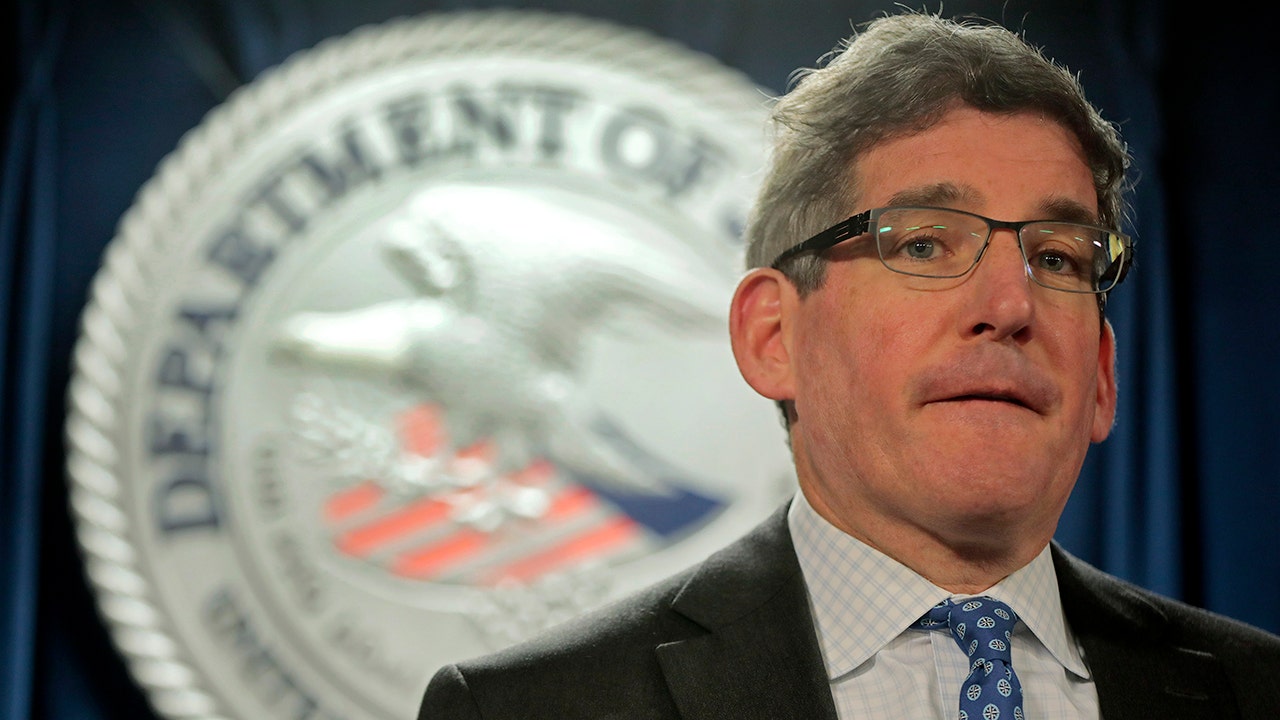
Acting United States Attorney Joshua S. Levy speaks. Authorities announce the arrest of three people for operating a brothel network in Greater Boston and eastern Virginia. (Pat Greenhouse/The Boston Globe via Getty Images)
Charging documents claim that in addition to Racketeer Influence and Corrupt Organizations Act (RICO) conspiracy crimes, members and associates are implicated in numerous murders, attempted murders and shootings largely targeting rival gang members and associates of other Boston-based gangs, including the H-Block and Mission Hill gangs.
One shooting Heath Street gang members allegedly took part in, officials said, targeted rivals in the Mission Hill Gang’s territory in October 2016, and resulted in the shooting of a 9-year-old girl who was severely injured.
In an incident in 2021, a juvenile Heath Street member or associate allegedly committed murder in the Mission Hill Gang’s territory, which Levy’s office said is common, as the Heath Street gang is accused of recruiting juveniles in the apartment development to join the gang and participate in crimes.
FBI FEARS VENEZUELA MIGRANT GANG MEMBERS COULD POTENTIALLY TEAM UP WITH MS-13 KILLERS
The U.S. Attorney’s Office in Massachusetts claims the Heath Street Gang operates out of the Mildred C. Hailey Apartments, formerly known as the Bromley Heath Housing Development, in Jamaica Plain. (Google Maps)
Levy’s office also alleges that the Heath Street Gang requires younger prospects to commit acts as part of their initiation, and they are rewarded with appearances in songs or videos made by the gang to assert and affirm gang membership, brag about violent acts and threaten rival gangs.
The gang members are alleged to have assaulted numerous law enforcement officers, as well.
The apartment development where the gang is based has been used for drug trafficking for many years, Levy’s office said, and members have established drug distribution networks throughout Massachusetts, Maine and California.
FUGITIVE ACCUSED OF KILLING MASSACHUSETTS GIRLFRIEND IS RE-ARRESTED IN KENYA AFTER ESCAPING POLICE CUSTODY
Some of the drug activity and deals are facilitated through social media platforms, the attorney’s office alleges, and includes the distribution of fentanyl, fentanyl pills, cocaine, cocaine base and marijuana.
Since about 2019, the group has openly stolen merchandise from stores in Massachusetts and New Hampshire and engaged in unemployment fraud using the CARES Act Loan, according to charging documents.
If convicted, suspects charged with racketeering conspiracy, conspiracy to distribute controlled substances, possession with intent to distribute controlled substances, conspiracy to interfere with commerce by robbery, and robbery could be sentenced to up to 20 years in prison and up to a $250,000 fine for each count.
Suspects convicted of being a felon in possession of a firearm and ammunition could get up to 10 years or 15 years for offenses committed after June 25, 2022, and at least five years, and up to life in prison for possession of a firearm in furtherance of a violent or drug trafficking crime.
Joining Levy during the announcement was Boston Police Commissioner Michael Cox; James M. Ferguson of the Bureau of Alcohol, Tobacco, Firearms & Explosives; and Michael J. Krol of Homeland Security Investigations.
Read the full article from Here


When Americans think of the beverage that fueled the American Revolution, they usually picture black tea — but it turns out that green tea was just as popular.
The Founding Fathers and their contemporaries drank both types of tea, Bruce Richardson, the Kentucky-based founder of Elmwood Inn Fine Teas, told Fox News Digital.
British subjects “were as likely to be drinking green tea as black tea, whether you were in Jane Austen [era] England … or you were in colonial Boston,” he added.
“There were five teas, all from China, because that was the only country that was exporting tea,” Richardson said. “And of those five different teas, two of them were green and three of them were black.”
Richardson, a tea historian who works as the tea master at the Boston Tea Party Ships & Museum, said the five types of tea dumped into Boston Harbor in protest of the Tea Act of 1773 included three black varieties — Bohea, Souchong and Congou — as well as the green teas Hyson and Singlo.
Bohea, the most common and least expensive black tea of the era, was often made from older tea leaves harvested after the highest-quality leaves of the season had already been picked.
Most of the tea dumped into Boston Harbor was Bohea, Richardson said — and it was so ubiquitous that he compared it to the way Kleenex has become synonymous with tissues today.
“It was so common that often teapots at the time, or some that I’ve seen, would say Bohea on the side of the teapot,” he said. “If they wanted tea, they’d say, ‘I’ll have a cup of Bohea.’ It was that common.”
Not only did colonial Americans distinguish between green and black tea, they even stored them differently.
“They still wanted their tea time, but they didn’t want to support the British government.”
“The well-to-do people would have a tea caddy – a wooden, beautifully made tea caddy to store their tea in,” he said.
“It was kept under lock and key. And in that tea caddy, [there] would be two compartments, one for green tea and one for black tea.”

Merchants often favored black tea because it held up better during the long voyage from China to Europe and onward to the American colonies, Richardson said.
“The green tea was what China had always drunk,” he said.
“And so they were exporting that as well, but they found that the black tea actually made the voyage better than the green teas.”
Even after many colonists swore off British tea, they kept the ritual of drinking it — or at least a close substitute.
Many patriots brewed so-called “Liberty Teas” made from ingredients such as dried apples, blueberries, chamomile and herbs grown in their gardens.
“They still wanted their tea time, but they didn’t want to support the British government,” Richardson said.


-

 Los Angeles, Ca55 minutes ago
LeBron James informs Lakers he will play elsewhere next year
-

 Detroit, MI1 hour ago
5 realistic cornerback trade targets for the Detroit Lions after Terrion Arnold’s release
-

 San Francisco, CA1 hour ago
Headlines, June 30 – Streetsblog San Francisco
-

 Dallas, TX1 hour ago
LIVE | Ivory Coast, Norway meet for World Cup knockout match at Dallas Stadium
-

 Miami, FL1 hour ago
Every Dolphins head coach’s start in Miami from worst to best
-

 Boston, MA2 hours ago
Historian clears up one of the biggest myths about the Boston Tea Party
-
Denver, CO2 hours ago
Nemanja Jokic, the older brother of\u00a0Denver …
-

 Seattle, WA2 hours ago
3 Seahawks Rookies Who Must Step Up Right Away

