Entertainment
Maurice Hines Jr., who went from tap-dancing brother act to Broadway trailblazer, dies at 80

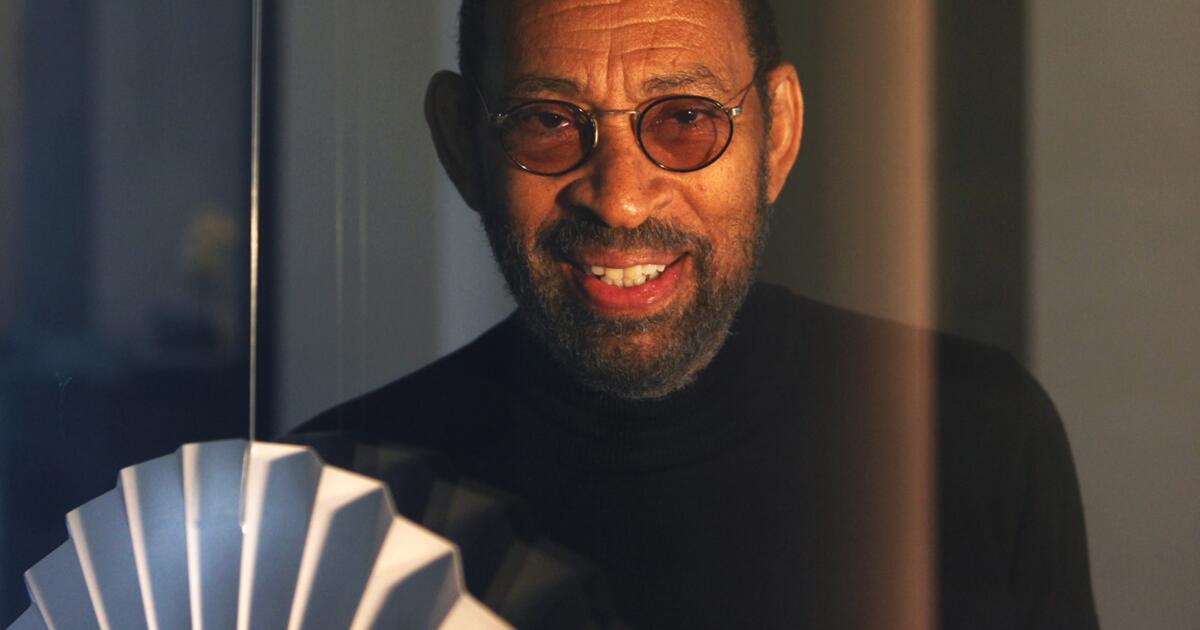
The scene from the movie “Cotton Club” was fictional but encapsulated much in the relationship between Maurice and Gregory Hines. In the film, the estranged brothers, once a top-billed dance duo, come face to face in a nightclub, their wounds and vanities visible; then they reunite in a seamless virtuoso dance, followed by an embrace.
Maurice Hines Jr., the older and longer-lived brother of a famous tandem act that evolved to separate solo stardom for each man, died Friday in Englewood, N.J., said his cousin Richard Nurse, who maintains the Maurice Hines website.
Hines forged a trailblazing 70-year career creating, choreographing, directing and starring in Broadway shows — and also performing all over the world — all the while overcoming prejudice against Black entertainers in leadership roles, and also prejudice against out gay men and out gay Black men.
Centrally, he could flat-out dance, with tap dancing as his trademark form but not his only one.
That movie scene and another from the film exhibit those skills as well as the troubled relationship with brother Gregory Hines, who achieved surpassing fame in Hollywood. Director Francis Ford Coppola allowed the brothers to improvise their filmed interactions.
“Francis picked up on the tension and brought that into the story,” said John Carluccio, who directed and produced the 2019 documentary “Maurice Hines: Bring Them Back.” “They played it very well because clearly that was going on.”
Soon after the film came out, there began a 10-year period where the brothers did not speak. They put aside their differences to be with their dying mother in the latter 1990s. This reconciliation lasted until 2003, when Gregory died of cancer at 57.
Those “Cotton Club” scenes were the last they danced together.
Maurice and Gregory Hines achieved early fame as perhaps the last of the great tap-dancing duos to emerge from the classic age of tap. They dazzled audiences in the early 1950s, first appearing on Broadway when they were 9 and 7 in the 1954 show “The Girl in Pink Tights.” They also sang and, in the early 1960s, joined forces with their father, Maurice Hines Sr., who played drums as part of Hines, Hines and Dad.
Tap had fallen out of vogue, but the brothers worked steadily, appearing more than two dozen times on “The Tonight Show” alone. Gregory, however, tired of being the impish, irresistible younger sibling and decamped alone for Southern California in 1972.
Living on opposite coasts, Maurice was faring better. He was hand-picked to star in the Broadway musical revue “Eubie!” and urged producers to give his brother an audition, while also haranguing his brother to get to New York. Gregory did not impress — his failed audition was later captured in spirit by a scene in the 1999 movie “Tap,” which starred Gregory Hines. In real life, Maurice insisted he would bow out of “Eubie!” unless Gregory was given a chance.
The 1979 show was a smash — as was their duet — but critics in particular fell in love with Gregory, and thus was launched his Tony-winning Broadway career.
Maurice would later replace Gregory — at the latter’s recommendation — as the lead in the stage hits “Sophisticated Ladies” and “Jelly’s Last Jam,” each making the role his own.
Gregory returned to Hollywood to pursue a notable film career. Maurice focused almost entirely on live theater.
“They both found their own lane,” documentarian Carluccio said.
Maurice’s energy, creativity, forcefulness and forthrightness helped him break ground creating, directing, choreographing and starring in two Broadway shows: “Uptown … It’s Hot!” in 1986 and “Hot Feet” in 2006. The latter retold Hans Christian Andersen’s fairy tale “The Red Shoes” through the music of Earth Wind & Fire.
“His choreography was some of the best I’ve ever seen, breathtaking,” said veteran actor-director-producer Mel Johnson Jr., who worked with Maurice Hines on several shows. “The performers were exhausted but they loved it, because they didn’t get the chance to do that kind of dancing on Broadway.”
Despite appreciation for the dancing, neither show proved a commercial or critical success — and Maurice Hines was forced to do much of his best work off Broadway and on tour.
His body of theater work included tributes to other artists such as Ella Fitzgerald, the fusion of hip-hop with traditional theater, a dance company that melded tap and ballet and, late in his career, the biographical, well-received “Tappin’ Thru Life,” which featured an all-female orchestra. He also recorded albums and headlined an acclaimed, long-running nightclub act.
Maurice Robert Hines Jr. was born in Harlem in New York City on Dec. 13, 1943. Gregory was born Feb. 14, 1946. Their mother, Alma Lola Lawless Hines, became a canny manager of the family act. Maurice Sr. was both jack-of-all-trades and working-class Renaissance man, for a time alternating roles as nightclub bouncer and drum-playing orchestra leader, Nurse said. After serving as a mariner in World War II with the Merchant Marine, he sold soda. Late in life he became a chef.
Maurice started dance lessons at 5 after fledgling dance studio owner Henry LeTang went door-to-door recruiting for students, Nurse said. Maurice would immediately teach what he learned to 3-year-old Gregory. LeTang, who later became a force on Broadway, spotted the boys’ talent and drive — and soon began private lessons.
The boys began performing, including at Harlem’s legendary Apollo Theater, where bad acts were not tolerated.
And they watched, performed with or learned directly from such talents as the acrobatic Nicholas Brothers, jazz singer Ella Fitzgerald and entertainer Sammy Davis Jr. — incorporating elements of those performers’ artistry into their own work.
“We wanted us to see all the great tap dancers,” Hines told documentarians. “We saw Coles and Atkins and we saw Bunny Briggs and Teddy Hale, Baby Lawrence. We were learning from these guys and we wanted to be up close so we could see their feet. … The quality that they all had, that I wanted so badly — and I do have it but I learned from them — was … appealing to the audience, be one with the audience, being honest and real with them.”
They boys quickly became popular across the country, opening for entertainers such as Lionel Hampton and Gypsy Rose Lee. They started off as the Hines Kids, became the Hines Brothers and finally Hines, Hines and Dad — until Gregory broke up the act.
Although the split hurt Maurice emotionally, each brother grew artistically. Maurice studied ballet, African and Dunham Technique as well as studying with modern maestro Alvin Ailey and jazz dance innovator Frank Hatchett. His body became limber and stronger, his turns sharp and fast.
He had to “redesign my body,” as he put it. “It was hard.”
Gregory, in turn, developed an earthy, explosive, emotive improvisational style that built on Black rhythmic traditions and influenced an entire generation that followed, including current star Savion Glover, whom Gregory mentored.
Both brothers were key figures in the revival of tap dancing through their teaching, performing and personal connection to greats of the past.
“My brother and I tap completely differently although we were both taught by Henry LeTang,” Maurice Hines told The Times in 1994. “We have very different stances. My style tries to be exactly like Fayard Nicholas, a full body style. [Gregory] dances from the waist down.”
It was ultimately Gregory Hines who became the defining tapper of his generation, although both brothers were undisputed masters of the craft.
Maurice Hines headlined shows into his early 70s, finally slowing down as health problems and accelerating memory issues took their toll, family and friends said.
Hines is survived by an adopted daughter, Cheryl Davis, whom he raised with former longtime companion Silas Davis. Funeral plans are pending.

Movie Reviews
Steven Spielberg’s Disclosure Day early Rotten Tomatoes score finally revealed following wave of first reviews

The reviews are in for Steven Spielberg’s new sci-fi flick Disclosure Day – and so far the consensus is that the great director has delivered another worthy addition to his canon of alien movies.
The film – which is released in UK cinemas today – currently boasts a score of 85 per cent on Rotten Tomatoes after 137 reviews, while its score on fellow review aggregator is 74 based on 47 reviews.
While those scores are a little lower than his previous two movies The Fabelmans (92 per cent on RT and 85 on Metacritic) and West Side Story (91 per cent on RT and 85 on Metacritic), it still indicates that the vast majority of critics were broadly on board with new movies.
Radio Times gave a mixed 3 star review in the film, praising the iconic filmmaker for injecting some of his classic awe-inspiring moments into the movie that “highlight why for so long Spielberg has been considered the unimpeachable king of entertaining big-budget filmmaking”.
We also gave a positive verdict on the performances – particularly from Emily Blunt – but remarked that the screenplay from regular Spielberg collaborator David Koepp “has a clunky and unfocused quality that occasionally makes it difficult to truly fall under the film’s spell”.
Elsewhere, the film received 4-star reviews from The Guardian, The Independent, The Evening Standard and Empire Magazine, while on the other end of the spectrum there were 2-star verdicts from The Times, The Telegraph, Little White Lies and BBC.
Meanwhile, the film perhaps received more glowing praise across the pond, with top marks from RogerEbert.com and positive write-ups in The Atlantic, IndieWire, Vulture and The Hollywood Reporter.
Disclosure Day stars Emily Blunt, Josh O’Connor, Eve Hewson, Colman Domingo and Colin Firth, with the synopsis reading: “As a massive government conspiracy unravels, a targeted whistleblower races against time to bring about the extraordinary event that will change human history forever: the day of ultimate alien disclosure.”
Disclosure Day is released in cinemas on Wednesday 10 June 2026.
Check out more of our Film coverage or visit our TV Guide and Streaming Guide to find out what’s on. For more TV recommendations and reviews, listen to The Radio Times Podcast.

Authorities have identified the hiker who suffered a fatal medical emergency in Runyon Canyon as 78-year-old screenwriter William Hasley.
Hasley was a veteran TV writer who taught screenwriting classes at UCLA Extension. He was also a friend of Caitlyn Jenner and helped write the former athlete’s motivational book “Finding the Champion Within,” according to his biography.
The L.A. County medical examiner released Hasley’s identity Tuesday but had yet to rule on his cause of death.
More than two dozen personnel with the Los Angeles Fire Department responded to a report of a hiker in grave medical condition off Nichols Canyon Road near Hollywood Boulevard shortly before 7 p.m. Saturday.
A helicopter was used to reach the patient and allow paramedics to provide urgent medical care. They were unable to save him, and he was declared dead shortly after, according to the LAFD.
Hasley hailed from Pittsburgh and played university football before venturing to Hollywood to pursue his dreams as a writer. He wrote on 37 episodes of “The Smurfs” in the late 1980s and early ’90s as well as several episodes of “Fat Albert and the Cosby Kids,” according to IMDB. His TV writing credits also included “Swift Justice,” “Ghost Stories,” “Murder, She Wrote,” “Young Riders” and “Highway to Heaven.”
He was able to channel his love of sports while working with NBC on the network’s project “Star Salute to the U.S. Olympic Team,” where he met Olympic gold medalist Caitlyn Jenner, according to his professional biography.
The pair became friends, and Hasley went on to help write a book about Jenner’s philosophy on overcoming adversity in sports and life. He was commissioned to ghostwrite several other motivational books including “Passion, Profit, & Power” for hypnotist Marshall Sylver and “The Slight Edge” for self-help expert Jeff Olson.
Hasley loved sharing his passion for writing with students at UCLA and described the process of writing as akin to assembling a puzzle, where one tries many different combinations of pieces before finding the perfect fit, according to his teaching biography.
“I personally believe that when you know your characters well enough they will start dictating their actions,” he wrote. “When that happens writing becomes a euphoric experience.”
In addition to teaching and writing, he enjoyed golfing, horseback riding, fighting City Hall over an environmental issue, volunteering in soup kitchens and speaking to youth organizations, according to his bio.
Hasley was formerly married to actor Robin Riker, best known for her roles on “Brothers” and “The Bold and the Beautiful.”
He lived in the Hollywood Hills not far from where he suffered the medical emergency. A neighbor told the New York Post they had seen him earlier Saturday carrying groceries home. “It’s very sad he had to die all alone like that,” the neighbor said.
Times staff writer Sonja Sharp contributed to this report.

Film Reviews
I Love Boosters
Director: Boots Riley
Neon, Focus Features, Universal Pictures
In Theaters: 05.22.2026
Recent times have shown us the impending horrors of late-stage capitalism. Quite the statement to start with.
Well… knowing this audience, this is an obvious statement. One could go on and on about how much this system has taken from people and easily become lost in the chaos. However, Boots Riley’s newest movie chooses to embrace chaos — a colorful and absurd chaos, that is. I Love Boosters is an afro-surrealist dreamscape that interrogates the hypocrisies and contradictions of capitalism while highlighting the importance of community, action and especially disruption. The film designs a new look for the revolution that shocks and inspires the audience to take action.
Keke Palmer (One of Them Days, Akeelah and the Bee) stars as Corvette, an aspiring fashion designer and leader of the booster team, The Velvet Gang, a group that shoplifts high-end clothes and sells them at a discount price. Corvette works alongside her two friends, Sade (Naomi Ackie, I Wanna Dance with Somebody, Mickey 17) and Mariah (Taylour Paige, The Toxic Avenger, Beverly Hills Cop: Axel F) as they try to make ends meet. When Corvette discovers that designer Christie Smith (Demi Moore, St. Elmo’s Fire, The Substance) stole the design she had submitted for a contest, she targets Metro Design, Smith’s fashion chain. In the midst of their plan, they meet and team up with Jianhu (Poppy Liu, Hacks, Dog Man), a Chinese factory worker protesting the poor working conditions of Christie Smith’s factories. Things get even more insane when they discover that Jianhu has a teleporter — and uses it in their heists to rob stores, leading viewers to discover more about the device.
Those expecting a typical narrative about revolution and taking down the system won’t find that here. Rather, I Love Boosters tries to be a revolution in its own way against Hollywood and the looming dread of the AI bubble through its storytelling and filmmaking. Riley takes full advantage of this medium and builds a world that is bursting with color and off-the-wall visuals — like the Smith’s slanted building or the crazy costumes worn by The Velvet Gang. He even goes as far as calling back to classic films like Jason and the Argonauts, with a live-action/stop-motion hybrid sequence that brings joy to anyone who wants tactile-ness back in movies.
Riley also forgoes any semblance of subtlety, but still manages to pack so much substance into the film. Of course, the visual gags can be peeled back to reveal deeply harsh truths about our world. Mariah’s hilarious trick to lighten her skin by holding her breath speaks volumes about the exhaustion black people deal with when code-switching. Or take the entire dissertation we get mid-way through the film about dialectical materialism, essentially telling the audience that Karl Marx is required reading for a workers’ revolution.
The film also acknowledges the messiness that comes with organizing and how acceleration is necessary for meaningful change. This goes without even diving into the uniquely black aspects of the film. The parts that speak specifically to the ones who lead the way in times of revolution and the roadblocks they face, from the appropriation of their art to the exploitation of their labor.
By focusing on the fashion industry, Riley dissects classism and elitism that exists in the space that is meant to celebrate human expression. The film basically states that those at the top are the artists, while everyone else is the art. In other words, those at the top shape the world into what they want it to be. But in truth, everyone wants to be an artist and put some of themselves into the world. When we do that, we can undoubtedly create a more equitable society.

Praise should also be given to the actors in this film. The leading ladies disappear into their roles, while bringing a level of charm and energy to every scene that makes you believe in their friendship. Of course, Paige steals the show in every scene she is in with her endearing performance that brings out the best in Palmer and Ackie. Don Cheadle (Hotel Rwanda, Iron Man 2) and Will Poulter (We’re the Millers, Midsommar) were also standouts. Cheadle, as the pyramid-schemer Dr. Jack, gives a great performance through layers of make-up and Poulter steals the show in every scene he is in as the uptight, petty Metro Designs branch manager Grayson.
While I praised the film for exploring so many meaningful aspects of revolution and actualization, you could still feel how busy this film truly is, which left certain ideas feeling underdeveloped. LaKeith Stanfield’s (Knives Out, Sorry to Bother You) character touches on the idea that men often steal women’s ambitions and souls to fulfill their own needs. While this did give us quite a memorable scene, his presence felt tacked on. Also, with so much happening in the movie, there were moments where the story felt like it was lost. Nonetheless, Riley manages to bring it all together in the end.
Once again delivering a scathing criticism of capitalism that is equal parts hilarious and optimistic, Riley’s approach to storytelling oozes with unconventionality, and through it he creates imaginative visuals that both shock and impress you. At the end of the day, I Love Boosters is a celebration of collective action that reminds us just how interconnected our issues are. —Angela Garcia
Read more film reviews by Angela Garcia:
Film Review: You, Me & Tuscany
Last Call for Secondhand Screenings!
If you enjoyed this film review, consider joining our community of donors!
-

 Los Angeles, Ca33 minutes ago
Los Angeles High School locked down as police search for armed juvenile
-

 Detroit, MI51 minutes ago
‘Diarra From Detroit’ sets date for second season on Paramount+
-

 San Francisco, CA1 hour ago
San Francisco police release video of shootout that critically wounded officer
-

 Dallas, TX1 hour ago
3 Dallas educators among FIFA World Cup volunteers
-

 Miami, FL1 hour ago
Miami Gardens man arrested after fleeing Florida Keys deputies at 125 mph, sheriff says
-

 Boston, MA1 hour ago
Boston gives update on plans for 3 a.m. last call at bars, outdoor drinking areas during World Cup
-

 Denver, CO1 hour ago
One Invitation Can Change a Life: Called By Name Campaign Inspires Future Priests For a Second Year in Denver
-

 Seattle, WA1 hour ago
Survey: What’s the toughest game to start the Seahawks’ season?

