West
Over 50 members of Utah Mormon congregations suffer carbon monoxide poisoning during service

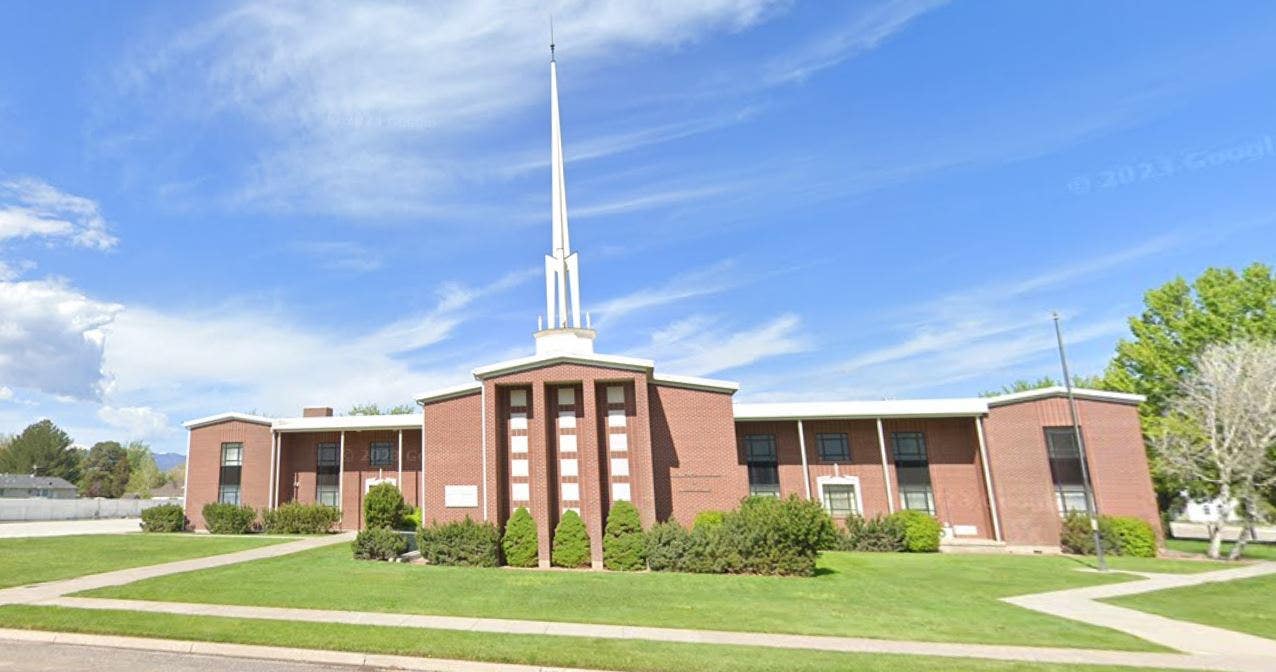
Over 50 members of a Utah Mormon Congregation suffered symptoms of carbon monoxide poisoning during a service this weekend.
At least 54 members of the Church of Jesus Christ of Latter-day Saints meetinghouse in Monroe, Utah reported symptoms, according to NBC News, though only 49 required treatment. The Church says it suspects a malfunction with the building’s heating system was to blame.
Church officials say the building will remain closed until they have confirmed the issue is fixed.
“We are concerned for the well-being of everyone impacted and are praying for their recovery,” the church said in a statement, adding that it is “working to support medical and other expenses” for affected parishioners.
MONTANA GRANPA WHOSE JAW WAS RIPPED OFF BY GRIZZLE BEAR ATTACKS RECOVERY: ‘HE IS GOING TO BE LIKE RAMBO’
Over 50 members of a Utah Mormon Congregation suffered symptoms of carbon monoxide poisoning during a service this weekend. (Google Maps)
Specific details about the symptoms from Sunday’s incident were not forthcoming, but at least 22 people were hospitalized immediately after the service.
MAN WHO SURVIVED GRIZZLY ATTACK BEARS MESSAGE FOR BEAST AFTER SURGERY GIVES HIM NEW FACE
Problems began when a 4-year-old girl reported breathing problems, followed by a man who began to feel sick, and a third person who reported a headache after leaving the building, according to NBC.
The Church of Jesus Christ of Latter-day Saints meetinghouse in Monroe is located in central Utah, nearly 200 miles south of Salt Lake city. Church officials say the building will remain closed until they have confirmed the carbon monoxide issue is fixed. (google maps)
Ultimately, the local fire department was called. They confirmed the carbon monoxide leak and ordered an evacuation.
CHICAGO DOCTORS USE BREAST IMPLANTS TO PERFORM SUCCESSFUL DOUBLE-LUNG TRANSPLANT ON 34-YEAR-OLD MAN
The Sheriff’s office in Monroe stated that local first responders did not have enough ambulances to transport all of the people reporting symptoms, and so units from nearby counties were called in, according to NBC.
CLICK TO GET THE FOX NEWS APP
Church officials have not announced when they expect the building to be usable again.
Read the full article from Here


The Lakers kept pointing to the summer of 2026 as when they would make their big move. It’s when they would have the cap space to radically reshape the roster around Luka Doncic and better fit his style of play.
They have done exactly that — starting with trading for the center they desperately needed.
The Utah Jazz are trading 24-year-old center Walker Kessler to the Lakers for two unprotected first-round picks (2031, 2033) and two first-round pick swaps (2028 and 2030), a story first reported by Shams Charania of ESPN. The Lakers are signing Kessler, a restricted free agent, to a four-year, $130 million contract (averaging $32.5 million per season).
This is a huge win for the Lakers. Luka Doncic has said getting a center who can set picks and roll hard to the rim was key to his success, and Kessler may be the best one he has ever played with. Kessler has been at the top of the Lakers’ wish list for a while, but he was a restricted free agent, and the expectation in league circles was that Utah would pay up to keep him.
However, the price the Lakers agreed to pay — essentially four first-round picks — was just too good for Utah to pass up. Utah still has Jaren Jackson Jr., who can play center, which slides Lauri Markkanen over to the four, with Keyonte George, No. 2 pick Darryn Peterson and Ace Bailey likely rounding out the starting five. That’s still a very good team, and the Jazz now have picks they can use or trade to add around that core. Danny and Austin Ainge — the Utah brain trust — did very well in this deal, setting the Jazz up for the future.
The Lakers’ gamble here is health — Kessler played in just five games last season due to shoulder surgery and just 58 games the season before that. When healthy, he has shown his potential on both ends, and last season averaged 14.4 points and 10.8 rebounds per game when he did play. For his career, he averaged 2.4 blocked shots per game and is one of the few centers in the league equally capable of blocking shots with either hand.
Utah wanted to keep Kessler and reportedly offered four years, $140 million ($28 million a year on average). Kessler and his agent went looking for a larger deal and secured it with the Lakers (their offer is $32.5 million per season on average).
Kessler was the big splash, but it wasn’t the only move the Lakers made. Soon after that trade was reported, a series of other Lakers deals were announced:
• Guard Quentin Grimes is leaving Philadelphia to come to the Lakers on a four-year, $60 million deal.
• Floor spacing big man Sandro Mamukelashvili agreed to come to Los Angeles on a four-year, $52 million deal. He will serve as a backup big but provides the shooting the Lakers need to space the floor around Doncic and Austin Reaves.
• Point guard Collin Sexton to join the Lakers on a two-year, $19 million deal with a player option on the second year.
• All of that on top of previously having re-signed Austin Reaves to a four-year, $184.8 million deal that locks him in as the secondary guard and shot creator next to Doncic.
The Lakers have gone all-in. The only draft capital they have left to trade is a 2032 pick swap and a 2033 second-rounder. That’s it. This is their core.
But like another professional sports team in Los Angeles, the Lakers essentially said “f*** those picks” and leaned into win-now players. It worked out when the Los Angeles Rams did it, winning a championship, and the Lakers are hoping for that same level of success.


How Fourth of July became a celebration of history and hope
From revolution to massive fireworks, July Fourth evolved into a celebration of history, heritage and America’s values.
With 150,000 people expected to attend Saturday’s Fourth of July festivities on the National Mall in Washington DC, locals and tourists alike may be looking for alternative options to view fireworks on America’s 250th birthday.
Washington DC will offer a secondary firework show on the 4th, and there will be plenty of areas in the city and surrounding neighborhoods to catch the big firework display at the National Mall.
Here’s a look at some of the best places to watch the July 4 fireworks in Washington DC.
Where can you watch fireworks in Washington DC on July 4th?
The National Mall will be the most popular area to watch fireworks, with President Donald Trump promising “the largest fireworks show in history.” Officials say 850,000 firework shells will be launched, potentially breaking a Guinness World Record.
But you don’t need to be at the crowded mall and its strict security measures in order to watch the display.
The organizers of the firework show, Freedom 250, say there will also be viewing spots at Hains Point, Columbia Marina, Gravelly Point, RFK Stadium, Meridian Hill Park, Union Station, Lower Senate Park and Upper Senate Park.
Other popular areas to watch the fireworks include the Cardozo Education Campus in Columbia Heights, the Washington National Cathedral in northwest DC, Lady Bird Johnson Park off the Potomac River and the steps of the U.S. Supreme Court Building on Capitol Hill.
Washington DC officials have also released an interactive map that allows you to see your view of the fireworks from any place in the city.
Are there any other fireworks shows in Washington DC on July 4th?
Anacostia Park will serve as the viewing area for a separate fireworks display that will be concurrent with the National Mall fireworks, which are expected to begin at 11 p.m.
DC officials say you can enter the park through Marion Barry Ave. SE, Nicholson St. SE or the Anacostia Riverwalk Trail near the Skate Pavilion.
The event is free to the public, as is the National Mall’s show.

LARAMIE, Wyo. — A bull moose was spotted roaming the streets of Laramie early Tuesday morning before being safely tranquilized and relocated by the Wyoming Game and Fish Department.
Photos from the University of Wyoming Police Department and Laramie residents show the creature curiously wandering through the university campus, where he was tranquilized before heading to a strip mall along Grand Avenue and taking a nap.
“Biologists got the call this morning that the moose was wandering in the UW Apartments neighborhood,” Laramie Region Game and Fish Information and Education specialist Hannah Smith said. “They responded to the scene and were able to dart the moose.”
While he was darted near the apartments, he didn’t stand around and wait for the tranquilizer to take effect. Smith said he worked his way east for about 20 minutes before ending up, coincidentally, in front of Sportsman’s Warehouse.
Lilly Avila, a Laramie resident working at a nearby coffee shop, told Cap City News the animal was sluggishly wandering the parking lot and rubbing against cars before the tranquilizer got to him.
“They brought him to the office and got him cooled down,” Smith said. “They don’t want to be in town. It’s a stressful situation for them, too. They can overheat really easily, so we get them cooled down before we transport them.”
Game and Fish couldn’t say as of Tuesday where the moose came from. Smith said he could have come east from the Pole Mountain area between Laramie and Cheyenne or up the Laramie River from the Snowy Range. Either way, his new home will be around Medicine Bow Mountain.
He also shouldn’t be feeling the effects of the tranquilizer for too much longer. Biologists gave him a reversal drug that should have prepared him to return to the wild.
“He should be pretty normal in terms of the medication. I think, in terms of his day, hopefully he goes back to living his happy moose life munching on some willows and doesn’t go for too many more walkabouts,” Smith said.


Related
-

 South-Carolina3 minutes ago
South Carolina Lowcountry Community Calendar of Events
-

 South Dakota15 minutes ago
Transparency, data protection laws take effect July 1
-

 Tennessee17 minutes ago
More than 1K Williamson County residents without power amid heat wave
-

 Texas23 minutes ago
SCHEELS CEDAR PARK
-
Utah30 minutes ago
Lakers trade for center Walker Kessler from Utah, make their big swing with rush of signings
-

 Vermont33 minutes ago
In Post-pandemic Vermont, The High-end Destination Wedding Industry Has ‘exploded’
-

 Virginia38 minutes ago
Virginia’s Clean Slate Law takes effect, sealing records of certain convictions, offenses
-

 Washington45 minutes ago
Where can you watch fireworks in Washington DC on the Fourth of July?

